

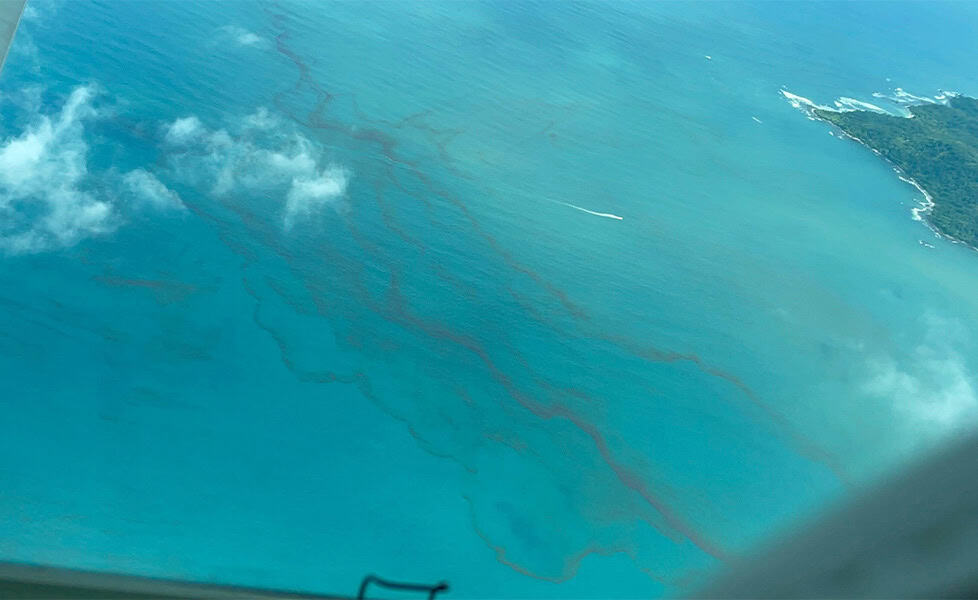
A noticeable change in watercolor has been reported across several zones of the Gulf of Nicoya and coastal areas adjacent to the Nicoya Peninsula. This alteration is the result of an algal bloom. Satellite imagery from July 5, provided by the Marine Phytoplankton Laboratory at the Marine Biology Station of the National University (UNA), shows reddish-brown spots and strands in the bay of Paquera and along the coast from Playa Negra to Punta El Río, extending outward into the gulf.
According to specialists Amaru Márquez Artavia and Karen Berrocal Artavia, the event is being caused by a bloom of the marine microalga Margalefidinium polykrikoides. Water samples taken on June 30 in the Punta Cuchillo area revealed concentrations exceeding 300,000 cells per liter, an unusually high amount for this species.
Although this type of occurrence can raise concerns, experts clarify that in Costa Rica, this particular microalga is not associated with the production of toxins that pose a threat to human health through the consumption of marine products, such as bivalve mollusks. In other words, it is not considered a toxic red tide like those that have, in the past, required restrictions on fishing or shellfish consumption.
While M. polykrikoides has not been shown to be harmful to humans, this species produces toxic compounds which can kill other marine organisms such as fish, bivalves, zooplankton, and even competing phytoplankton. However, M. polykrikoides may still cause skin irritation upon contact with affected water and, under specific environmental conditions. While it does not present a direct toxicity risk to humans, the bloom requires careful monitoring due to its possible ecological consequences.
Authorities recommend the public stay informed through official channels, especially updates from the Red Tide Epidemiological Surveillance Commission, and avoid misinformation that could generate confusion or unnecessary alarm in coastal communities.





