

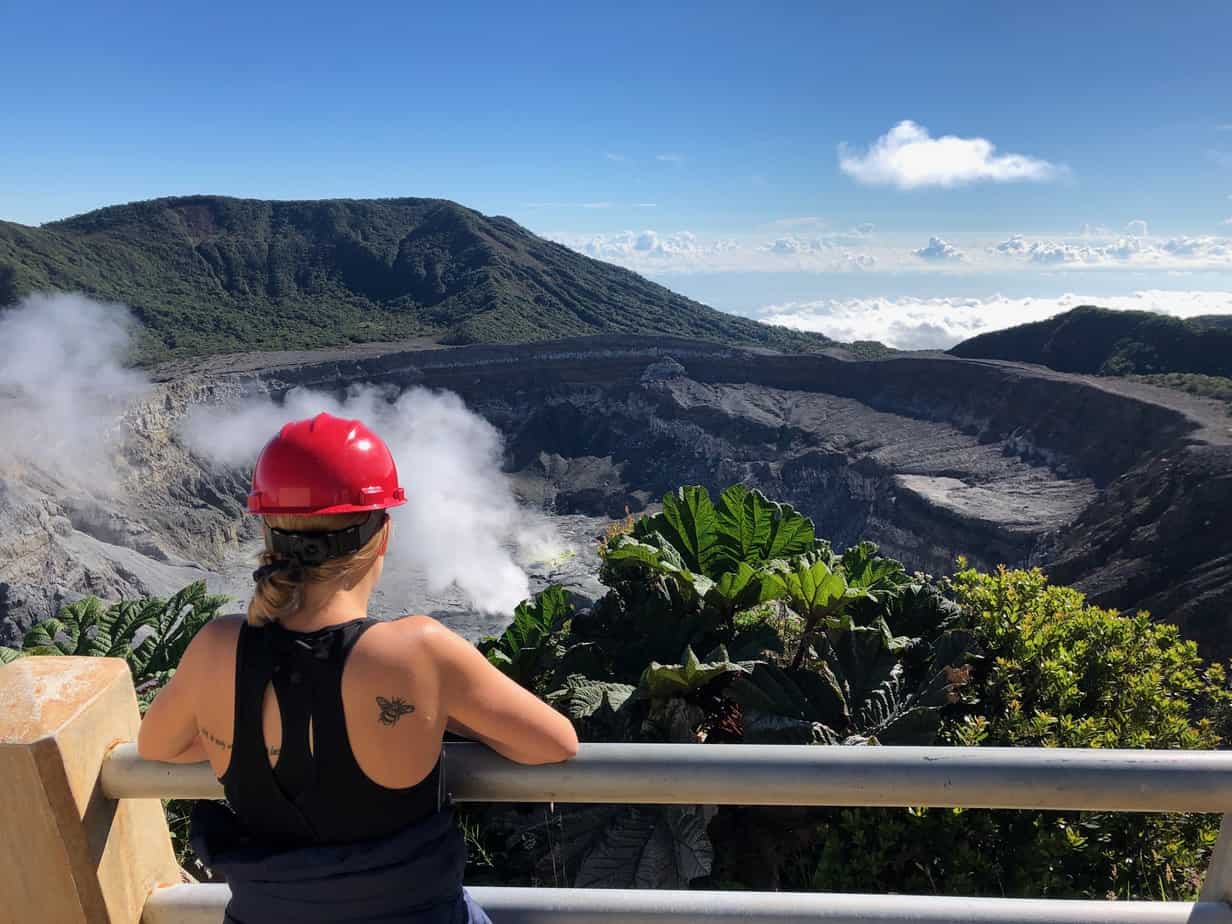
Costa Rica has introduced new safety rules at Poás Volcano National Park after an eruption early yesterday morning, but the goood news is that the popular destination remains open. Starting today, the park will allow a maximum of 1,064 visitors per day, down from 2,052. That means roughly half as many people will be able to visit Poás each day.
Visitors will also be required to wear safety helmets on the main trail leading to the crater viewpoint and on the Sombrilla de Pobre trail. Both trails remain open. Costa Rica is also limiting how many people can be at the crater viewpoint at the same time. A maximum of 56 visitors will be allowed at the viewpoint for up to 20 minutes.
The new rules follow an eruption at Poás at about 2:36 a.m. yesterday. During the eruption, the volcano threw hot rocks and other volcanic material around the crater. Some material traveled approximately 600 meters, or about 1,970 feet, from the crater area. No significant damage or ashfall outside the volcano was reported. Costa Rica’s volcano experts are continuing to closely watch Poás because pressure can build beneath the crater and cause additional eruptions.
That does not mean a larger eruption is about to happen. It simply means Poás remains active and authorities believe additional precautions are necessary while scientists continue monitoring it. The new visitor limits are meant to reduce the number of people who could be exposed if another eruption occurs.
What to Know
The biggest point for anyone planning a trip to Poás is, as we mentioned at the start, that the national park is still open. You can still walk to the crater viewpoint, but fewer people will be allowed into the park each day. Groups at the viewpoint will also be smaller and visitors will have less time there. Poás Volcano National Park normally opens daily from 8 a.m. to 4 p.m., with the last visitors admitted at 2 p.m.
Tickets must be reserved in advance through Costa Rica’s national park reservation system. Because the daily limit has been reduced by almost half, tickets could become harder to find, especially on weekends and holidays. There is currently no date for the restrictions to end. Authorities said the rules will remain in place until the volcano becomes calmer and officials believe the risk has decreased.
Conditions could also change quickly so if volcanic activity increases, Costa Rican authorities could restrict access further or temporarily close parts of the park. For now, you can still visit just simply expect fewer available tickets, smaller groups at the crater and now a helmet as part of the experience.





