

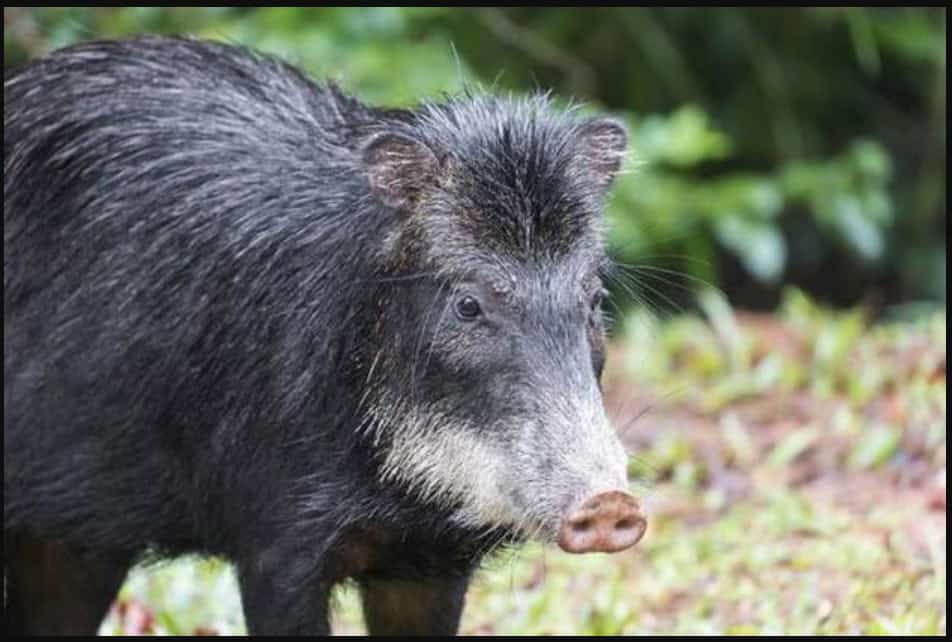
White-lipped peccaries have returned to Piedras Blancas National Park after years without confirmed records of the species, marking an important wildlife restoration effort in Costa Rica’s South Pacific. The project reintroduced 13 white-lipped peccaries, also known locally as chanchos de monte, after relocating them from protected areas on the Osa Peninsula. The animals were captured, transported, held in an acclimation enclosure and then released into the forest.
The white-lipped peccary had been one of the large mammals no longer recorded in Piedras Blancas, along with the jaguar and Baird’s tapir. Its return is meant to restore part of the park’s natural balance, not just bring back a single species.
The operation required careful preparation. Researchers installed Wi-Fi inside the forest so they could monitor capture sites in real time through remote cameras. They also built two connected holding pens, similar to livestock corrals, and gradually trained the peccaries to enter them voluntarily to feed.
Guido Saborío, the biologist leading the project, said the animals first became comfortable entering and leaving the corrals freely. Once they were doing so regularly, the gates were closed, allowing the team to contain the group safely. After capture, the peccaries were moved by vehicle to Puerto Jiménez and then transported by boat overnight to Piedras Blancas. The nighttime trip helped reduce the risk of overheating and took advantage of favorable tidal conditions.
Once inside the park, the animals spent about a month in an acclimation enclosure before being released into the wild. Each peccary now wears a GPS tracking collar, allowing researchers to follow their movements and help guide anti-poaching patrols in the area.
Hunting was the main reason white-lipped peccaries disappeared from Piedras Blancas. The species has long been targeted for meat in parts of rural Latin America, and its habit of moving in large herds makes it especially vulnerable. Habitat loss has added to the pressure. White-lipped peccaries need large, healthy forests to survive because they travel long distances in groups and depend on connected habitat.
Their return matters for the forest itself. As the animals move through the landscape, they consume and disperse seeds, influence which plants regenerate, and create muddy wallows that can become small habitats for amphibians, insects and other wildlife. The species is also important prey for jaguars. Restoring white-lipped peccaries to Piedras Blancas could eventually improve the conditions needed for jaguars to return or expand their presence naturally in the area.
Piedras Blancas National Park sits in Golfito, along Costa Rica’s southern Pacific coast. The park forms part of a larger biological corridor linking the Osa Peninsula with other protected areas, making the recovery of key wildlife species important beyond the park’s boundaries.
Researchers plan a second white-lipped peccary reintroduction during the first months of next year. The long-term goal is to rebuild a self-sustaining population in Piedras Blancas, allowing the species to once again play its role in the forest.





