

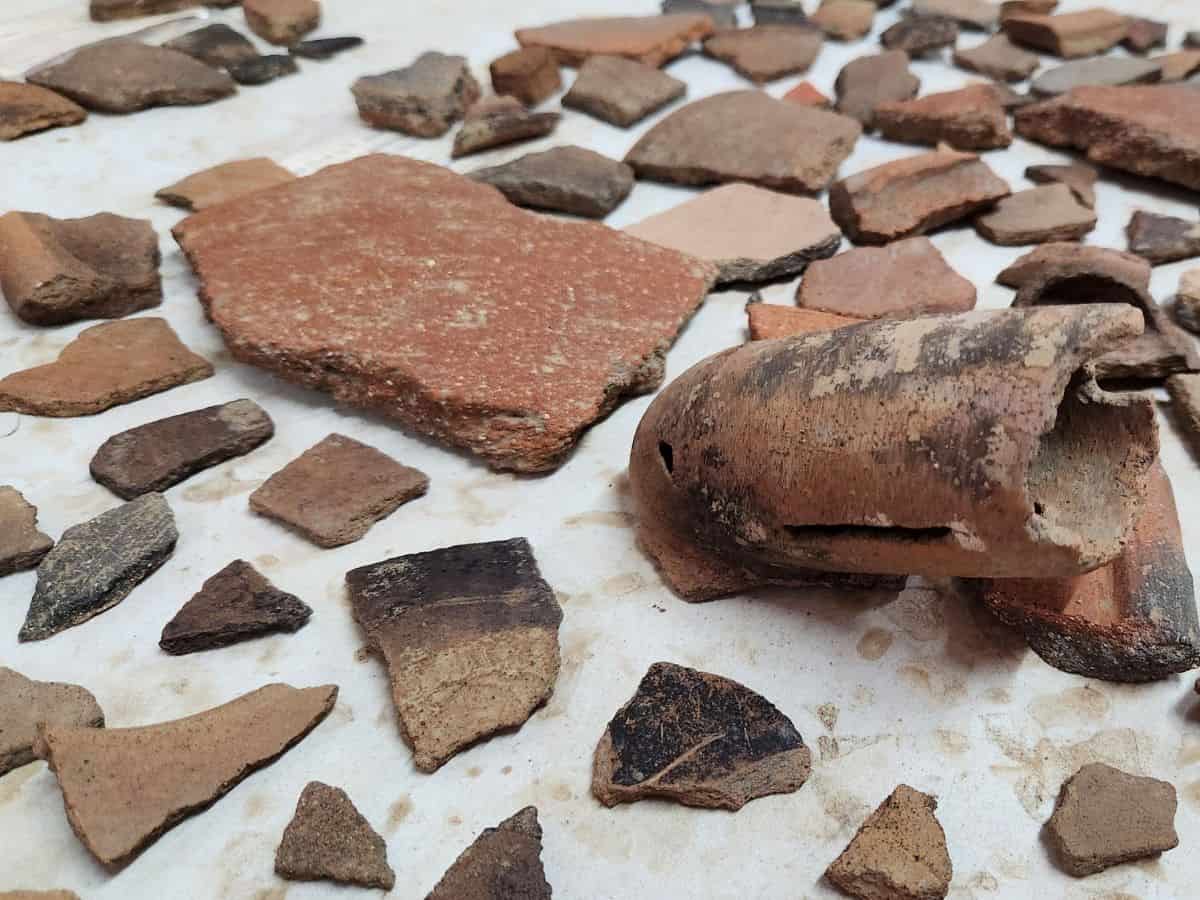
Costa Rica has completed an archaeological rescue excavation in the area planned for the future Southern International Airport, uncovering new evidence of pre-Columbian communities that lived in the Diquís Delta while clearing another cultural heritage step for the project.
The excavation focused on 12 sectors where earlier studies had found the highest concentration of cultural material. Fieldwork ran from March 4 to June 10 and documented remains linked to communities that inhabited the region between AD 800 and 1500.
The work found evidence of everyday life rather than monumental architecture. Archaeologists documented residential areas, hearths, combustion zones, ceramic fragments and post holes, signs that homes were likely built with materials that disappeared over time. The excavation also identified different layers of human occupation preserved by the natural sedimentation of the Diquís Delta.
The findings point to two main periods of occupation, from AD 800 to 1200 and from AD 1300 to 1500. The recovered materials are expected to help researchers better understand how Indigenous communities organized their settlements, adapted to the delta environment and lived in one of Costa Rica’s most important archaeological regions.
The excavation also confirmed that the airport’s impact area does not contain stone spheres, causeways, cobblestone pavements or other monumental structures like those found at nearby archaeological sites such as Finca 6, Grijalba and Batambal.
That distinction is important because the Diquís Delta is one of Costa Rica’s most important archaeological landscapes. The region is internationally known for its pre-Columbian stone spheres and for evidence of complex societies that lived there centuries before the arrival of Europeans.
“Every project that transforms the country must also help us understand who we are,” Culture Minister Jorge Rodríguez Vives said. “This archaeological excavation demonstrates that development and heritage protection are not opposing goals, but rather complementary commitments.”
Adriana Collado Chaves, director general of the National Museum of Costa Rica, said the work will provide new scientific information even though no monumental structures were found inside the project area. The recovered material, she said, will help broaden understanding of the history and ways of life of the Indigenous populations of the Diquís Delta.
The rescue excavation followed an archaeological assessment process that began in 2024, before any major construction work. The broader assessment covered land in Palmar Sur de Osa, where the future airport is planned, and helped identify the areas that required more detailed excavation.
Laboratory work will continue in the coming months as specialists clean, classify and analyze the recovered material. The pieces will later be stored at the José Fabio Góngora branch of the National Museum for conservation and future research. The final technical report is expected to be submitted to the National Archaeological Commission in October 2026.
The project involved the Ministry of Culture and Youth, the National Museum, the Ministry of Public Works and Transportation, and the General Directorate of Civil Aviation. Officials say the process shows that infrastructure planning in southern Costa Rica can move forward while still protecting the archaeological record beneath the land selected for development.





