

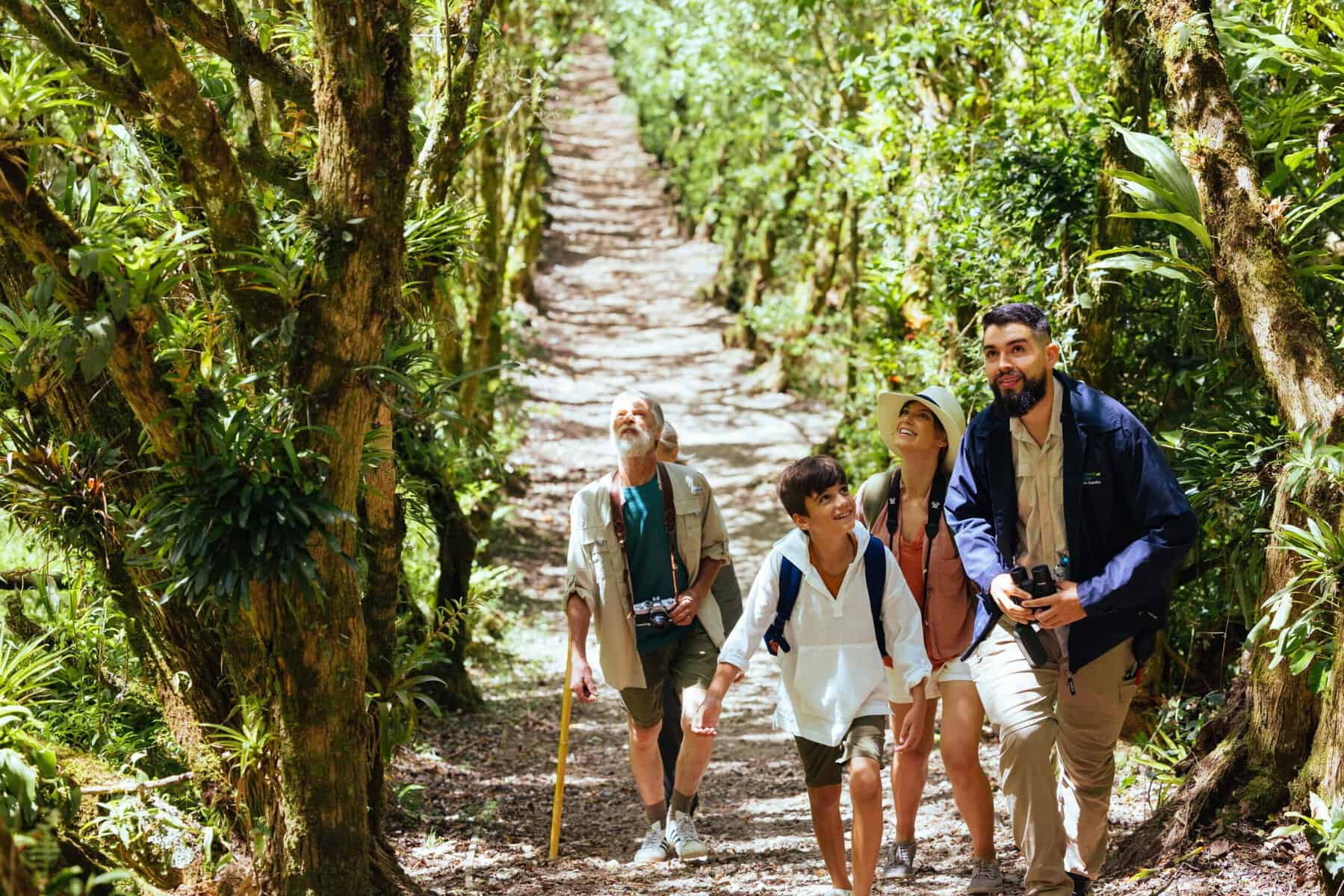
Costa Rica is leaning further into a tourism strategy built around higher-value visitors, longer stays and experience-based travel, signaling a continued move away from mass tourism as it competes for travelers willing to spend more for nature, wellness, culture and sustainability.
The shift is visible in the Costa Rican Tourism Board’s European campaign, “Empieza a vivir, Pura Vida,” started this year for priority markets including Germany, Spain, the Netherlands, Switzerland, France and the United Kingdom.
The campaign presents Costa Rica less as a quick beach escape and more as a place for travelers to reset, reconnect with nature and take part in what the ICT describes as a transformative, essential and regenerative trip. Its themes include local connection, reinvented nature, sustainable impact and travel with personal meaning.
That language in this campaign matters as Costa Rica is not trying to move away from a mass-market bargain destination. The tourism model is increasingly focused on visitors who spend more, stay long enough to move through multiple areas and seek out experiences tied to wildlife, wellness, adventure, culture and local communities.
That means families, older travelers, younger visitors with strong interest in Costa Rica, honeymooners and other long-haul travelers who are more likely to build fuller itineraries. They may combine national parks, boutique hotels, guided nature tours, wellness activities, coffee experiences, beaches and cultural visits rather than staying in one resort for a short, low-cost trip.
The ICT’s own planning language points in that direction. Costa Rica’s tourism strategy emphasizes a “sustainable, non-massive” model that prioritizes the quality of visitation over volume. The goal is not simply to count more arrivals, but to attract visitors with higher average spending and a willingness to travel across different regions of the country.
The numbers help explain the strategy. Costa Rica received 2,689,278 international tourists in 2025, a modest 1% increase over the previous year. But tourism revenue reached $5.54 billion, while average spending per visitor rose to $1,848. The average stay was 10.3 nights in 2025, down from the unusually long post-pandemic stays of 2022 and 2023, but still long enough to support multi-destination travel within the country.
That balance is important for a country with limited territory, fragile ecosystems and popular destinations that already face pressure from traffic, water demand, real estate growth and overcrowding during peak travel periods. A pure volume strategy would bring more people through the same beaches, parks and roads. A higher-value strategy tries to generate more revenue without depending only on bigger crowds.
Costa Rica’s European campaign fits that logic. The ICT is placing the country in front of travelers who often take longer vacations than short-haul visitors and who tend to respond to nature, sustainability, wellness and cultural authenticity. The campaign is scheduled to run across digital television, radio, outdoor screens, social platforms, cinema, print and other channels through November 2026.
Europe is especially useful for this positioning because the travel decision is already a bigger commitment. A visitor flying from Germany, France, Spain, Switzerland, the Netherlands or the United Kingdom is more likely to plan a longer trip than someone arriving from a nearby market. That gives Costa Rica more room to promote regional circuits, rural tourism, protected areas and activities beyond the best-known beach towns.
The strategy also reflects a competitive reality. Costa Rica is expensive compared with several Central American neighbors, and the strong colón has made hotels, restaurants, tours and car rentals feel even pricier for many foreign visitors. Rather than fight that battle mainly on price, the country is trying to defend a premium position: safer, greener, better organized and more connected to nature than cheaper alternatives.
That does not mean Costa Rica is only chasing luxury travelers. The stronger reading is that it wants higher-value tourism, a broader category that includes active retirees, families with travel budgets, wellness visitors, birdwatchers, surfers, adventure travelers, digital nomads, honeymooners and people seeking carefully planned nature-based vacations.
The risk is that “higher value” can become a narrow phrase if it is measured only by how much a visitor spends. Costa Rica’s challenge will be making sure that more tourism money reaches local businesses, guides, rural communities and conservation efforts, rather than concentrating only in high-end coastal developments.
Costa Rica’s new tourism message is more selective than broad. It is not trying to sell every traveler the same beach vacation, or compete only on price. It is betting that visitors who come for nature, wellness, culture and carefully planned experiences will stay longer, spend more and leave a lighter footprint than mass tourism allows.





