

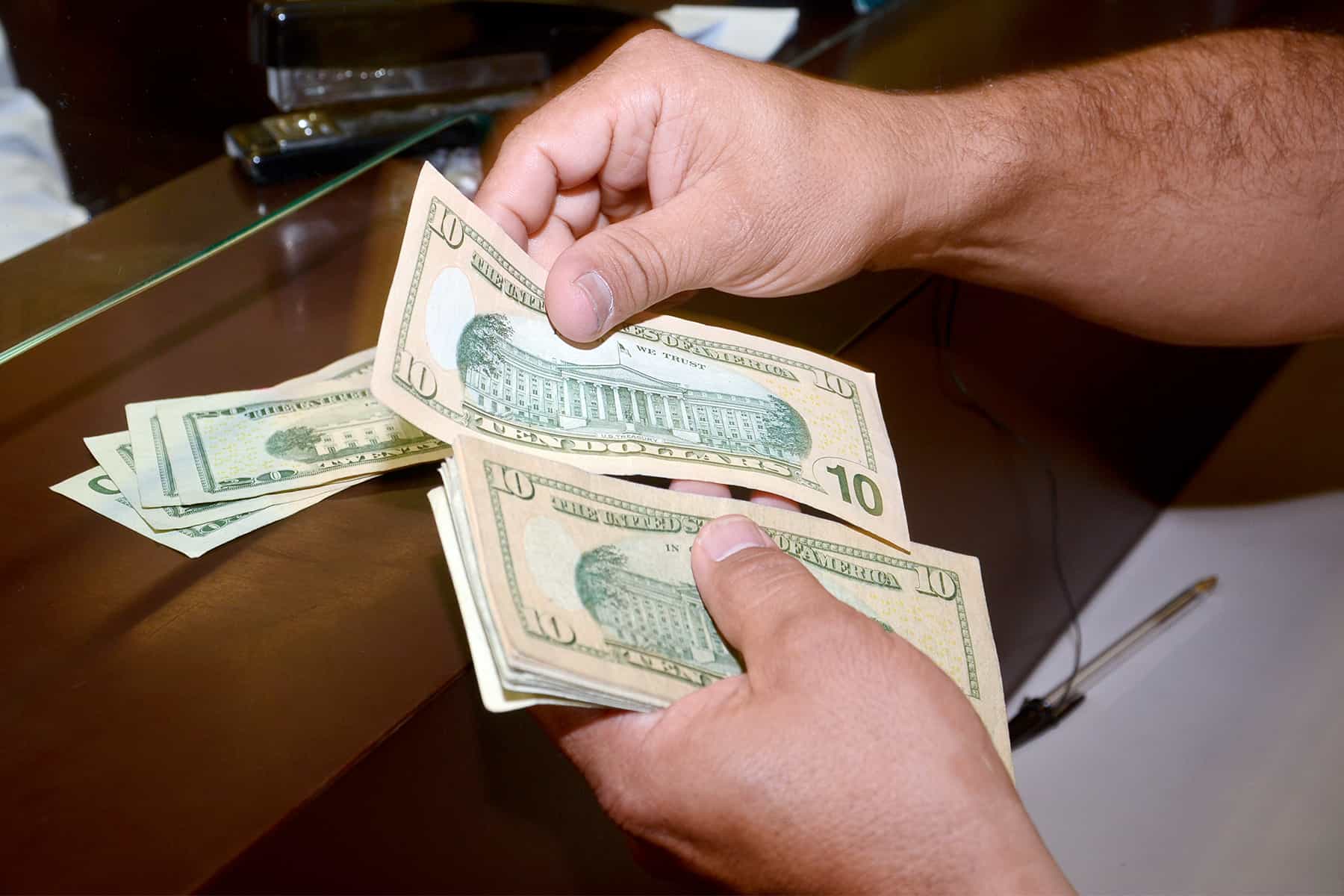
The U.S. dollar has fallen to its lowest level in Costa Rica’s modern wholesale foreign-exchange market, increasing the squeeze on those residents who earn in dollars and adding fresh pressure on tourism businesses already worried about the rising cost for foreign visitors.
The dollar averaged ₡449.17 in Thursday’s session of the Mercado de Monedas Extranjeras(Monex), according to the latest figures from the Central Bank of Costa Rica (BCCR). The rate was down from ₡449.51 on Wednesday and marked the third record low reached this week.
Thursday’s session opened at ₡451.97, briefly fell as low as ₡447 and ended with the final transaction at ₡449.06. A total of $62.73 million changed hands through 260 transactions. The BCCR stepped into the market and bought $26.53 million through what it calls stabilization operations, which are intended to reduce excessive pressure or volatility in the exchange rate rather than maintain the dollar at a specific price.
That brings the Central Bank’s stabilization purchases to approximately $983.7 million so far in 2026, spread across 48 trading sessions. Thursday’s intervention followed another $12.4 million purchase on Monday. As of Friday morning, before the day’s Monex session begins, the BCCR’s official reference rates stand at ₡446.12 for buying dollars and ₡451.89 for selling them.
The ₡449.17 wholesale average is the lowest recorded in the BCCR’s Monex historical series, which dates to December 2007. The Monex platform itself began operating in November 2006, making the current level effectively a low for the modern foreign-exchange system.
For people living in Costa Rica on income paid in U.S. dollars, the effect is that each dollar you have now buys fewer colones. At yesterday’s Monex average, $1,000 is equivalent to about ₡449,170 before bank spreads and fees. At an exchange rate of ₡500, the same $1,000 would produce ₡500,000.
That difference can be significant for retirees receiving pensions in dollars, remote workers paid by U.S. companies and other foreign residents whose rent, groceries, utilities, medical bills and daily expenses are largely paid in colones. However, the stronger colón does have winners. Costa Ricans buying imported goods, people paying dollar-denominated debts with colón income and businesses importing products priced in dollars can benefit from a cheaper U.S. currency.
But the situation is much harder for companies that earn dollars while paying most of their expenses in colones. Tourism is particularly exposed is this area as hotels, tour companies, transportation businesses and other operators may receive much of their revenue from foreign visitors in dollars while paying salaries, electricity, taxes, insurance and local suppliers in colones. As the dollar falls, those costs become more expensive when measured against their dollar revenue.
Both Costa Rica’s tourism professionals and exporters have repeatedly raised concerns this year about the strong colón. Business groups argue that the exchange rate is reducing margins and making the country more expensive compared with competing destinations where a tourist’s dollar stretches further.
The impact on visitors is less obvious when hotels, tours or rental cars are already priced directly in dollars. But many expenses inside Costa Rica remain linked to colón costs. Restaurants, domestic services, wages and locally produced goods can eventually translate into higher dollar prices as businesses try to protect margins.
That matters because Costa Rica already competes as one of Central America’s more expensive destinations. A stronger colón can widen that gap even when the underlying price in colones has not changed. The debate over the exchange rate is therefore becoming increasingly complicated for the Central Bank. Large inflows of foreign currency have created persistent downward pressure on the dollar, while the BCCR has accumulated substantial reserves by purchasing dollars from the market.
Economists have noted that the sustained abundance of foreign currency has been one of the main forces behind the colón’s appreciation. For now, yesterday’s intervention shows the Central Bank is willing to step in when it considers the movement excessive. It does not, however, signal that officials intend to return the dollar to any particular exchange rate.
With the dollar now below ₡450 in Monex and nearly $1 billion already purchased this year specifically through stabilization operations, the exchange rate has become more than a financial-market story. For thousands of Costa Rica residents paid in dollars and for businesses competing for international tourists, it is increasingly a question of purchasing power and competitiveness.





