

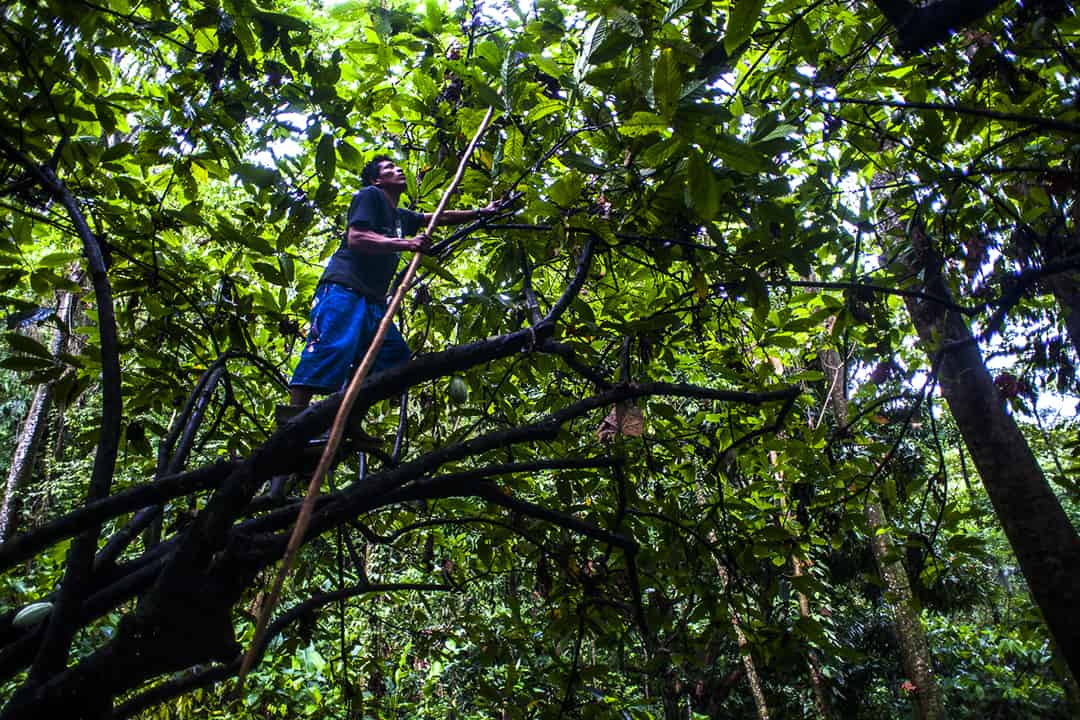
Heavy rains in Costa Rica’s Caribbean region are damaging cacao plantations and could reduce harvests for months to come, with some producers in Talamanca reporting losses of between 50% and 60%. The more pressing problem is happening before the cacao pods even begin to develop.
Intense rainfall is knocking flowers from cacao trees, meaning fewer pods will be available to harvest roughly six months from now. Excess moisture is also creating favorable conditions for diseases that attack cacao and making it harder for farmers to dry harvested beans. The situation is particularly concerning in Talamanca and other parts of the Caribbean, where cacao remains an important source of income for small farmers and Indigenous communities.
Elena Gaitán, owner of the cacao operation Skenseke Ta said that she estimates she has lost around 60% of her cacao production during the current period because of weather conditions. The losses have already affected her ability to meet future orders. Gaitán had expected to deliver 10 tons of cacao in March but has warned customers that she will not be able to meet that target. Another producer, José Alberto Moore of Finca La Fe in Talamanca, estimated that heavy rains have affected between 50% and 60% of the flowers on his cacao plants.
Those percentages are reports from individual farms and should not be interpreted as a 50% to 60% loss across Costa Rica’s entire cacao industry. No national estimate of this year’s losses has yet been released. The concern extends beyond the physical force of the rain. Carlos Hernández, a researcher with the School of Agricultural Sciences at the National University, explained that prolonged wet conditions can interfere with cacao pollination. Cacao flowers depend on tiny insects for pollination, and excessive rain can make it harder for them to move among the plants.
Fewer successfully pollinated flowers eventually means fewer cacao pods. Hernández said the situation could affect more than 1,500 cacao-producing families around Costa Rica, many of them in the Caribbean, northern border areas and Indigenous communities where cacao provides an important source of household income.
Disease is another growing concern as constant moisture creates favorable conditions for black pod disease, caused by Phytophthora palmivora, which attacks cacao pods and can substantially reduce production. The disease has long been recognized as one of the main threats to cacao in Costa Rica, particularly in humid growing regions. Research and agricultural records from the Ministry of Agriculture and Livestock also identify black pod disease among the principal diseases affecting the crop.
Even cacao that survives the rain faces another challenge once it is harvested. Many small producers rely on the sun to dry fermented cacao beans before they can be stored or sold. Long stretches of cloudy and rainy weather can slow that process, increase the risk of spoilage and make it more difficult for producers to maintain quality.
The problems come as Costa Rica has been trying to strengthen cacao production in the Caribbean. The Ministry of Agriculture and Livestock and the Mixed Institute for Social Aid have invested in agricultural projects in Limón that include cacao production. In Valle La Estrella, for example, a program announced this year is helping 22 families in the Tjai Cabécar Indigenous territory establish one hectare of cacao each, with plants, agricultural supplies and technical assistance.
Cacao has particular economic importance in Talamanca, where it is commonly grown on small farms and in agroforestry systems alongside bananas, plantains and other crops. For some farmers, however, years of low prices, plant diseases and difficult weather conditions have already pushed them toward other crops or additional sources of income.
The latest rains add another problem because the full economic impact will not necessarily be visible immediately. Flowers falling from trees today represent cacao that farmers will not be able to harvest months from now. Producers could therefore continue feeling the effects of the current weather well into 2027.
Costa Rica’s Meteorological Institute says rainfall patterns have varied sharply across the country this year. While much of the Pacific and Central Valley has faced drier conditions, the Caribbean has experienced periods of intense rainfall. For the week ending Oct. 4, the IMN expected rainfall in the Caribbean and Northern Zone to remain closer to normal seasonal levels, while drier-than-normal conditions persisted across much of the Pacific and Central Valley.
That contrast illustrates one of the problems facing Costa Rican agriculture: farmers can be dealing with drought in one part of the country while producers elsewhere struggle with too much water. For cacao growers in Talamanca, the concern now is what remains on the trees.
The losses reported so far are concentrated on particular farms, and it is still too early to determine the impact on national cacao production. But with damaged flowers, increased disease pressure and difficulties drying beans, producers in the Caribbean are already preparing for a smaller harvest in the months ahead.





