

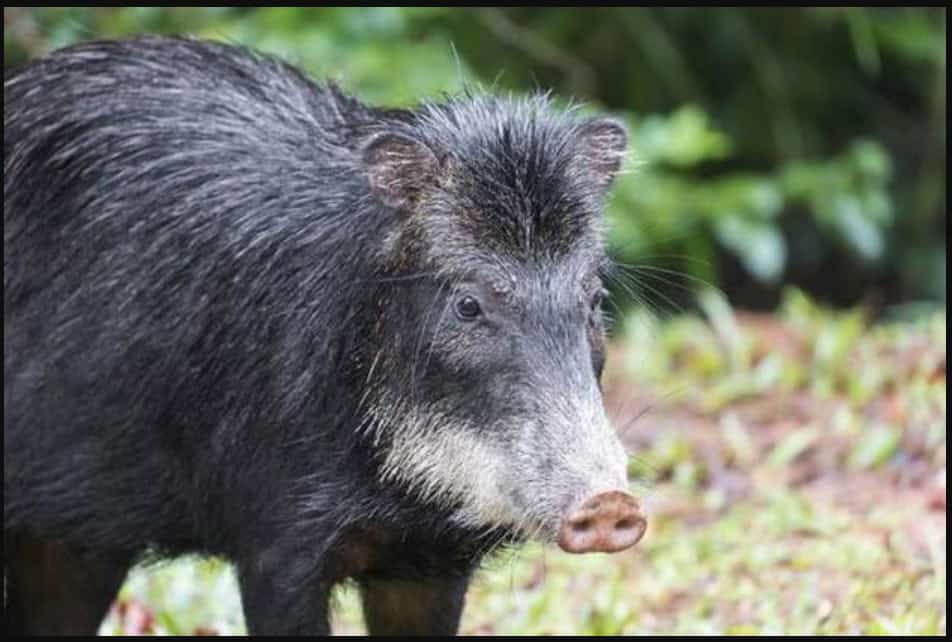
Authorities in southern Costa Rica are investigating the illegal hunting of endangered wild pigs after the carcasses of ten animals were discovered last Wednesday inside the Golfo Dulce Forest Reserve on the Osa Peninsula. The Rancho Quemado Community Biological Monitoring group reported the incident on social media, emphasizing that hunting continues in the Vanegas community, which borders the reserve, despite the species’ protected status.
The organization is urging the National System of Conservation Areas (SINAC) to increase personnel in the area, noting that only two park rangers are currently responsible for 149,500 hectares. Since 2015, the monitoring movement has tracked wild pig herds and other wildlife, successfully raising the population from 50 to 350 individuals. Last week’s discovery involved nine adult peccaries and one juvenile, with additional animals possibly injured.
In response, the Agrarian and Environmental Deputy Prosecutor’s Office carried out three raids on Friday in connection with an investigation into the alleged illegal hunting of endangered wildlife. Authorities are investigating three suspects, believed to have hunted nine peccaries on January 14.
The operations are taking place in homes located in Puerto Jiménez and Bahía Drake, with law enforcement reporting the seizure of meat that may correspond to the hunted animals.
The investigation began after nine heads, and their skins were found on private property. Officials emphasized that illegal hunting damages both the environment and human communities, accelerates the loss of biodiversity, and undermines national tourism. The office also highlighted that these animals play a critical role in forest health, including soil regeneration and the protection of water sources.
White-lipped peccaries (Tayassu pecari) are social mammals native to the Americas, living in large herds that can number in the hundreds. They contribute to forest regeneration, seed dispersal, and soil health while serving as prey for predators such as jaguars. In Costa Rica, their survival is threatened by illegal hunting for meat and trophies as well as deforestation, which destroys their habitat.
Local activists stress that the recent killings represent a major setback and mentioned that the last such massacre occurred in 2008. Efforts to monitor and protect the species, led by the Rancho Quemado group, continue as authorities pursue legal action.





