

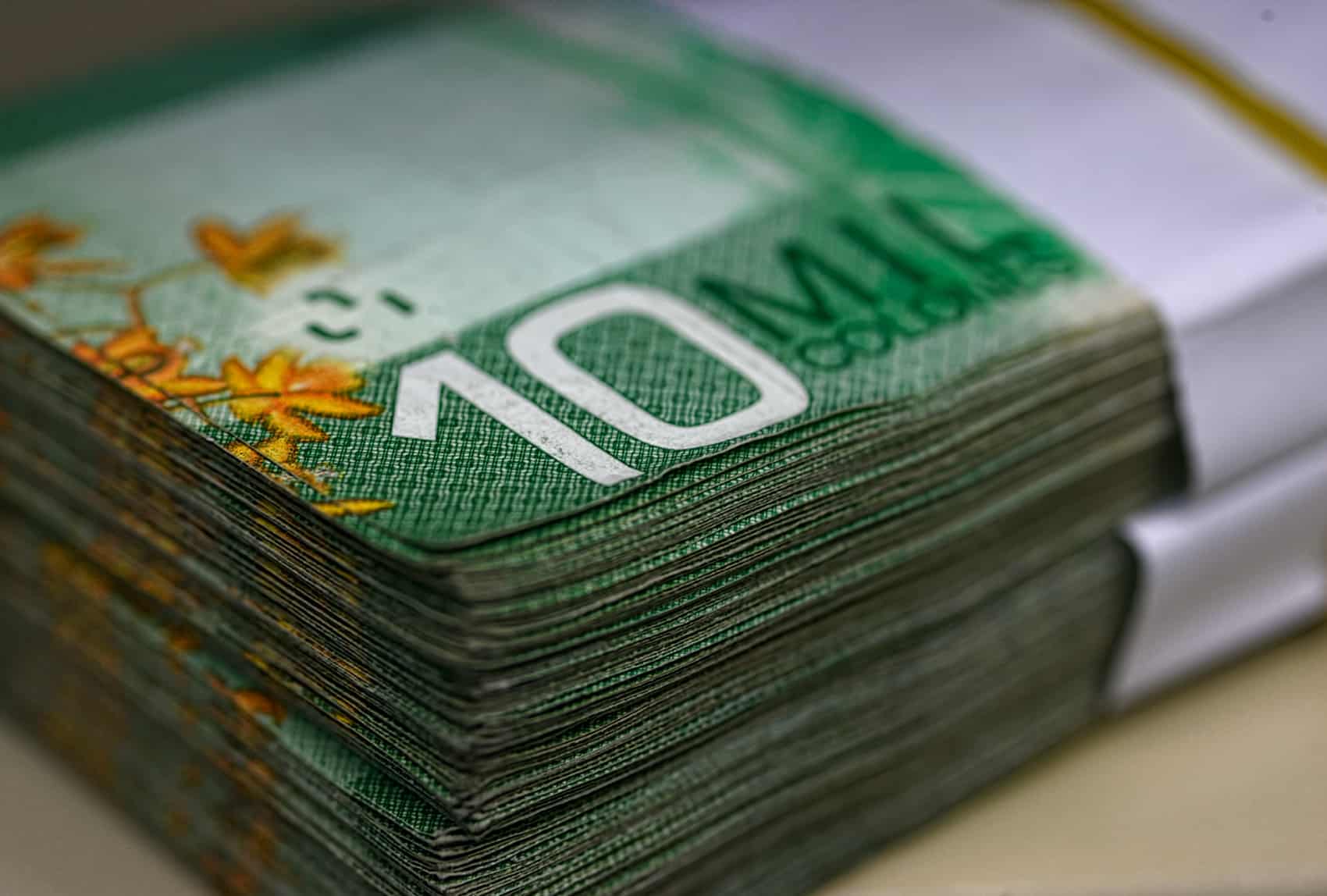
The International Monetary Fund (IMF) has reclassified Costa Rica’s de facto exchange-rate regime from a “managed float” to a “stabilized” arrangement, pointing to the Central Bank’s (BCCR) sustained intervention in the foreign-currency market known as Monex. The change appears in the Fund’s most recent Article IV staff report, prepared as part of the review of Costa Rica’s Flexible Credit Line.
According to the IMF, the Central Bank’s interventions have kept exchange-rate fluctuations within a narrow 2% band for more than six months, a pattern in place since mid-2024. Over the course of 2026, the dollar has traded between roughly ₡452 and ₡497 in Monex. The Fund noted that the exchange rate has shown somewhat more flexibility so far this year, but cautioned that more observations are needed before concluding that a new trend has taken hold.
The reclassification is the IMF’s alone. Costa Rica has officially maintained a managed-float regime since 2015, in which the exchange rate is set by supply and demand while the Central Bank reserves the right to intervene. Rodrigo Cubero, a former BCCR president said that the Fund assigns “de facto” classifications that can differ from a country’s official regime: a “stabilized” label applies when the rate moves no more than 2% over six months largely because of central-bank action, whereas a “managed float” would show larger swings with more limited intervention.
The scale of that intervention has been considerable. Of the $5.309 billion traded in Monex through June 30, the Central Bank purchased $3.429 billion — about 64.5% of the total, the IMF reported. Of those purchases, $843.7 million went to stabilization operations aimed at cushioning downward pressure on the dollar, a record under the managed-float regime for that purpose. A further $2.244 billion was bought on behalf of the public sector, and $340.7 million was added to reserves.
Behind the figures is a colón that has strengthened for four straight years. After peaking near ₡696.76 in mid-2022, the dollar has trended steadily downward, touching several historic lows in Monex this year. On July 3, the BCCR reference rate stood at ₡450.98 to buy and ₡456.09 to sell.
For foreign residents, the trend cuts both ways — a point that matters for anyone living on dollars in Costa Rica. Retirees, remote workers and others earning in dollars now convert to fewer colones than in past years, tightening budgets pegged to a foreign income. Those with dollar-denominated debts but colón earnings, by contrast, need fewer colones to service what they owe. La Nación reported that exporters and the tourism sector have felt the pressure of the strong colón, since they earn dollars but pay many of their costs in local currency, while importers benefit.
The Fund recommended that the Central Bank limit interventions to keeping the market orderly during significant shocks, said further reserve accumulation is not necessary, and suggested cutting the monetary policy rate to ease both the interventions and the downward pressure on the dollar.
Economist Norberto Zúñiga said the Fund has repeatedly flagged what he described as excessive BCCR involvement in the market, and warned that reducing uncertainty about the dollar’s value can implicitly guarantee certain exchange-rate levels and encourage dollarization. Analysts Luis Alvarado of Acobo Puesto de Bolsa and currency specialist William Porras said that, absent the Central Bank’s purchases, the dollar would likely be trading even lower than it is now.





