

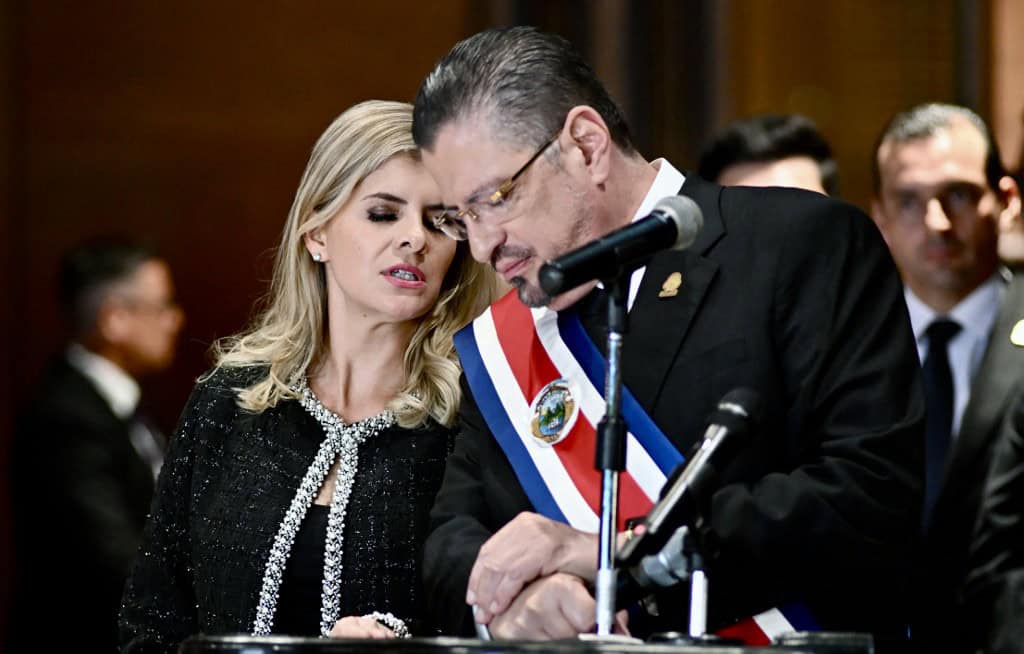
Costa Rica’s Attorney General’s Office has opened a criminal investigation involving President Laura Fernández and Finance Minister Rodrigo Chaves over the appointment of the head of the Policía de Control Fiscal, or Fiscal Control Police. The investigation centers on the June appointment of Katherine Tenorio Ruiz as director of the police, which operates under the Ministry of Finance and is responsible for combating tax evasion, customs violations and contraband.
Prosecutors opened the case following a complaint questioning whether the government legally changed the requirements for the position shortly before Tenorio was appointed. To be clear, the opening of a criminal case does not mean Fernández or Chaves committed a crime. Prosecutors are now examining whether any actions connected to the regulatory change and appointment violated Costa Rican law.
At the center of the dispute is a requirement contained in Costa Rica’s General Police Law. The law establishes that directors of police forces must hold at least the police rank of comisionado, while deputy directors must hold at least the rank of comandante. That requirement had previously been examined by Costa Rica’s Procuraduría General de la República, the government’s legal advisory authority.
In a 2021 ruling requested by the Ministry of Finance, the Procuraduría determined that directors and deputy directors of police under the Executive Branch must meet the minimum police-rank requirements established by law. The ruling specifically addressed the application of those requirements to bodies such as the Fiscal Control Police.
The controversy intensified because of a regulatory change approved shortly before Tenorio took office. On June 9, Fernández and Chaves signed an Executive Decree changing the regulations governing the Fiscal Control Police. The decree established professional and technical qualifications for the director and deputy director positions, but also explicitly stated that appointments to those posts would not require possession of police ranks.
The decree was published in the official government newspaper La Gaceta on June 18. Four days later, on June 22, the Ministry of Finance announced Tenorio as the new director. The legal question now facing investigators is whether the Executive Branch could use a decree, which is a lower-level regulation, to remove a qualification established by national law.
The complaint that prompted the investigation was filed by Frente Amplio lawmaker Antonio Trejos. It asks prosecutors to examine the actions of Fernández, Chaves and any other officials involved in preparing, reviewing or approving the decree and Tenorio’s appointment. It also asks authorities to determine whether Tenorio held the required rank of comisionado when she took office.
Tenorio’s official government biography does not identify her as holding that rank. However, that absence alone does not establish that she does not hold it, and prosecutors have not announced a conclusion on that question. Tenorio has substantial professional experience relevant to the work of the Fiscal Control Police. She is an attorney, notary and criminologist and holds a master’s degree in Law and International Business.
She previously worked as an investigator with the Fiscal Control Police and as a criminologist in investigations involving the Panama Papers and complex fraud. She has also worked as a legal adviser in the Vice Ministry of Telecommunications and in the Arms and Explosives Control Department of the Ministry of Public Security.
The controversy therefore focuses primarily on the legal requirement for police rank rather than Tenorio’s academic or professional credentials. The government’s June decree said the new requirements were intended to ensure that the Fiscal Control Police is led by qualified professionals capable of handling its specialized responsibilities involving tax, customs and financial investigations.
The investigation comes at a politically sensitive moment for the Fernández administration, as tensions between the Executive Branch and Costa Rica’s judicial institutions have escalated in recent weeks. Thousands of people demonstrated in San José and other parts of the country on Thursday in support of the Judiciary and Costa Rica’s system of checks and balances following disputes over judicial funding, court decisions and the authority of different branches of government.
The investigation into the Fiscal Control Police appointment is still at an early stage. Prosecutors have not announced charges against Fernández or Chaves, nor have they determined that the appointment or decree was unlawful. As of this morning, no new public explanation from the government had been located addressing the Fiscalía’s decision to open the case.





