

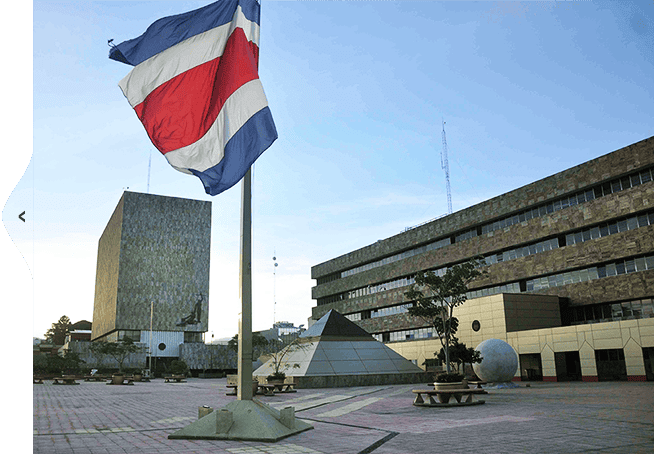
Judicial employees, university representatives and civil society groups are preparing demonstrations across Costa Rica today as the dispute between President Laura Fernández’s government and the Judiciary grows increasingly confrontational. The main gathering is scheduled to begin at 4 p.m. at Plaza de la Democracia in downtown San José.
Organizers have described the event as a peaceful demonstration in defense of judicial independence, democratic institutions and Costa Rica’s system of checks and balances. The protest is expected to continue until approximately 8 p.m. and will include speeches, cultural presentations and activities organized by unions and civic groups. Participation is open to the public.
The National Council of University Rectors (Conare), has also called on university communities and the public to participate. Its march will leave the Fuente de la Hispanidad in Montes de Oca at 3:30 p.m. before continuing toward Plaza de la Democracia. Similar gatherings have been announced outside judicial buildings in other areas of the country. Confirmed locations include Nicoya and Liberia, while calls have also circulated for demonstrations in Puntarenas, San Carlos and other judicial districts.
Eight unions and professional organizations representing judicial employees are among the groups supporting the San José protest. They include the Judicial Workers’ Union, or Sitrajud; the Public Defense Union, Sindepu; the National Association of Criminal Investigators, ANIC; and the Costa Rican Judges Association, Acojud.
The National Association of Judicial Employees, Anejud; the National Association of Judicial Professionals, Anprojud; the Association of Accounting and Finance Professionals of the Judiciary, Asprotcofi; and the National Front of Struggle, FNL, are also involved. The demonstrations follow several weeks of escalating tension over government spending cuts and a Constitutional Chamber ruling involving substitute Supreme Court justices.
The dispute intensified after the Constitutional Chamber (Sala IV), issued a ruling on July 30. In a 4-3 decision, the court overturned the Legislative Assembly’s attempt to return a list of candidates for substitute justices to the Supreme Court. The ruling also temporarily extended appointments that had expired on December 16, 2025.
The court said the temporary measure was needed to prevent disruptions in urgent cases while lawmakers complete the appointment process. Substitute justices are required when permanent members of the Constitutional Chamber cannot participate in a case because of conflicts of interest, illness or other legal restrictions.
Fernández responded by accusing part of the Judiciary of carrying out a “coup d’état” against the Legislative Assembly, which has the constitutional authority to appoint Supreme Court justices. The Constitutional Chamber rejected that characterization and said its decision fell within its legal authority to protect access to constitutional justice and prevent the court from becoming unable to handle important cases.
On August 3, Legislative Assembly President Yara Jiménez and ruling-party lawmakers filed a criminal complaint against the four justices who supported the majority decision: Fernando Cruz Castro, Paul Rueda Leal, Ingrid Hess Herrera and Jorge Araya García. Fernández, several Cabinet ministers and supporters of the governing Pueblo Soberano party accompanied the lawmakers to the Supreme Court.
The complaint accuses the justices of suspected prevaricato, a criminal offense involving a judge or public official who knowingly issues a decision contrary to the law or bases it on false facts. The judicial dispute comes alongside growing concern over spending reductions ordered by the Ministry of Finance, which is headed by former president Rodrigo Chaves. Chaves also serves as minister of the Presidency in the Fernández administration.
Judicial authorities say three government budget actions during the past two months have reduced funds available to the courts, the Public Prosecutor’s Office and the Judicial Investigation Police, known as the OIJ. The Judiciary has said one of the measures reduced its operating budget for the second half of 2026 by approximately 42%.
Officials have warned that the reductions could affect fuel, expert reports, criminal investigations, court proceedings and the execution of search warrants. Those warnings come as Costa Rica continues to confront organized crime, drug trafficking and high homicide levels. Fernández and Chaves have rejected allegations that their administration intends to close, control or dismantle the Judiciary.
Both have argued that spending reductions are required because of the government’s fiscal position and that the judicial system needs significant reforms. The government says the changes are intended to reduce spending, eliminate privileges and make the courts more efficient. Judicial leaders and protest organizers argue that the measures could weaken one of the country’s most important democratic institutions.





