

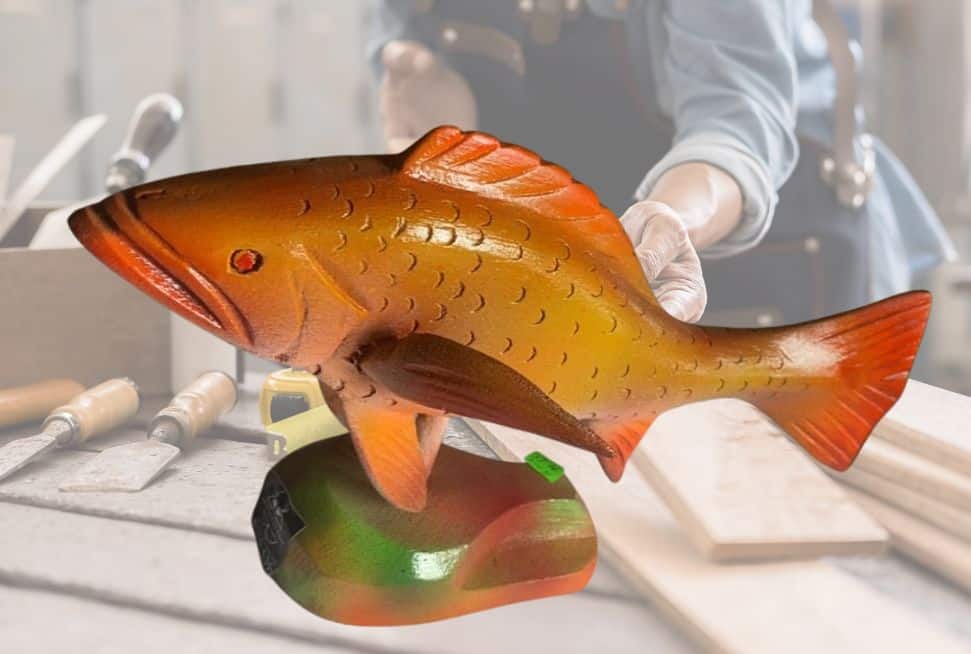
A group of fishermen on Isla Venado is turning discarded and salvaged materials into handmade art, creating a new source of income for local families while keeping the island’s close connection to the sea at the center of the work. The venture, known as Artesanías B&M, makes decorative pieces from wood washed ashore and other recovered materials. The products are inspired by Isla Venado’s culture, landscape, fishing traditions and daily life in the Gulf of Nicoya.
The project is part of a broader push to strengthen sustainable income options in coastal communities, where many families have long depended heavily on fishing. In Isla Venado, that pressure has pushed some residents to look for ways to earn money without leaving behind the identity and knowledge built around the ocean.
Artesanías B&M is supported by the MarViva Foundation and funded by the Blue Action Fund, as part of efforts to promote community projects that bring economic, social and environmental benefits. MarViva said the initiative shows how coastal communities can use creativity and local knowledge to build practical alternatives from the resources already around them.
“Sustainable production alternatives are essential for strengthening the resilience of coastal communities. This initiative demonstrates that creativity, local knowledge, and the responsible use of resources can become real opportunities for economic development while also promoting a culture of sustainability and appreciation for the local environment,” said Melissa Álvarez Barquero, communications manager at the MarViva Foundation.
The project’s pieces are made by hand from materials shaped by time, tides and weather. Instead of cutting new wood, the artisans collect what the sea returns to the coast and transform it into souvenirs and decorative items with a local story.
For the artisans, the work is not only about selling crafts. It is also a way to show visitors the culture of Isla Venado and the value of traditional craftsmanship in a community where the ocean remains central to family life. Pablo Mora Salas, an artisan with Artesanías B&M, said the project grew out of a changing reality for local fishermen.
“That’s why we decided to innovate and turn materials that many people consider waste into handicrafts that generate income for our families. We want to show that coastal communities have the ability to create new economic opportunities without losing their identity or their connection to the sea,” Mora said.
The initiative fits into a larger trend in the Gulf of Nicoya, where community groups, cooperatives, women-led projects and local associations are developing tourism, food, lodging, mangrove tours, responsible fishing experiences and sustainable crafts. These efforts are aimed at reducing pressure on marine resources while keeping more income inside coastal communities.
For Isla Venado, the appeal is clear. Visitors who buy the pieces take home more than a souvenir. They support a local family, help give value to recovered materials and learn about a community trying to adapt without breaking its bond with the sea. MarViva has described this type of community-led development as a way to protect the Gulf of Nicoya while improving the well-being of the people who depend on it. The model links conservation with local income, rather than treating the two as separate goals.
Artesanías B&M lists pieces starting at ₡3,000. People interested in buying the crafts can contact the project at 8649-5393.





