
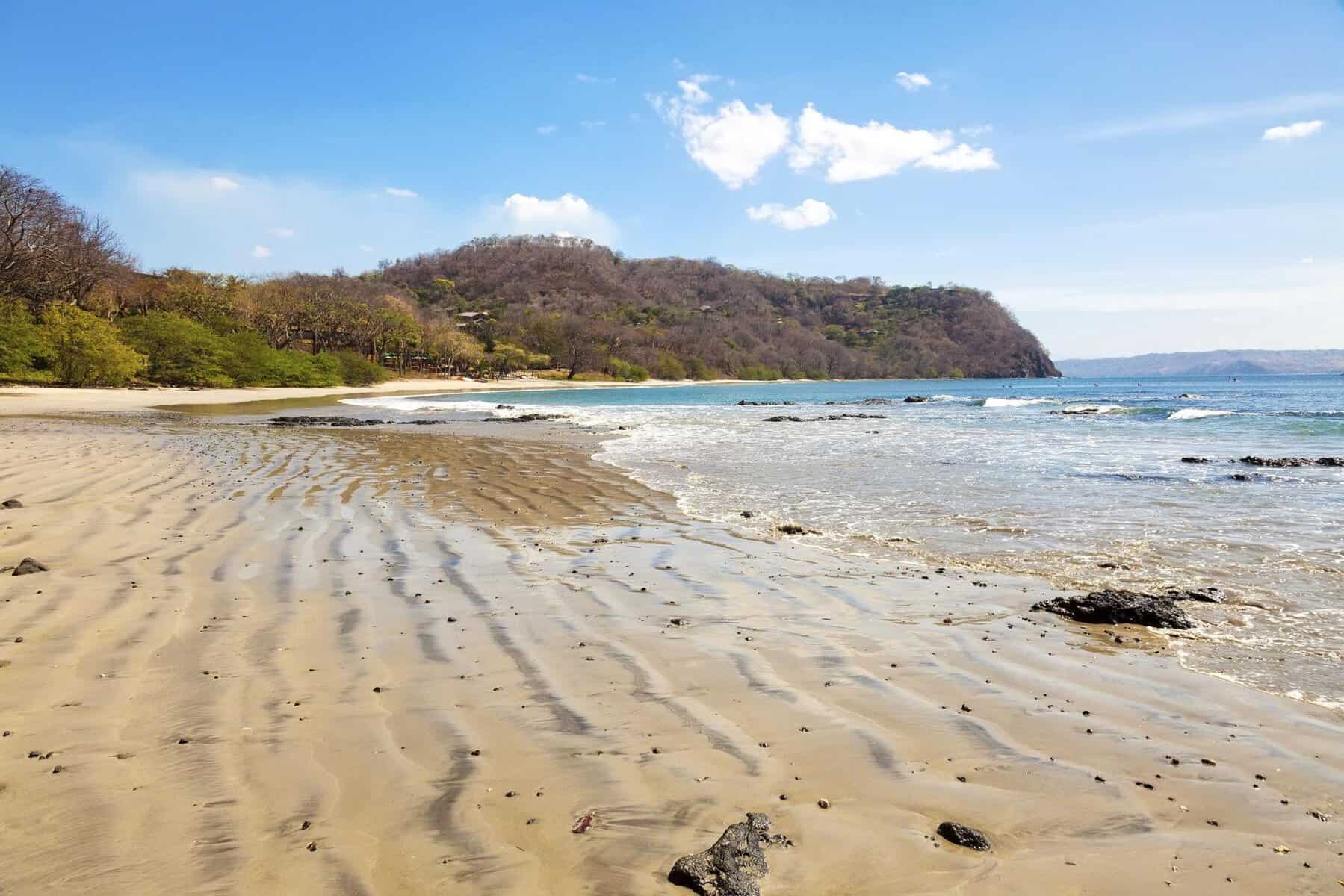
On a stretch of Pacific coastline inside the Golfo de Papagayo tourism zone, an ongoing standoff between developers and environmental advocates reached a new flashpoint this week after the University of Costa Rica’s governing council formally voiced alarm over a government permit allowing the clearing of nearly 750 trees to make way for a luxury resort and residential complex.
The land in question sits in Playa Panamá, in the area of Carrillo, Guanacaste. The university’s concern centers on the planned clear-cutting of 748 trees spanning 22 distinct species, along with the surrounding understory vegetation. The cutting authorization came from SINAC, Costa Rica’s national conservation areas agency, as part of the first phase of a real estate project that includes hotels, residences, sports facilities, and other amenities, all on land that falls under the administration of the Costa Rican Tourism Institute and is classified as part of the nation’s natural heritage.
The university council is pushing for independent technical studies to settle whether the site genuinely qualifies as protected forest under current law, arguing that any decision needs a scientific basis rather than expedience.
The project driving all this is being developed by Enjoy Hotels and Resorts, part of the broader Enjoy Group, a Costa Rican hospitality company with deep roots in the tourism industry. The group traces back to 1973, when its founder began his career as a hotel operator in San José before building an enterprise that today spans hotels, restaurants, infrastructure, and real estate across the region.
It currently runs half a dozen hotel properties domestically and has partnered with major international chains, including a recent agreement to bring additional Marriott-branded properties to Costa Rica, signaling that this is an established commercial player rather than a fringe operator. The Bahía Papagayo development itself is no small undertaking: according to its environmental filing, the project represents an investment north of $925 million, built around a combined residential and tourism complex.
The legal fight over those trees, though, stretches back well before this week’s headlines. The roots go to a legal framework dating back more than 40 years. In the early 1980s, Costa Rica passed legislation establishing the Golfo de Papagayo tourism zone as a special development area, declaring it a matter of national interest and handing the Tourism Institute broad authority to grant land concessions and approve construction within it.
That law is precisely what SINAC leaned on this past spring when it issued the cutting permit, reasoning that because the site falls within this exceptional development zone, it does not meet the legal definition of protected forest.
That reasoning did not go unchallenged. A union activist and an environmental lawyer separately filed constitutional actions months earlier, questioning the entire regulatory model underpinning development in the zone. When SINAC’s cutting authorization arrived this spring, those legal challenges escalated quickly: a Constitutional Chamber magistrate issued an emergency order freezing all tree cutting and construction permits across the entire tourism zone while the underlying case was being decided.
The developer’s own project manager later went to court to argue that Bahía Papagayo should not be bound by that freeze at all, since the company had not used the specific mechanism for shifting density that the injunction was actually targeting.
Then came a notable political wrinkle. Despite the court’s intervention, the outgoing president and his successor publicly defended the tree-clearing plan at a press event in the spring, framing its natural environment as something to protect while still backing the project, an apparent contradiction that drew criticism from environmental advocates.
The most recent twist landed just days ago. Costa Rica’s government issued a new decree stripping out the regulatory provision that had allowed developers in the tourism zone to shift building density between concessioned properties, on its surface an environmentally protective move. But legal observers were quick to note the catch: removing that provision does not actually block the tree cutting itself, since the underlying authority to grant such permits remains intact.
If anything, by eliminating the very mechanism the court’s injunction had been anchored to, the decree may hand the developer grounds to ask the court to lift the freeze altogether. The association representing other concession holders in the zone responded cautiously, saying simply that it was taking note of the change.
Complicating any quick resolution, a separate and independent legal challenge, filed only days before that decree and aimed directly at the original cutting permit rather than the density mechanism, was just accepted for review by the Constitutional Chamber, which has ordered conservation officials to explain themselves. That challenge does not depend on the density rule at all, meaning it survives regardless of what happens with the freeze tied to the now-defunct provision.
As of today, no trees have been cut and no construction has begun. The fate of a project worth nearly a billion dollars now hinges on which of two parallel, and increasingly tangled, court proceedings gets resolved first, and on a deeper, unresolved question the university’s intervention has pushed back into the spotlight: whether a coastal development law written more than 40 years ago should still be allowed to override the country’s modern environmental protections.