

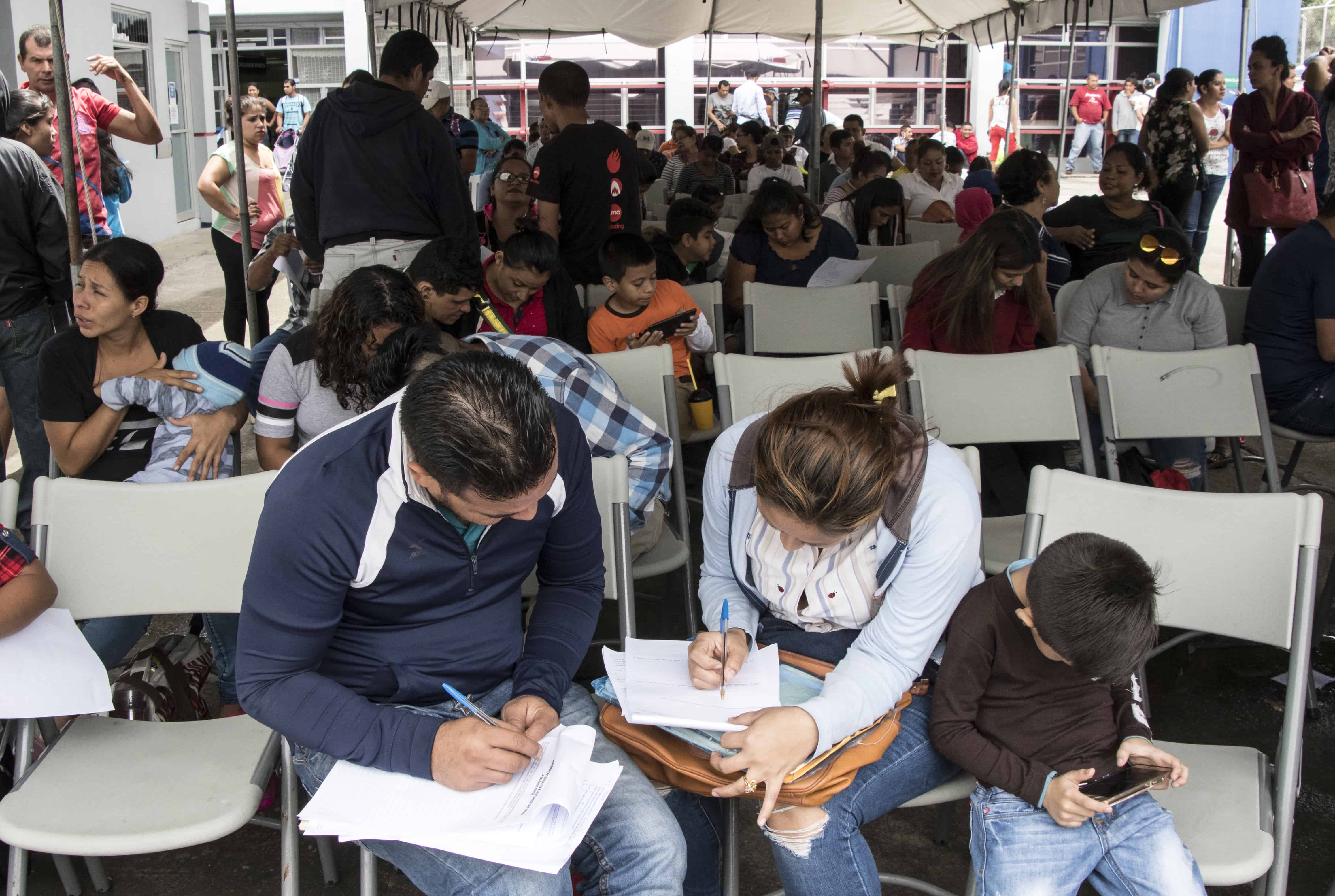
Refugees and asylum seekers now account for about 4.5% of Costa Rica’s population, a sign of how deeply regional displacement has become part of daily life in the country.
By the end of 2025, Costa Rica hosted roughly 233,652 people in need of international protection, according to the United Nations Refugee Agency (UNHCR). Most were Nicaraguans, who made up 76% of the total. The figure places Costa Rica among the main host countries in the Americas when measured against the size of its population.
The main driver remains Nicaragua. Since the political crisis that erupted there in 2018, tens of thousands of Nicaraguans have crossed into Costa Rica seeking safety, work and legal protection. UNHCR says the human rights situation in Nicaragua continued to worsen in 2025, marked by political repression, restrictions on civil and Indigenous rights, and pressure in border areas.
Costa Rica is also receiving people from Venezuela, Cuba, Colombia and northern Central America, but the Nicaraguan flow remains the backbone of our country’s asylum challenge. UNHCR says Costa Rica is both the main destination for displaced Nicaraguans and a transit country for people of other nationalities.
The numbers are striking for a country of just over 5 million people. UNHCR estimates Costa Rica hosted 92% of all asylum seekers and refugees in Central America in 2025. That concentration has put pressure on the asylum system, public services, housing, schools, health care and border communities, especially in the Northern Zone and the southern corridor near Panama.
The issue is not just how many people are arriving. It is how long many remain in legal limbo. Costa Rica’s asylum backlog fell from 217,587 cases in 2024 to 177,971 in 2025, helped by the closure of inactive files and the modernization of the case system. Even so, the pending caseload remains large. UNHCR said the system still faces limited capacity, staffing restrictions and budget pressure, slowing final decisions for many applicants.
That delay matters. Asylum seekers may have permission to stay while their cases are reviewed, but years of uncertainty can limit access to better jobs, stable housing and long-term planning. Costa Rica has tried to ease part of that pressure by allowing many working-age applicants to receive work authorization the same day they formalize an asylum claim.
The government has also moved to create another legal pathway for some people stuck in the system. A new temporary category will apply to people from Nicaragua, Venezuela, Cuba and Colombia whose refugee applications are pending, were declared manifestly unfounded, or were denied, provided they meet other requirements. The measure applies to people who filed refugee claims between June 1, 2014, and May 7, 2026.
The category is scheduled to open in September and would allow approved applicants to live and work legally in Costa Rica for two years, with the possibility of renewal. It is meant to reduce pressure on the refugee system while giving some long-waiting applicants a more stable status.
For Costa Rica, the realization is that migration is no longer a side issue. It affects labor markets, public schools, rentals, health services, border security and national politics. It is also part of Costa Rica’s international identity as a country with a long tradition of offering refuge.
At the same time, the trend has become more difficult to sustain. UNHCR warned that funding cuts in 2025 reduced field presence, community outreach and assistance programs. Those cuts come as Costa Rica continues to receive new claims and as regional policy changes, including tighter northward migration routes and increased returns of people on the move, push more pressure onto countries such as Costa Rica.
The result is a complicated picture. Costa Rica remains one of the region’s most important safe havens, especially for Nicaraguans fleeing repression. But the scale of the refugee and asylum-seeking population is now large enough that our country’s response is no longer only a humanitarian matter. It is a central public policy challenge.





