

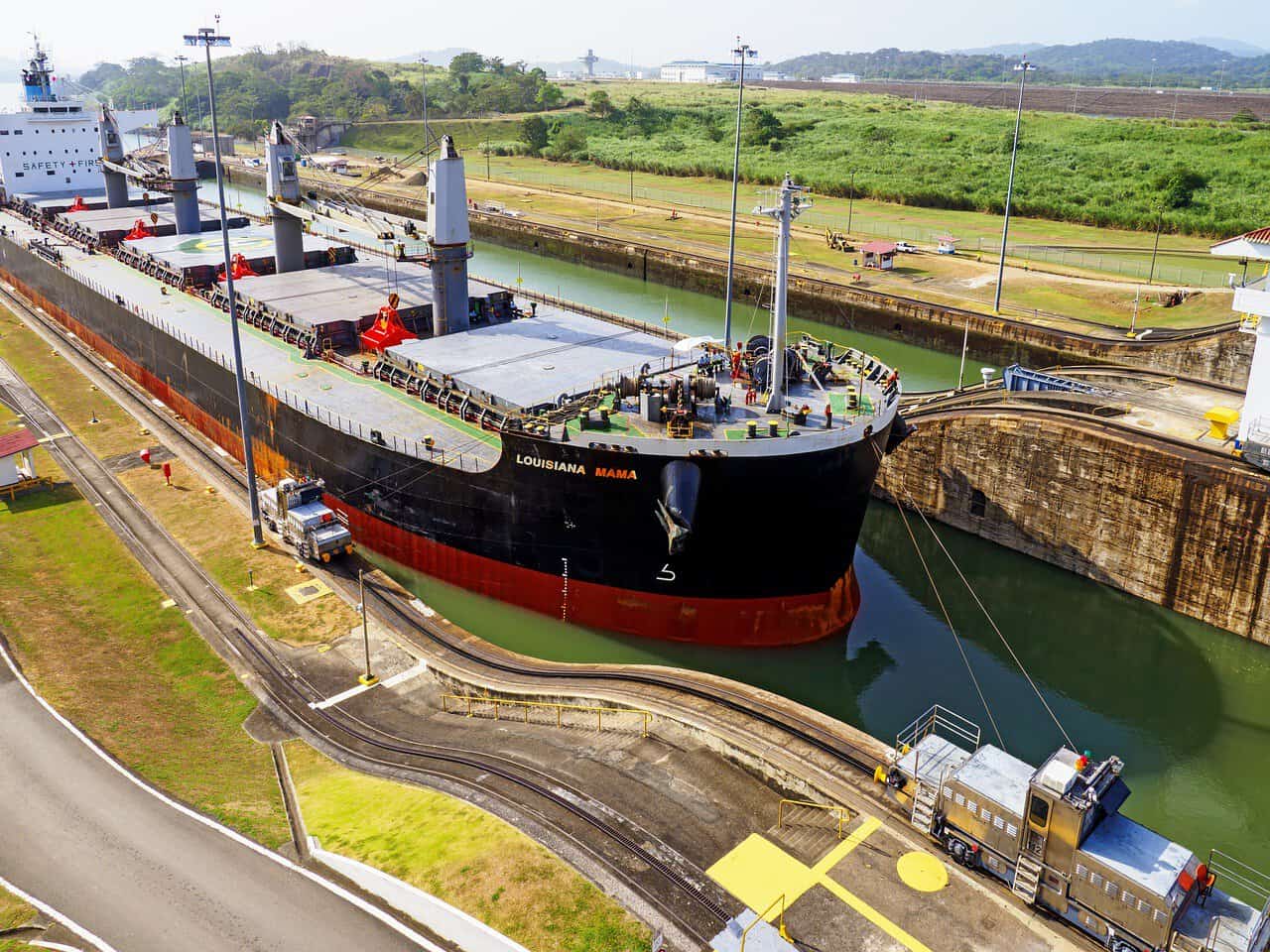
The Panama Canal will allow fewer ships to pass through the waterway beginning in September as a drought linked to El Niño reduces the amount of water available. The Panama Canal Authority said daily crossings will be limited to 34 ships starting September 4. That number will fall again to 32 ships per day on September 15.
About 35 ships were using the canal each day through June, although the waterway can handle close to 40 under normal conditions. The restrictions are meant to save water. The canal’s locks work like water-powered elevators, raising and lowering ships as they travel between the Atlantic and Pacific oceans. Every crossing requires large amounts of fresh water from nearby lakes.
Rainfall between May and August was 34% below the historical average. The amount of water flowing into the canal’s lakes and rivers was 44% below normal, according to the Canal Authority. El Niño, a natural warming of the Pacific Ocean that changes weather patterns, often brings drier conditions to Panama. Canal officials expect the current El Niño to be unusually strong and possibly continue into 2027.
The largest ships, known as Neopanamax vessels, will receive nine daily crossing spaces. The older Panamax locks will initially handle up to 25 ships a day, falling to 23 on September 15. The Canal Authority is also placing limits on how deeply ships can sit in the water. The maximum allowed depth at the Neopanamax locks will fall to 14.63 meters (48 feet) on September 2 and then to 14.48 meters (47.5 feet) on October 1.
This measurement is known as a ship’s draft. When the canal lowers the draft limit, heavily loaded ships may have to carry less cargo to avoid sitting too deep in the water. Fewer crossings and lighter cargo loads could lead to longer waits and higher shipping costs. Companies may also pay more to reserve one of the limited daily spaces or choose a longer route around South America.
The decision marks a change from the Canal Authority’s position in May, when officials said they did not expect to restrict crossings during 2026. The worsening water situation forced the canal to revise that plan. Panama faced a similar problem during the severe drought of 2023 and 2024, when the canal sharply reduced daily crossings. The restrictions caused shipping delays and pushed some companies to use other routes.
Water shortages also affect people living in Panama. The canal’s reservoir system supplies drinking water to more than half of the country’s population, meaning officials must balance the needs of international shipping with those of local communities.Canal officials have already introduced measures to conserve water, including placing two smaller ships in the same lock when possible, reusing water at the newer locks and temporarily reducing hydroelectric power production.





