

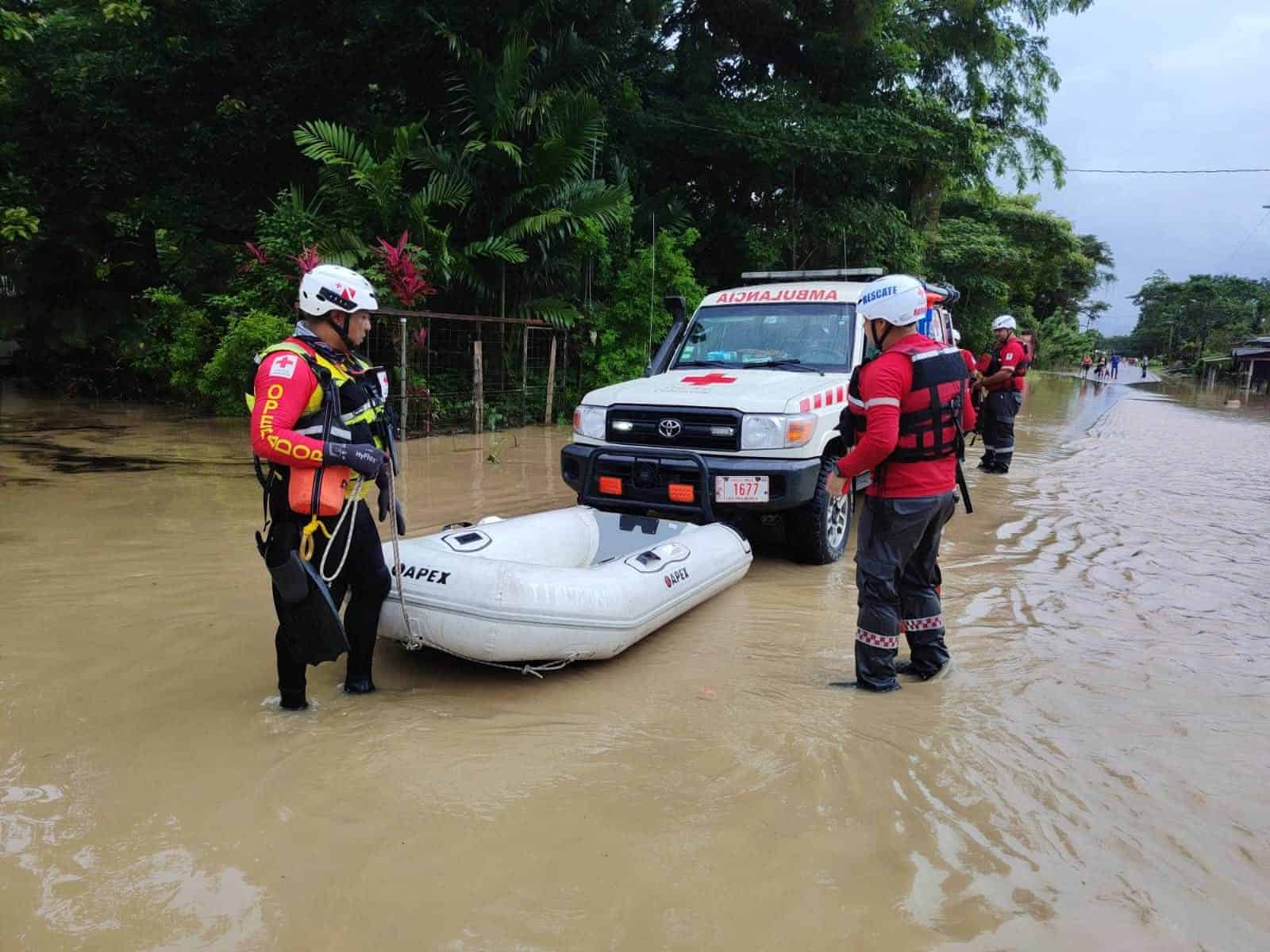
Costa Rica has declared a national emergency in nine areas after days of heavy rain caused floods, damaged roads and cut off several communities.The declaration covers Guatuso, Turrialba, Sarapiquí, Limón, Pococí, Siquirres, Talamanca, Matina and Guácimo. Most are in the Caribbean region and northern Costa Rica, where the worst damage has been reported.
President Laura Fernández confirmed the declaration after the National Emergency Commission (CNE) reviewed damage reports and recommended the measure. In simple terms, an emergency declaration allows the government to move money and hire companies more quickly than it normally could. That can speed up repairs to roads, bridges, water systems and other public services damaged by the rain.
It does not mean normal government rules disappear. Any work paid for under the declaration must be directly connected to the flooding and its damage. More than 700 people remained in emergency shelters as of last night. Some communities have been difficult to reach by road, forcing authorities to use helicopters to deliver food and other supplies.
The rain has caused rivers and streams to overflow, flooded homes and damaged roads across the Caribbean and northern regions. Routes 10 and 32 have been among the major roads affected by landslides or flooding during the emergency. Schools have also been disrupted. The Ministry of Public Education said 145 schools and high schools would remain closed Friday, August 21, while officials check roads, buildings and access conditions.
Guápiles has the largest number of closures, with 85 schools affected. Another 39 are closed in Sarapiquí, 12 in Turrialba, four in Limón, four in the northern border region and one in Sulá. The emergency follows an unusually wet stretch in which eight tropical waves passed over or near Costa Rica between July 20 and August 18. Tropical waves are areas of unstable weather that often bring heavy rain and thunderstorms.
The heaviest rainfall came last August 16 and 17. Parts of the southern Caribbean and Turrialba received up to 360 millimeters, or about 14 inches, of rain within 48 hours. The repeated downpours have left the ground almost completely soaked in some areas. That increases the danger of landslides and flash flooding because the soil can no longer absorb much additional water.
Authorities are now expected to conduct a more detailed count of the damage. Government agencies and municipal officials will then prepare a recovery plan listing the roads, bridges, schools and other public services that need repairs. Those of you in affected areas should continue watching CNE warnings and avoid walking or driving through flooded roads. Water can be deeper or faster-moving than it appears, and roads may have hidden damage underneath.





