
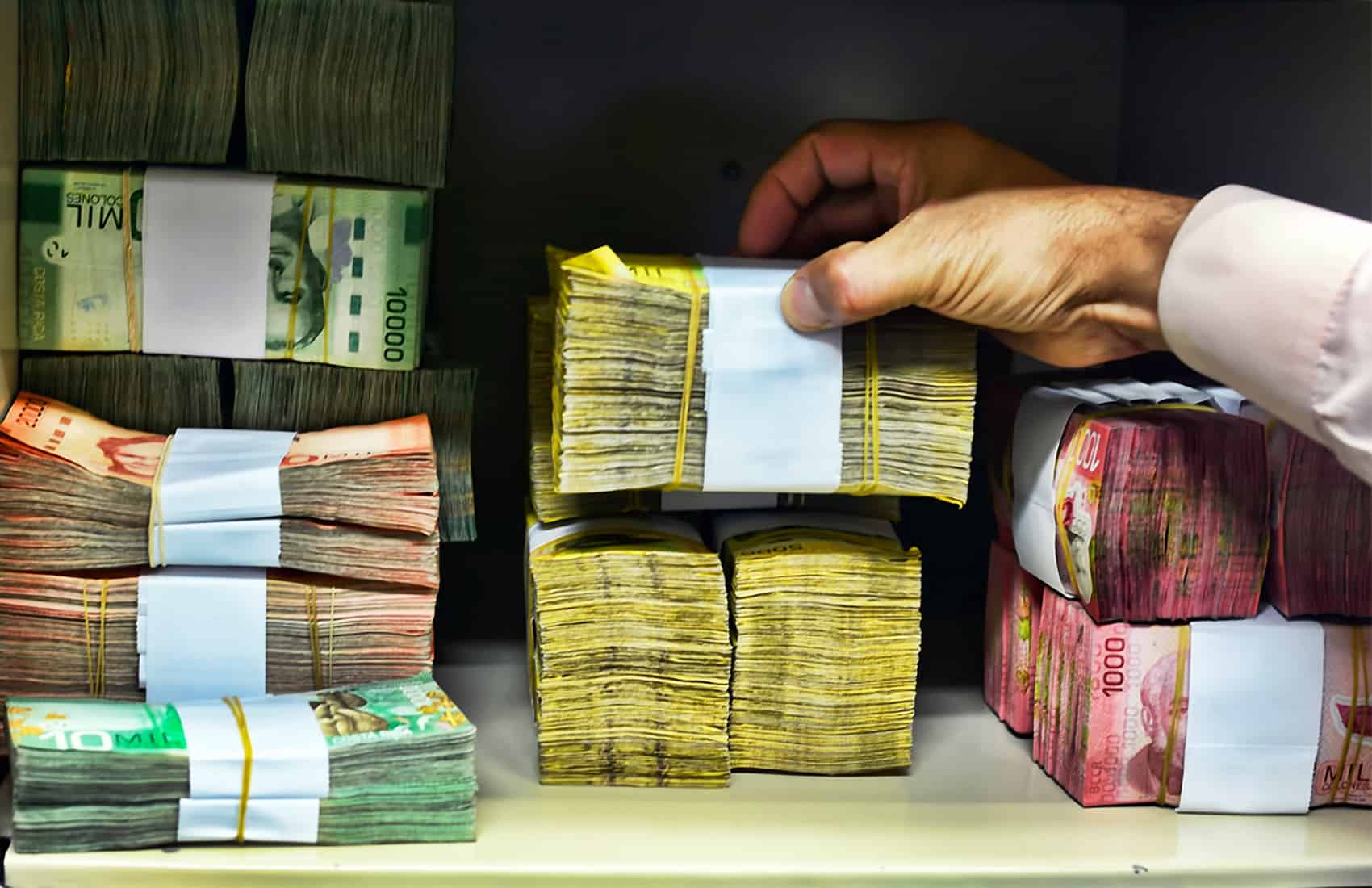
Two years after passing a controversial fiscal-reform project, Costa Rica remains on tenuous financial grounds.
At an individual level, the pandemic and related measures have exacerbated unemployment. Nearly half of Costa Rican workers are unemployed or underemployed, representing tens of thousands more people in that situation compared to 2019.
At a national level, Costa Rica has the third-highest public debt in Latin America, according to a new report from the United Nations Economic Commission for Latin America and the Caribbean (CEPAL).
Public debt — the amount of money a government owes to outside debtors — reached 66.2% of Costa Rica’s GDP, trailing only Argentina and Brazil in the region.
Consequently, the government is spending more on interest payments. According to CEPAL, the amount Costa Rica allocates for interest grew more than for any other Latin American country over the last year.
As a result, Costa Rica has turned to outside financial institutions for loans, which the government says would allow it to renegotiate debts, spend less on interest payments and invest in social programs.
The International Development Bank (IDB) has approved a $250 million loan, but the decision by legislators not to approve the financing before their end-of-year vacation means the country will almost certainly lose access to this money.
Another source of financing is from the International Monetary Fund. In January, Costa Rica will begin negotiations for a $1.75 billion loan over three years from the IMF.
This, too, faces significant internal opposition; earlier this year, Costa Ricans across the country protested the potential IMF deal, because the government had planned to raise some taxes to pay back the loan.
Costa Rica’s new IMF proposal includes fiscal consolidation worth 3.0% of GDP, of which 0.8% would come from new taxes.
The Costa Rican Presidency argues that even if the country can reduce spending, outside financing is necessary.
“In the 1980s, we already experienced a crisis born from debt problems,” a video produced by the government said. It referenced the skyrocketing inflation, devaluation of the colón and poverty that characterized that period in Costa Rica.
But even if Costa Rica does obtain IMF financing, experts say the country will face ongoing debt challenges.
According to U.S.-based Fitch Ratings, the IMF loan “could serve as a policy anchor to support fiscal consolidation and free some additional multilateral funding at lower borrowing costs.” However, without additional measures, it “might prove insufficient to stabilize central government debt.”
“We forecast interest payments will reach 38% of central government revenues in 2020, or 21.4% of general government revenues,” Fitch Ratings says.
As the Legislative Assembly adjourns — delaying most new legislation until the new year — Costa Rica will end 2020 with critical financial decisions unresolved.