
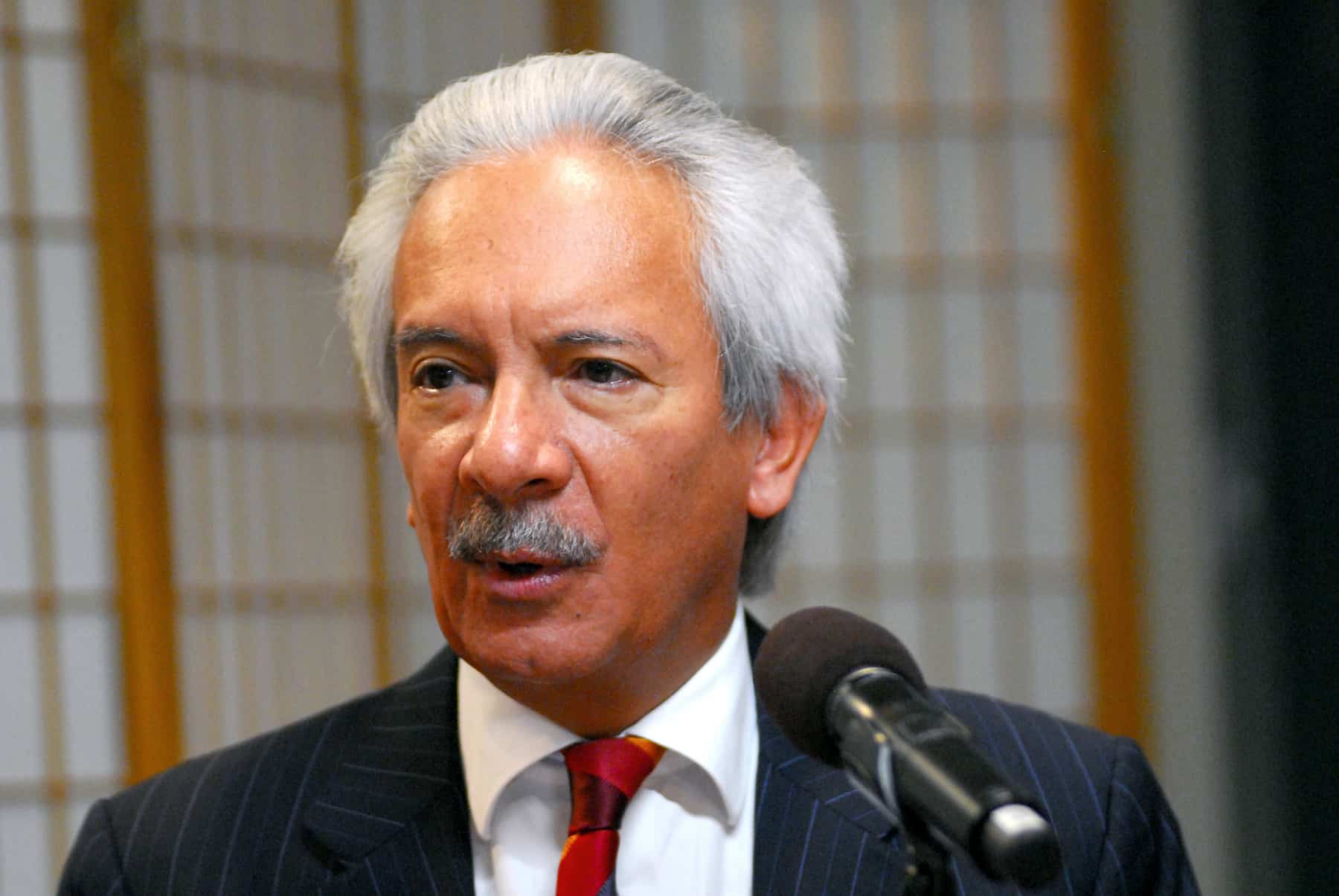
Prominent Guatemalan journalist José Rubén Zamora says the justice system in his country operates like a criminal structure, and he said he was prepared to die defending himself from what he described as fascist cruelty while he was in prison. In an interview at his home in Guatemala City, where he has been under house arrest since leaving prison two weeks ago, Zamora said it will be difficult to dismantle what he called the “pact of the corrupt” between politicians and business leaders that, in his view, manipulates the judicial system to protect criminal activity.
Zamora, 69, was arrested in 2022 after publishing corruption reports in the now-defunct newspaper El Periódico, which he founded, implicating then-President Alejandro Giammattei (2020–2024). In total, he has served about three years in prison, plus nearly six months under house arrest.
Giammattei is close to Attorney General Consuelo Porras, whose term ends in May. Accused of money laundering but described by international organizations as a prisoner of conscience because of his reporting, Zamora said the ongoing judicial elections to renew key institutions such as the Public Prosecutor’s Office are unlikely to do more than slightly curb the power of that network.
Q: How do you see the possibility of going back to prison?
A: I see it as very real. I’ve been preparing myself so that, if that happens, I’m ready. I feel that sending me back does more damage to the judicial system, but if that is my contribution so that the world realizes that here we have a narco klepto dictatorship, above all a judicial one, then I’m happy to go.
Q: Do you think these elections can defeat what is known as the pact of the corrupt?
A: You might achieve a precarious balance and get some breathing room, but if there is no refounding of the state, there will be a regression. In two years, when the social-democratic President Bernardo Arévalo finishes his term, it is most likely these “little radicals” could return. But it is good for them to know that the great majority of Guatemalans are not afraid of them.
Q: What do you think is the intention of the attorney general, sanctioned by the United States and the European Union, in seeking reelection or being elected a magistrate of the Constitutional Court?
A: She needs immunity, but she has an uphill battle. We already saw the madness they came up with during the election that Arévalo won, when they invented an alleged fraud. I imagine they’ll do something like that.
Q: Do you hold any resentment toward the attorney general and those behind your cases?
A: No. I think that to straighten out justice, we will have to prosecute them criminally. And I’m sure it won’t be only me. Others who have suffered things, with or without bitterness, we will keep going after them.
Their behavior is frenetic, hysterical, full of hatred, trying to stigmatize. We have only seen that with the Nazi fascists. They have been on the verge of crossing the line in this ruthless persecution, but it is to destroy you and assassinate you civilly, your honor, and to annihilate, with enormous pleasure, your presumption of innocence, to destroy your assets, your family. They can only be sick. They have behaved like a criminal structure.
Q: What was the hardest part of prison?
A: In the first days, about 40 people showed up with logs and were hitting the door. They said, “We’re going to break this son of a bitch’s ass” (kill him). So I pushed the bunk beds together, climbed up there, piled everything I could. And I stood there with a broom. I said, even if I’m the first one, I’ll give a couple of broom whacks. I was prepared to die there.
Q: How is your health?
A: Mentally I’m fine. I’ve always had a very good memory. The impact was so strong at the beginning (he lost about 20 kilos, editor’s note) that they brought me a written diary and I said, “Who is that man? He looks like a skull.” It was me.
Q: Why didn’t you choose exile?
A: They wanted to say I was a criminal and that’s why I fled. So I stayed, and I would only leave definitively or partially the day my honor is categorically cleared. I’m innocent. They haven’t proven anything against me.
Q: What did it mean to close El Periódico?
A: I always sought an independent, truthful, irreverent outlet, capable of taking risks if it made sense, even the risk that they could kill you. I saw it as an agent of change. We had to understand the rules of the game and change them.
I felt it happened so fast, the closure for economic reasons while I was imprisoned. It was such a short agony. I felt like they ripped out my brain and my heart without anesthesia, but I got through it.