

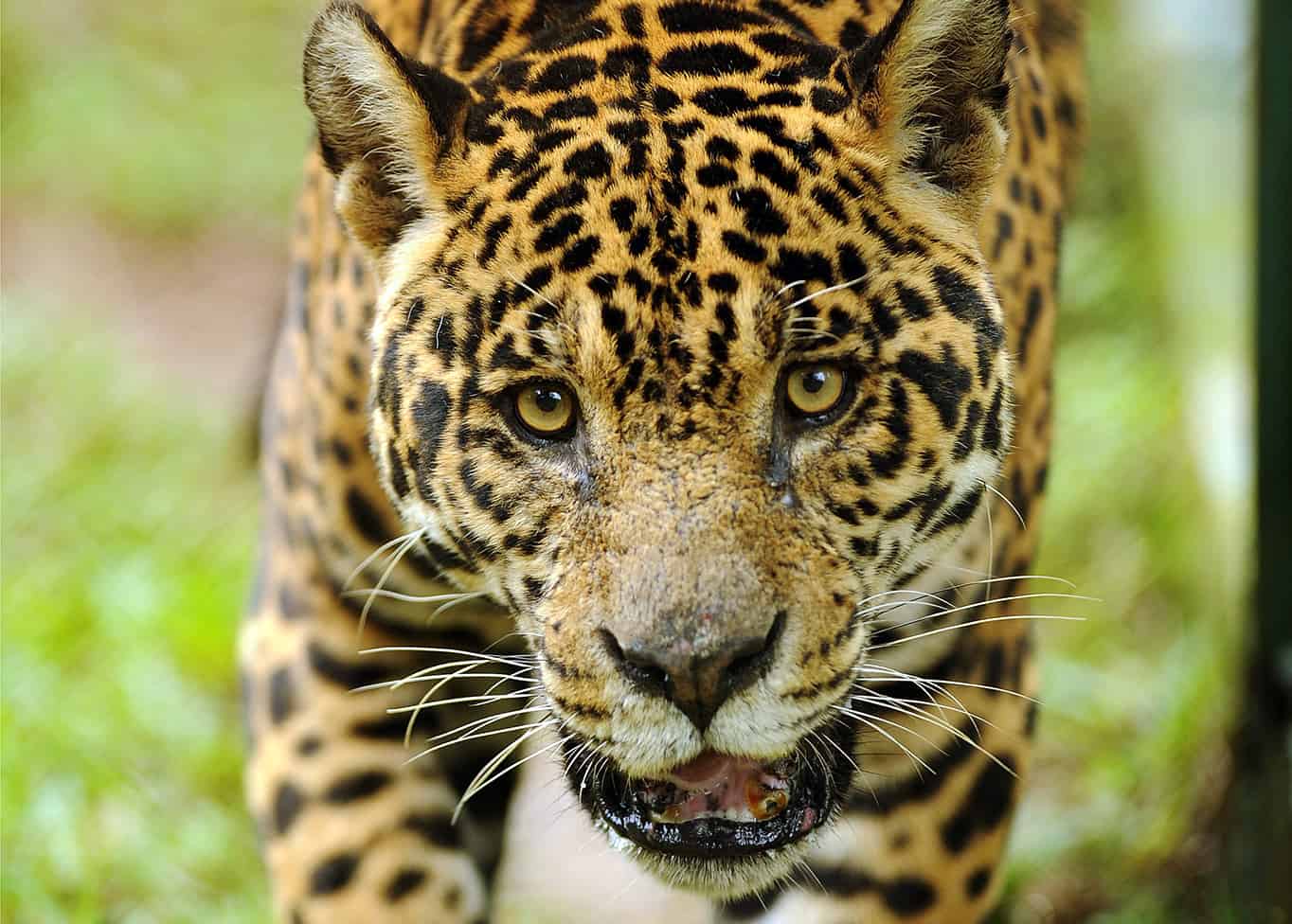
An increasing number of farms in Panama are taking steps to reduce jaguar attacks on livestock, showing that coexistence between people and these American big cats is possible, a UN agency said Friday. The jaguar (Panthera onca) is a prominent figure in Maya and Aztec mythology, but many farmers kill them after an attack on their cattle.
Ninety-six percent of jaguar deaths in Panama from 1989 to 2019 occurred after livestock attacks, according to the NGO Fundación Yaguará. The jaguar’s prized pelt also made it a target for poachers, causing its population to fall by 20% to 25% since 2000, according to the International Union for Conservation of Nature (IUCN).
“Jaguar conservation is not only about protecting an iconic species; it also involves safeguarding and restoring critical ecosystems, and improving water and biodiversity management,” said Juan Bello, regional director for Latin America and the Caribbean at the UN Environment Programme (UNEP).
Fundación Yaguará, the Global Environment Facility (GEF), and UNEP run a program to “reduce conflicts between communities and wildlife” in Panama.
Through this innovative project, many ranches have adopted measures to reduce livestock attacks and avoid reprisals against jaguars, demonstrating that coexistence is possible. Measures include installing electric fencing, strategically placing pastures, and changing cattle rotation patterns, among others.
There is also “participatory community monitoring” of jaguars and their prey using camera traps. To this end, farmers and members of the Emberá and Guna Yala Indigenous communities have been trained.
Since 1975 the trade in jaguars has been banned worldwide, but illegal trafficking of skins, claws, and teeth continues. The jaguar protection program in Panama will be presented at the Forum of Environment Ministers of Latin America and the Caribbean next week in Lima.
The forum will take place amid concerns about shrinking international funds for environmental protection and after U.S. President Donald Trump, in his speech to the UN General Assembly, called climate change “the greatest hoax in history.”





