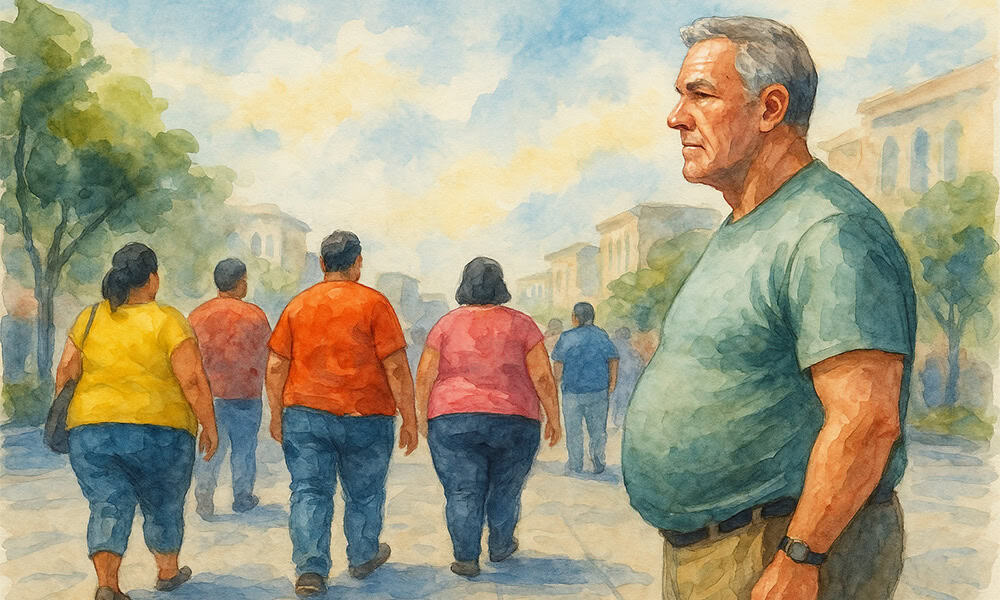
Recent studies claim that about one-third of adults in Costa Rica are considered obese and another third overweight. Which means about two-thirds of adults are carrying too many kilos. It is a serious enough problem that the Costa Rica Department of Health has declared obesity as a chronic disease.
I am not sure what to make of these numbers. Certainly there are more overweight people than when I first arrived here 35 years ago. My first impression in 1990 was that Costa Rica was the most physically fit place I had ever visited. Everyone looked to be at their ideal weight.
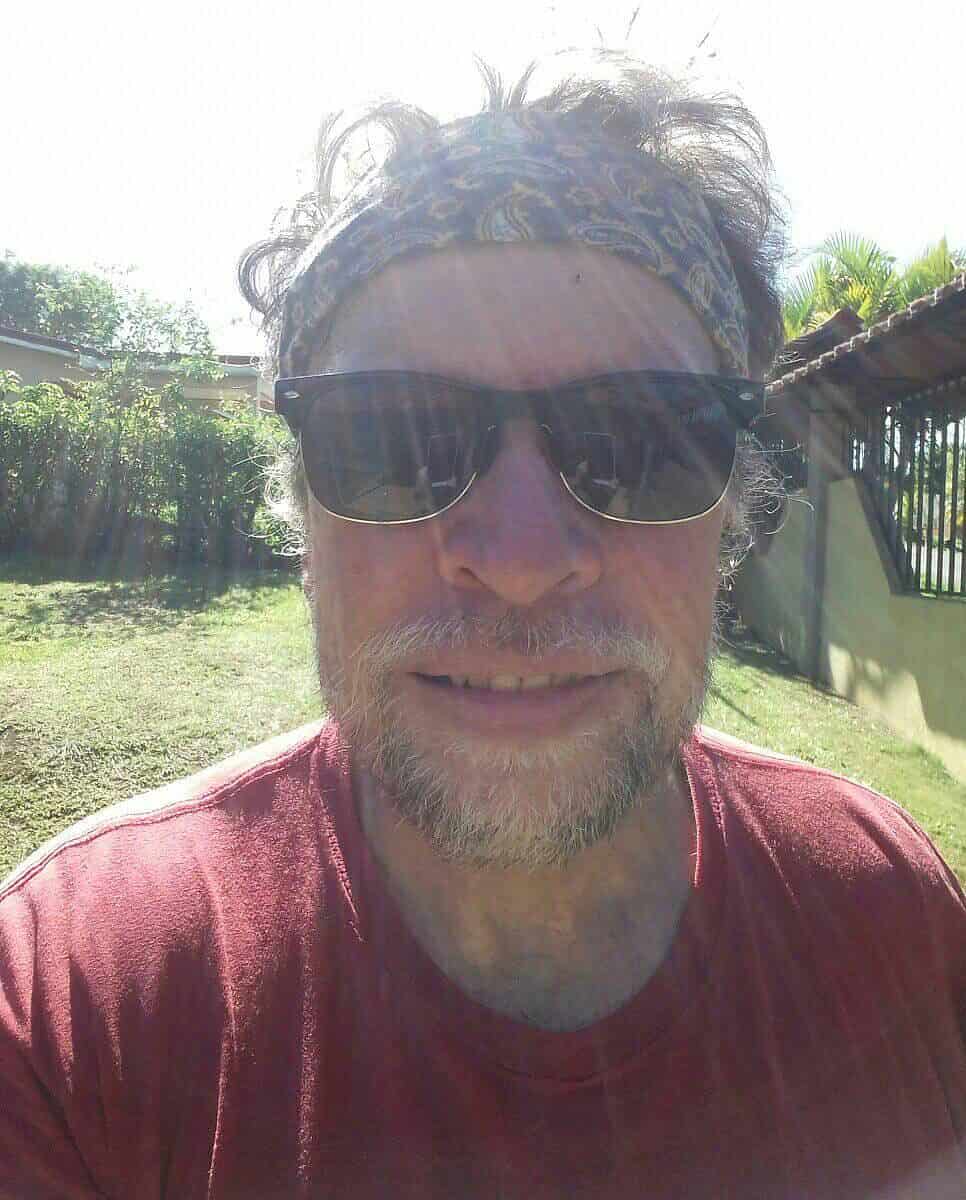
Fast forward to today. Ticos are on average larger than three decades ago. I remember walking down a main street in San José during early morning pedestrian rush hour and being able to see over the heads of everyone in front of me. I am a bit over 6 feet/1.85 meters tall and weigh 220 pounds/100 kilos. Now, two of my nephews are taller and heavier than me, and several others are near to me in size. A few of my younger kin are what I would consider overweight, though none are obese.
I am not sure of the metrics used to differentiate between the two. For me, an overweight person is one who with a few months of diet and moderate exercise can shed the excess pounds and get back to fighting weight. An obese person is sometimes obese due to medical reasons, but the majority got there by the basic route of too many calories and not enough exercise, over a prolonged period of time. Many seem to have crossed the Rubicon into a permanent (and shortened) life of plus-size, 5XL clothing. They would need a year or more of an intense diet/exercise program to get healthy.
If the agency in charge of determining who is overweight or obese is using the BMI (body mass index) to measure, then I have a hard time accepting their data. The BMI method uses a rigid system of height/weight parameters, with no seeming regard for people who have weight trained for years and replaced fat with muscle. According to this system, I am obese, when in reality I am in excellent physical condition for my age. I don’t know how many obese seniors could do a hilly 3-hour, 50 km bicycle ride like the one I did this past weekend.
I cannot argue with the conclusion that Costa Rica is unhealthier than 3-plus decades ago. There are more squat wide bodies and expanded waistlines than before. The main culprit is likely diet, as access to fast and highly processed foods is easier than ever. The healthy blue zone diet has been replaced in many cases by donuts and double cheeseburgers. Add the fact that Costa Rica is and always has been among the highest per capita in sugar consumption and you have the ingredients for a heavier, unhealthier populace.
It’s all relative, because the obesity I see here is not as severe as I see in the US, where adults with mobility issues due to obesity number in the millions. Even those of my contemporaries without mobility issues, middle-aged boomers, seem to flaunt their big bellies as a sort of cultural status symbol.
Both up there and down here, there is more of a recent focus on the preventive philosophy, that good health and good physical shape is not something you get through a pill or some modern pharma miracle, but instead through eating sensibly and getting plenty of exercise. It is a simple formula, but one too often unfollowed.