

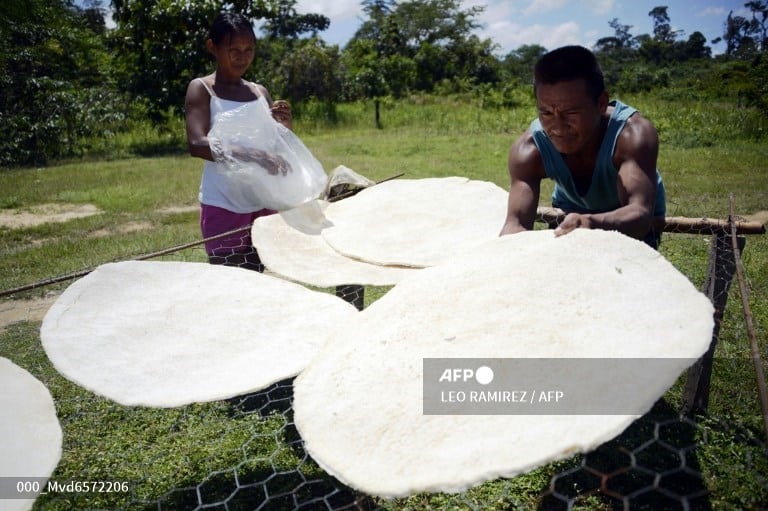
Casabe, an indigenous flatbread made from cassava root, has recently been recognized by UNESCO as part of its Intangible Cultural Heritage list. This acknowledgment follows a collaborative nomination from several Caribbean nations, including Venezuela, Cuba, the Dominican Republic, Haiti, and Honduras.
This centuries-old staple is larger than traditional tortillas and is celebrated for its unique crispy texture. The preparation of casabe involves grating the cassava root, pressing it to remove excess moisture, and then cooking the resulting dough on a hot metal surface. The final product can vary in color from white to golden brown, depending on the cooking process and the specific variety of cassava used.
Traditionally, casabe has played an essential role in Caribbean cuisine, but its appeal is now extending beyond cultural boundaries. With a growing emphasis on gluten-free diets, casabe is becoming increasingly popular in health-conscious markets. Its versatility allows it to complement a wide range of dishes, including meats, vegetables, and cheeses. Additionally, casabe is being creatively incorporated into desserts, showcasing its adaptability in contemporary culinary practices.
Gabriel Atiles Bido from the Dominican Gastronomy Academy notes the historical perception of casabe: “Europeans initially dismissed casabe as tasting like sawdust,” he explains. However, as wheat bread proved impractical in the humid Caribbean climate, casabe became a staple food source. This led to the New World saying: “In the absence of bread, casabe,” highlighting its importance in local diets.
The flatbread holds special significance for the Garifuna people, descendants of Afro-Caribbean communities residing along Honduras’s coast. They incorporate casabe into their seafood dishes, celebrating its cultural heritage. In Venezuela, various coastal and plains communities continue to uphold strong traditions of casabe production.
“I was born with casabe; my parents made casabe,” shares Maritza Zambrano, a 57-year-old vendor in Caracas who sells this beloved bread at local markets. She reminisces about her childhood when casabe was a fundamental part of their diet. While Spanish conquistadors referred to it as “Pan de Indias” (Indian bread) in Cuba, its popularity has waned in some regions.
As interest in traditional foods grows globally, Venezuela is now pursuing similar UNESCO recognition for its iconic arepa, aiming to preserve and promote its culinary heritage alongside that of casabe.





