
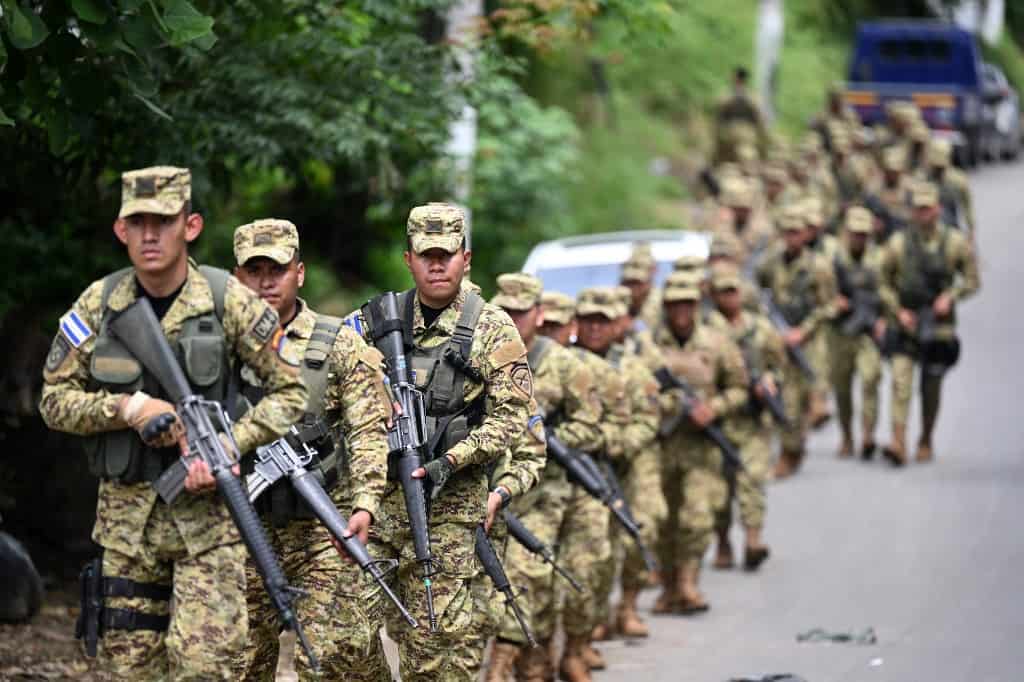
El Salvador’s two-year state of emergency has created a spiraling human rights crisis, Amnesty International said Wednesday, calling the country’s war on gangs “disproportionate”.
In March 2022, President Nayib Bukele launched a crackdown on gang violence, imposing a state of emergency that suspended the need for arrest warrants, among other civil liberties.
While he is widely credited with slashing homicides to the lowest rate in three decades, his tactics have also prompted outcry about human rights violations and lack of due process.
Under the emergency provision, authorities have detained about 78,000 people, according to government figures released Tuesday. Many of them have been locked away in a prison that Bukele had specially built.
“Reducing gang violence by replacing it with state violence cannot be a success,” Amnesty’s Americas director Ana Piquer said in a statement.
As of February, there have been 235 deaths in state custody and prison overcrowding stands at 148 percent, according to Amnesty. Citing a local rights group, it also said there were 327 cases of enforced disappearances.
As Bukele begins his second term with no sign of the emergency provision being lifted, the rights group warned the situation looks set to worsen.
“If this course is not corrected, the instrumentalization of the criminal process and the establishment of a policy of torture in the prison system could persist, leading to an increase in the already alarming figures of due process violations, deaths in state custody and the precarious situation of persons deprived of their liberty,” it said.
Bukele was re-elected with more than 80 percent of the vote in February. On Tuesday, Minister of Justice and Security Gustavo Villatoro pledged there would be no let up in the government’s campaign against the gangs, and promised to “eradicate this endemic evil.” “This war against these terrorists will continue” he said on state television.
El Salvador was once considered one of the most violent countries not actively at war. Last year, the murder rate nosedived, falling to 2.4 per 100,000 inhabitants.