

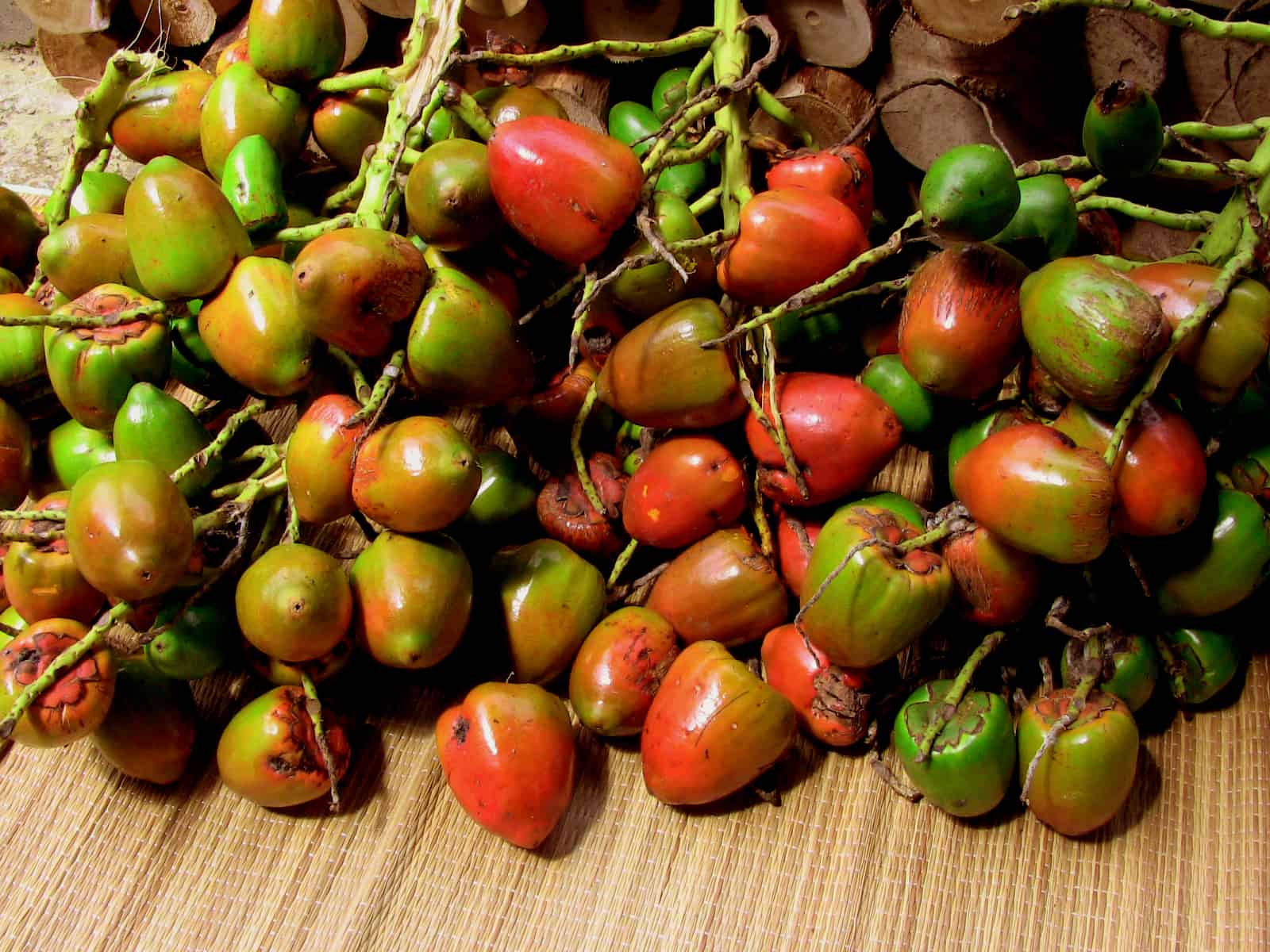
Visitors to Costa Rica during the rainy season will come across the pejibaye harvest in local markets. This unusual fruit comes from a tropical palm, often called peach palm in English, and has a starchy, orange mesocarp or midsection that is edible when cooked.
The fruit is boiled in salted water and peeled, and the seed is removed before eating. The texture and flavor of the cooked pejibaye has been compared to dry squash. The fruit halves are often filled with mayonnaise, ketchup or sour cream; most pejibaye vendors offer cooked pejibayes, which you’ll see in steaming trays in carts or market stalls, so give them a try.
Indigenous peoples highly esteem pejibaye as a food crop, and today it are considered one of the most nutritional foods on the planet: The pejibaye is a good source of carbohydrates, proteins, vitamins A, B1, B2, B3, and C, as well as minerals calcium, phosphorus, and iron.
The palms that produce pejibayes have another gourmet harvest – they also produce new vegetative offshoot palms, which can be harvested for heart of palm. The palm heart is excellent raw or cooked, served in salads or prepared with eggs and vegetables in a casserole. This useful palm is indigenous to Amazonian areas of Colombia, Ecuador, Peru and Brazil, but has been cultivated and distributed since ancient times throughout the neotropics. Today, Costa Rica is a major producer of pejibaye palms.
Local gardeners who have plenty of space to plant can take advantage of growing these valuable palms. The photo is from a homegrown pejibaye harvest. Local nurseries often offer spineless pejibaye seedling palms, or you can try your luck starting them from seed:
Tips on Planting a Pejibaye Plant
This crop is not recommended for small home gardens, due to its spiny fronds. Plant the seeds in plastic nursery bags five centimeters deep in rich potting soil. Keep them watered and shaded until they germinate, then slowly move them into the sunlight. Transplant them to permanent sites before they become root-bound (around six months).
Pejibayes do well on a wide range of soils, but grow best with applications of manure composts and soil amendments. New varieties are now offered that do not have as many spines and are much easy to manage. The fruits begin to appear in five to seven years and can be harvested with long bamboo poles.
Once you’ve grown your own pejibayes (or picked some up at the market), how can you prepare them at home? Some folks love cooked pejibayes and others don’t find them very appealing, but here is a gourmet pejibaye recipe the whole family will enjoy:
How to Make Creamed Pejibaye Soup
Peel a dozen cooked pejibayes and blend them in two batches with the following ingredients to your own taste: onions, garlic, curry to taste, and about eight cups good soup stock or milk. Simmer the finely blended soup and add finely chopped, fresh cilantro as a garnish to each bowl. It’s a wonderful warm meal on a chilly, rainy tropical afternoon.
For more information on tropical gardening – naturally – visit the New Dawn Center blog
This article first appeared in 2014





