

Recently there’s been a lot more interest in the benefits of natural vinegar, and for good reason. Naturally fermented vinegars have many beneficial properties that improve and protect your health.
According to the Journal of Food Science, vinegar’s therapeutic properties include antibacterial activity, reduced arterial pressure, an antioxidant boost, reduced effects of diabetes, and cardiovascular illness prevention.
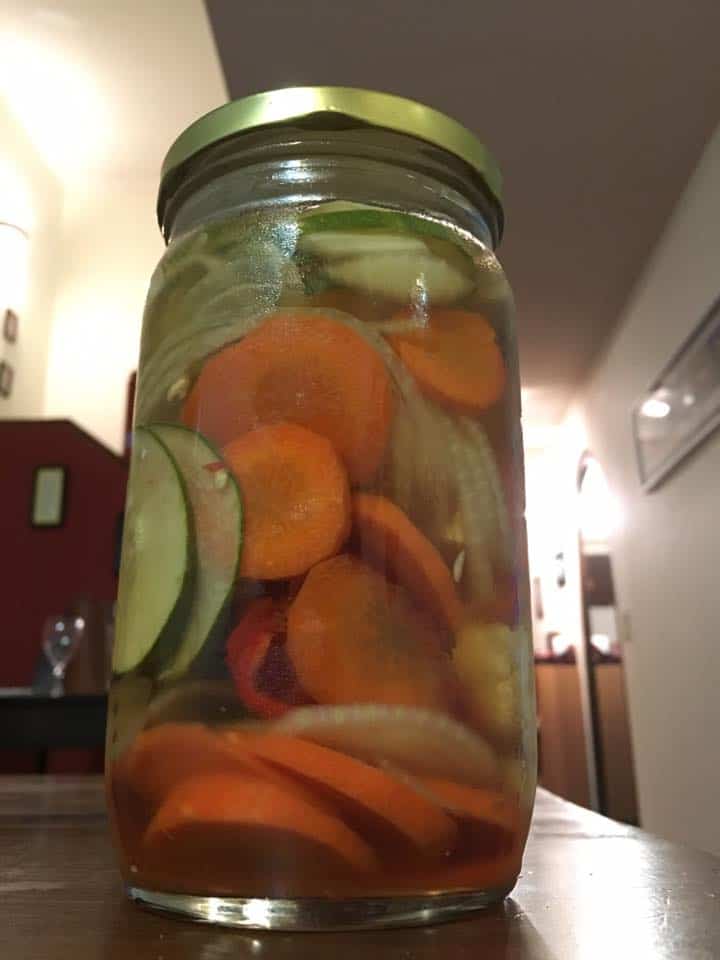
In Costa Rica, an ideal way to enjoy natural vinegar is in a traditiona “chilera” (or “chilero,” depending on whom you ask). Many families still make this popular recipe with vinegar made from the banana called “guineo negro,” along with hot and sweet chiles, onions, cauliflower, and other available vegetables you may have from the garden.
Lots of Costa Ricans enjoy this delicious condiment on most of their meals. However, homemade chilera is slowly being replaced by commercial products, like mustard, ketchup and hot sauce to name a few. Unfortunately, most of these products don’t contain natural vinegars, but have synthetic vinegars that are nutritionally inferior.
For families that have space to plant, it is very easy to grow some guineo negro bananas at home to make natural vinegar. The name comes from the Islands of Guinea where these varieties were first shipped by the Spanish to the New World tropics. Hijos or shoot cuttings are easily found in many regions of the countries. Check your neighbors and local nurseries. Farmer’s markets often carry guineo negro bananas and “vinagre de guineo negro.”
For your recipe book, here are the steps to make this natural banana vinegar. By the way, you can make vinegar from any type of banana, but they are often too sweet for that sour vinegar taste we like. So, you will need a raceme of mature guineo negro bananas and a 2-3 gallon plastic bucket with a good lid.
Now look for a 1 1/2 inch nail, which can be carefully nailed into the outside of the container 1 inch from the bottom. Make sure that the nail is tight and doesn’t drip. If it drips, look for a bigger nail that fits tightly.
Now peel the bananas and mash them very well in the bucket with your hands. You should not add water. Simply place the lid on the bucket and place it in a dark and cool place. After the first week, the pulp of the bananas will float to the top and the liquid remains in the bottom of the pail.
During the following week, the liquid begins to ferment and begins to change to vinegar. In the third week the vinegar is ready, although the longer you wait the more mature the flavor.
Now pull the nail and let the vinegar pour out into a container. The finishing step it is to filter the vinegar and to bottle it.
Now we can use the vinegar to make chileras. Here is a recipe for a chilero that’s easy to make: you will need carrots, cauliflower, onions, garlic, chayote, hot and sweet chiles and almost any other vegetable that you like. Use hot chiles to your taste. Parboil the vegetables separately for a few minutes (except the onion, the garlic and chiles), then place them in cold water immediately. Next, put the vegetables in a glass jar along with the vinegar, onions, garlic and chiles; add salt to your taste.
Place the lid on your chilera and allow it to sit several days before using. Then place it on the table for the family to enjoy, while receiving the probiotic benefits for their health. Everyone will love those pickled vegetables. We use them in salads as well, and sometimes have a hard time keeping up with the demand.
If you are in San Isidro del General on Thursday, you can visit our local farmer’s market. There you will find stands that have guineo negro bananas, and you’ll find chilera at our new health stand Fuente del Bienestar. Nos vemos.
Read more of Ed Bernhardt’s monthly Home Gardening columns here.





