

Nearly 3,000 Cuban migrants in Costa Rica still have no way to legally reach the United States after an emergency meeting of Central American foreign ministers in San Salvador ended Tuesday without an agreement.
Despite the support of other Central American Integration System (SICA) member states at the meeting, the proposed “humanitarian corridor” through Central America was defeated after Nicaragua remained the lone holdout by refusing to offer safe passage to Cuban migrants, according to a statement from the Costa Rica Foreign Ministry Tuesday evening.
The meeting in San Salvador brought together foreign ministers from the SICA member states – Panama, Costa Rica, Nicaragua, Honduras, Guatemala and El Salvador –as well as Mexico, Colombia, Ecuador and Cuba, to discuss solutions to the Cuban migrant crisis that has been building in Costa Rica since the dismantling of a human smuggling network here on Nov. 11.
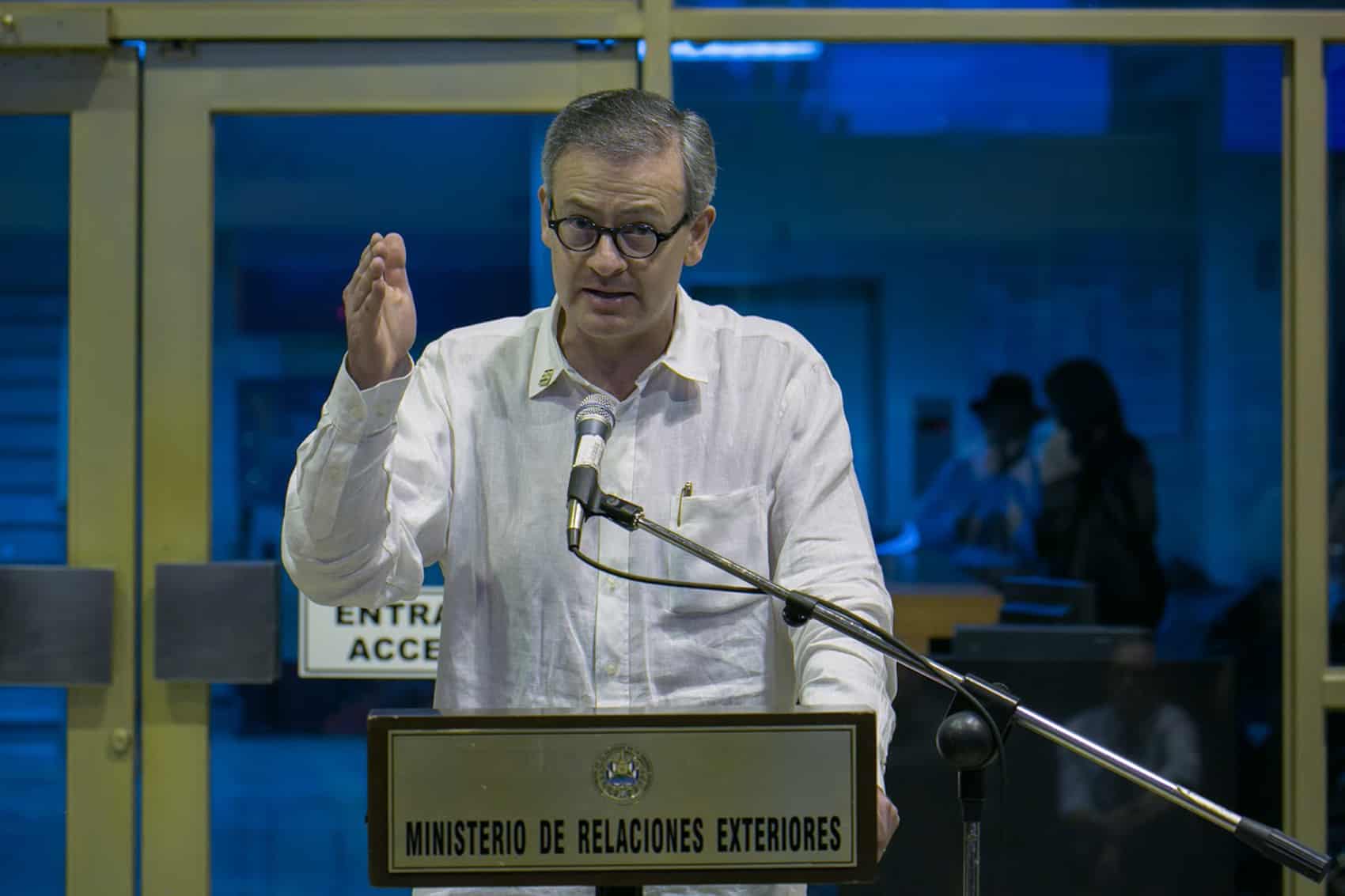
Costa Rican Foreign Minister Manuel González had blistering words for Nicaragua’s “intransigence” at the meeting.
“I have to say it like it is. Today SICA was wounded and the one that did it should take responsibility. It is unacceptable to toy with the pain of others,” González said.
“It’s ironic that Nicaragua comes here to talk and defend Central American migrants and then blocks a reasonable solution when it has not even addressed the migration of thousands of Nicaraguans to Costa Rica for decades,” the minister added.
Earlier in the day, Nicaraguan Foreign Vice Minister Dennis Moncada read the country’s position from a statement after the first round ended without a solution.
“Nicaragua maintains its position that it should not be pressured into legitimizing illegal [immigration] policies” and “demands the Costa Rica government take the necessary measures to remove from our border all” Cubans, Moncada said.
Moncada went on to echo criticisms made by Cuban President Raúl Castro against the U.S. immigration policy that favors Cubans. The United States “has a responsibility to correct and change the current crisis,” he said, “accepting once and for all … a new era of dialogue and respect in its relations with Latin America and the Caribbean.”
Costa Rica’s González called for the meeting after the Nicaraguan army used tear gas and truncheons to turn back several hundred Cubans who tried to cross the border at Peñas Blancas on Nov. 15. Costa Rica started issuing temporary transit visas to the migrants after its decision to briefly close its southern border to the migrants between Nov. 11 and Nov. 14. Unable to pass, the number of migrants continues to mount without a way forward.
Quiero traer estas palabras de angustia a esta Conferencia Episcopal de América Latina pic.twitter.com/zBbutACPgT
— Luis Guillermo Solís (@luisguillermosr) November 24, 2015
Meanwhile, in San José, President Luis Guillermo Solís stopped in on a meeting between Central American bishops from Panama, Costa Rica, Nicaragua, Honduras, El Salvador and Guatemala. The bishops signed a letter supporting the “humanitarian corridor” proposed by Costa Rica. Central America is no stranger to the plight of migrants crossing borders illegally, the bishops said in their letter, calling for the safety of the Cuban migrants as they travel to the U.S.
The letter called for an “immediate solution” to the migrant crisis, saying that the humanitarian corridor would “protect them from mafias that traffic and take advantage of their vulnerability when they pass through our lands as irregular migrants.”
According to immigration authorities nearly 300 Cuban migrants continue to arrive at Costa Rica’s southern border with Panama every day. Leading up to the talks Tuesday, Costa Rican emergency organizations announced they would establish three new shelters designed to house an additional 470 Cuban migrants. As of Sunday, 1,996 Cuban migrants were staying in 11 different shelters in La Cruz, Upala and Liberia.
AFP contributed to this report





