

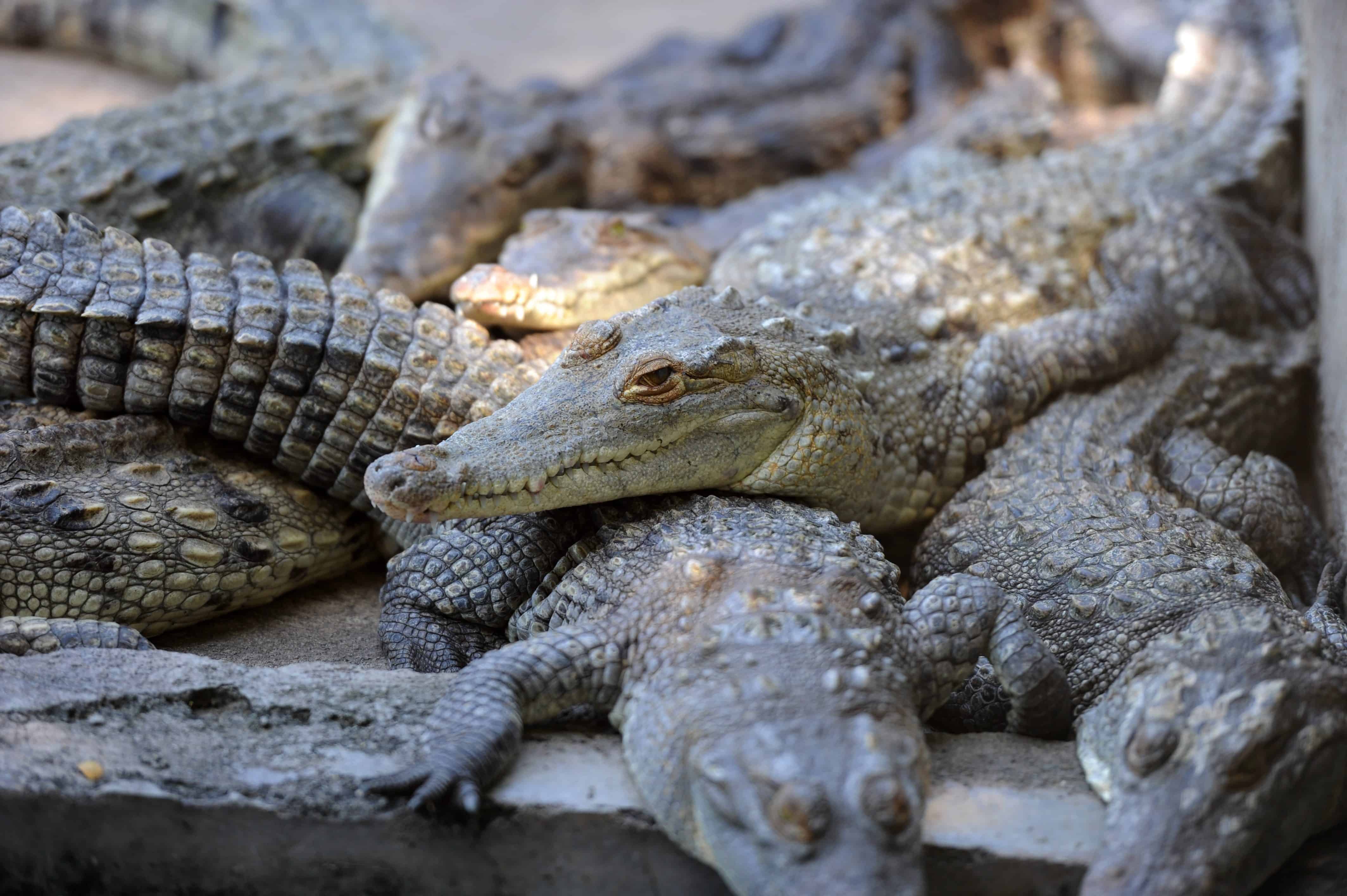
SAN MANUEL, Honduras — More than 10,000 Honduras crocodiles are starving to death on a farm after the wealthy family owning them had their assets frozen because of U.S. accusations they laundered money for drug traffickers.
AFP journalists visiting the 30-hectare (70-acre) property called Cocodrilos Continental, in San Manuel near the city of San Pedro Sula, also saw seven scrawny lions kept in cages.
“The crocodiles and lions are dying of hunger, and we are too because we haven’t been paid the last two weeks,” said one worker at the entrance to the farm who asked to go by the pseudonym José.
“Forty animals have already died. They were taken away in boxes by trucks to be buried,” he said.
The farm is owned by the Rosenthal family, a powerful clan in Honduras with interests spanning banking, media, property, tourism, livestock and football.
On Oct. 7, the U.S. Treasury Department said it was targeting the family’s 79-year-old multimillionaire patriarch, Jaime Rosenthal, his son Yani Rosenthal, and his nephew Yankel Rosenthal “for their money laundering and drug trafficking activities”.
It imposed an asset freeze on them and barred U.S. businesses from dealing with them, which notably affected their Banco Continental. The bank, headquartered in San Pedro Sula, is being liquidated on orders of the Honduras’ Banking Commission. A newspaper owned by the family has also been shut (although the digital version continues to function).
Yankel Rosenthal was arrested in Miami by U.S. authorities the day before the Treasury announcement.
Accounts blocked
The U.S. accusations and sanctions have rocked Honduras, which had long perceived its wealthiest families to be untouchable. That held especially true for the Rosenthals: Jaime Rosenthal was vice-president of the country from 1986 to 1989; his son Yani was a minister in the government from 2006 to 2009.
Recommended: Elites in Honduras, not just gangs, the target of latest US money laundering indictment
Although the crocodile farm was not one of the seven Rosenthal businesses designated for U.S. sanctions, it has found itself caught up in the freeze affecting other parts of the business empire.
An official at Honduras’ state Forest Conservation Institute (ICF), Pablo Dubon, said the executives running Cocodrilos Continental told authorities the freezing of the Rosenthals’ assets led to the accounts used to pay the workers and buy animal feed being blocked.
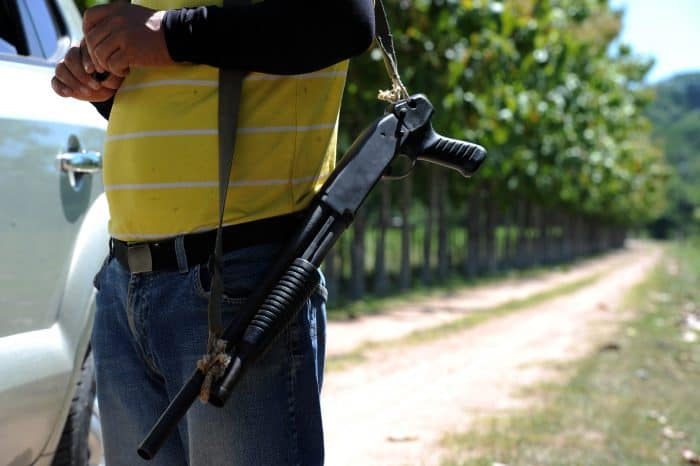
Dubon said the municipality and animal protection groups were working on an emergency plan to temporarily care for the animals while a permanent solution was found. One option was to have the employees work for food while the legal status of the farm was assessed.
A week ago, the ICF delivered 1.5 tons (3,000 pounds) of chicken meat to the farm but workers refused to feed it to the animals until they were paid their monthly wages of $340 each.
“The 3,000 pounds doesn’t amount to much because a crocodile eats the equivalent of half a horse in a day,” said Jose, the worker at the gate.
“But at least something is being done,” he added.
11,000 crocodiles
According to security guards at Cocodrilos Continental, there are 11,000 American crocodiles spread out over 135 pools hidden by weeds and bushes turned green by recent rains. Some 60 newborn crocs are among them. An on-site clinic meant to look after around 70 ailing crocodiles has ceased to function.
The farm’s website says the crocodile business was created to generate profits by exporting meat and skin to the United States, while also “preserving the species.” It had a yearly budget of $1 million to pay employees’ wages and food for the animals.
Three farm employees who refused to give their names told AFP they were thinking of looking for jobs elsewhere because they haven’t been paid beyond the second week of October.
But if they did so, they warned, people living nearby would likely rush in to grab the crocodiles to eat.





