

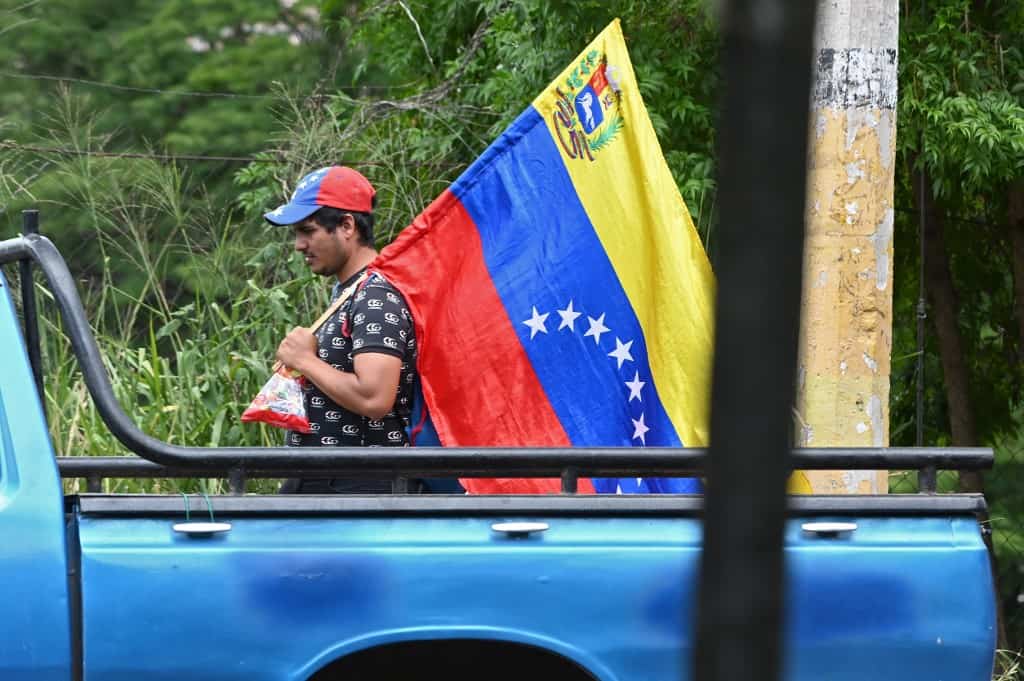
The United States carried out airstrikes on Venezuelan military sites early this morning, leading to the capture of President Nicolás Maduro and his wife, Cilia Flores. President Donald Trump announced the operation on social media, stating that U.S. forces executed a large-scale strike and removed the couple from the country. Maduro faces charges in New York for narco-terrorism and drug trafficking conspiracies.
The attacks targeted key locations in Caracas and other areas, causing power outages and civilian panic. Venezuelan officials condemned the action as an assault on their sovereignty and demanded proof that Maduro remains alive. Defense Minister Vladimir Padrino López activated national defenses and called for calm among citizens.
Costa Rican authorities have stayed silent on the matter so far. No official statement came from the Foreign Ministry or President Rodrigo Chaves’ office by the time of this writing. This quiet response aligns with Costa Rica’s history of promoting peaceful resolutions in Latin America. Our country has long hosted Venezuelan migrants fleeing economic collapse and political repression under Maduro.
In recent years, Costa Rica refused to recognize Maduro’s 2024 reelection, labeling it fraudulent. Instead, officials backed opposition candidate Edmundo González as the legitimate winner. That stance reflected broader concerns over Venezuela’s electoral integrity and human rights abuses. With today’s developments, analysts here suggest Costa Rica may view the change as a potential step toward stability, though risks of unrest loom large.
The event stirs worries about regional fallout. Venezuela’s instability has driven waves of migration, with over 100,000 Venezuelans now living in Costa Rica. Trade ties, though limited, could face disruptions if chaos spreads. Local experts point to possible increases in border pressures from Colombia or Nicaragua, both affected by Venezuelan refugees.
Within Costa Rica, the Venezuelan community expressed a mix of hope and caution. Many gathered in San José parks and online groups to share news. Carolina Sánchez, a Venezuelan resident in Heredia, told reporters she felt emotional and expectant. She hopes for a free Venezuela but waits for confirmed details.
Other Venezuelans here echoed similar sentiments. Some described relief after years of exile, while others stressed the need for reconciliation. Claireth Rodríguez, another migrant, spoke of collective joy mixed with anxiety. She highlighted the human cost of Maduro’s rule, including deaths from hunger and border crossings.
International responses varied sharply. Allies like Russia and Iran denounced the U.S. moves as violations of sovereignty. Brazil’s President Luiz Inácio Lula da Silva called it a dangerous precedent. In contrast, Ecuador’s Daniel Noboa welcomed it, saying criminals face justice. Argentina’s Javier Milei supported the shift toward freedom.
The European Union urged moderation, while Spain called for de-escalation. Chile condemned the military action and pushed for peaceful solutions. As details emerge, Costa Rica’s government may break its silence. For now, the focus remains on monitoring impacts to migration and security. Venezuelans in the country hold their breath, dreaming of returns home amid uncertainty.
This operation marks a bold U.S. policy shift under Trump, who had indicted Maduro in 2020. It ends a 25-year era of chavismo, started by Hugo Chávez. Venezuela now faces a power vacuum, with Vice President Delcy Rodríguez stepping in temporarily. Local groups in Costa Rica plan vigils tonight to support their compatriots. Authorities here advise calm and vigilance for any spillover effects.





