

TIERRADENTRO, Colombia – Illegal coca cultivation is surging in Colombia, erasing one of the showcase achievements of U.S. counternarcotics policy and threatening to send a burst of cheap cocaine through the smuggling pipeline to the United States.
Just two years after it ceased to be the world’s largest producer, falling behind Peru, Colombia now grows more illegal coca than Peru and third-place Bolivia combined. In 2014, the last year for which statistics are available, Colombians planted 44 percent more coca than in 2013, and U.S. drug agents say this year’s crop is probably even larger.
The coca boom comes at an especially sensitive time for the Colombian government, which is in the final stages of peace negotiations with leftist FARC rebels who have long profited from the illegal drug trade. Last month the government halted aerial spraying of the crop, citing concerns that the herbicides used may cause cancer. That program had been a pillar of Plan Colombia, under which the United States has provided more than $9 billion to this country since 2000.
Colombian President Juan Manuel Santos, a key U.S. ally, said his administration is ready to launch a massive crop substitution campaign if a deal with the Revolutionary Armed Forces of Colombia, or FARC, is reached and areas under rebel control become safe enough for government workers. The guerrillas and the government have already agreed in principle on a sweeping new development plan for Colombia’s struggling rural areas, with the FARC pledging to help persuade farmers to rip out their coca in favor of lawful crops.
U.S. and Colombian officials say the biggest reason for the current bumper crop is that the FARC, along with other armed groups, has encouraged farmers to plant more coca in anticipation of the peace deal and the new government aid.
In an interview with The Washington Post, Santos said his government will seek U.S. support for the huge new crop substitution plan. With the FARC off the battlefield, such a program could succeed where past initiatives have fallen short, he said.
“We have a golden opportunity,” Santos said. “But if we don’t give the farmers an alternative, they’re going to keep growing coca.”
A new cocaine rush
Cocaine consumption in the United States fell in the past decade while methamphetamine and heroin use soared. But a glut of cheap product could bring a new cocaine rush. It could also unleash new cycles of violence along trafficking routes through Central America and Mexico.
The FARC, whose formidable guerrillas initially “taxed” farmers’ coca production and went on to dominate trafficking in the areas under their control, has vowed to leave the drug trade if the peace deal is reached. But Colombia’s other armed groups – including ELN guerrillas, paramilitary gangs and the rural bands known as “bacrim” – will be looking to muscle into the business in areas where the FARC pulls out.
U.S.-funded aerial spraying played a huge role in reducing Colombia’s coca crop from an estimated 400,000 acres in 2000 to fewer than 120,000 acres in 2012. The tactic was bitterly resented in rural communities, though, and it provided diminishing returns as drug growers moved their crops to national parks, indigenous reserves, border areas and other places off-limits to spraying.
Two-thirds of the country’s 170,000 acres of coca fields are now in such areas, according to the government, and the new coca boom was well underway before the ban on aerial spraying took effect Oct. 1.
‘More coca on the ground’
Jorgan Andrews, director of the State Department’s International Narcotics and Law Enforcement Affairs section at the U.S. Embassy in Bogotá, said the growth in coca production appears to be linked to the peace talks with the FARC and expectations about the substitution programs that may follow.
“The government programs will be in areas where there is coca, so one interpretation is that those who grow the most coca will get the most government benefits,” he said.
“And if the peace process with FARC falls apart,” he said, “they’ll already have more coca in the ground.”
Andrews said Colombia’s 2015 coca output is projected to go “way up.” Many of the plants added last year have since matured, “so what you’ll see is a big cocaine production spike as those plants come online.”
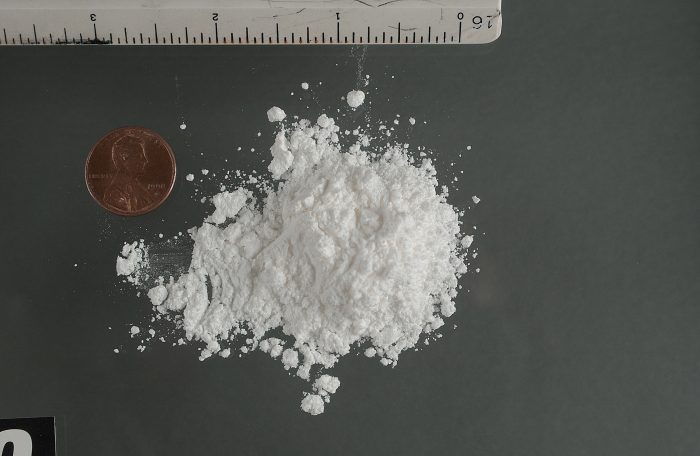
Once the coca leaves are stripped from the plant, they are soaked in solvents such as kerosene to leech out the naturally occurring alkaloids, then processed with sulfuric acid, ammonia and other chemicals to make cocaine base and eventually white powder.
Because mature plants yield more of the leaves used to make cocaine hydrochloride, the street-level version of the drug, a 44 percent increase in the amount of land planted with coca translates to a projected 52 percent increase this year in cocaine production, according to U.N. estimates.
Even if the Santos government and the FARC agree on a truce by their March 23 deadline, it won’t mean social workers with cacao seeds and fish-farm projects will be able to fan out across Colombia’s jungles and mountains. Some of the country’s coca strongholds are likely to remain no-go zones for years – Colombia has more deaths and injuries from anti-personnel mines than anywhere outside Afghanistan.
“What happens if the coca numbers keep going up? It’s going to put a lot of pressure on the government from the international community,” said Bo Mathiasen, the Colombia director of the U.N. Office on Drugs and Crime.
Recommended: 30-year-old Dutch photos help ID victims in 1985 Colombia Justice Palace siege
Still, he pointed out, coca is not lucrative for small farmers – even if it pays more than traditional crops. “And that’s the good news for us, because it makes it easier to succeed with alternatives,” Mathiasen said.
As many as 1 million of Colombia’s 50 million citizens are linked to the coca business directly or indirectly, according to Eduardo Díaz, the economist and former health minister in charge of the crop substitution program. Díaz said the government has learned critical lessons over the years about what works and does not.
“It can’t be, ‘Here, try these seeds, see you later,’ ” Díaz said. “We have to establish the presence of the state in these conflict zones.”
Cash payments to individual families in exchange for voluntary eradication do not work either, Díaz said, because the possibility of earning money simply encourages everyone to grow coca. Instead, the government wants entire communities to opt for crop substitution in the hope it will bring state-building investments in infrastructure, health and education. Holdouts would face forced eradication and criminal penalties.
Díaz said asking farmers to gradually phase out coca also does not work. As long as there are illegal crops in the community, there will be armed groups attracted to it, he said, like flies swarming food.
Losing patience
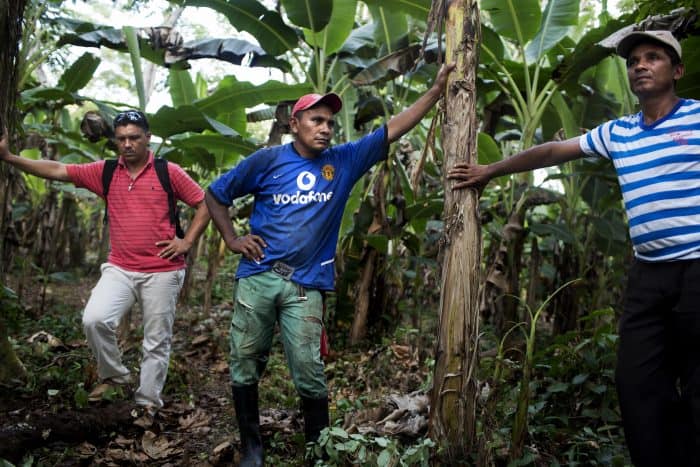
Here in Tierradentro, a tiny village at the foothills of the Nudo de Paramillo range in the northern state of Cordoba, a crop substitution program supported by the U.S. Agency for International Development is encouraging former coca growers to try bananas and cacao instead.
FARC units remain active farther up the mountain, protecting coca fields in a national park.
The area is one of Colombia’s most war-torn, fought over by right-wing paramilitaries and the FARC for the past 20 years. But with a unilateral cease-fire in effect, Tierradentro is quieter now than at any time in recent memory.
Farmers here say they are proud to grow food again, returning to a simpler and more innocent era. Sure, they said, the coca brought more money, but also wanton killing, prostitution and benefits that did not last.
“Most of the money went to alcohol,” said Darwis Tarifa, 42, who said he lost two brothers to drug deals gone bad.
Cacao seemed the most promising alternative for Tierradentro’s farmers, but the trees planted here will take several years to bear fruit. Bananas were the only option in the meantime, and many farmers here confessed they were losing patience, earning as little as $175 a month, well below minimum wage and less than a third of what they made growing coca. Selling bricks of cocaine base was a lot easier than arranging for truckloads of bananas to reach markets several hours away along a rough dirt road.
“Today we live in peace,” said Alexis Fernández, 63. “But there’s no coca and no money.”
Farther up the mountain and a canoe ride across the muddy San Jorge River, Jacinto Tapia showed off the fields where he grew coca until switching to bananas last year. In the rich alluvial soils, his mature coca plants could be harvested every 40 days, virtually year-round, almost as good as a monthly paycheck.
Soldiers arrived last year and ripped them out. Tapia signed up for the crop substitution program.
“Once you start getting old, you get tired of having these problems,” said the sun-worn Tapia, 69. “You don’t make as much money, but you sleep better at night.”
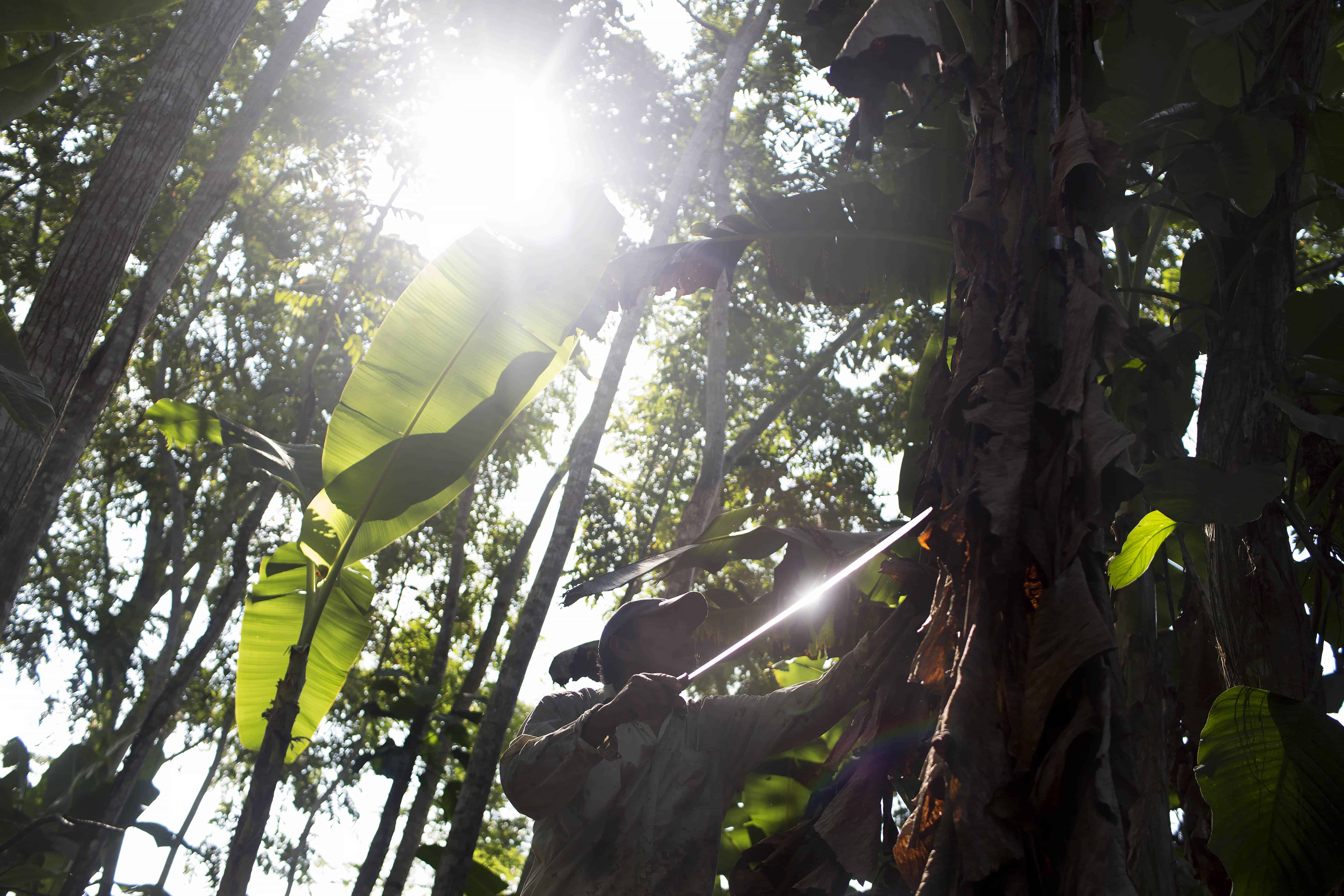
A few vestigial coca plants poked through the ground between the bananas and empty cans of glyphosate herbicide. Their leaves were a radiant shade of green. Tapia chopped at their roots with his machete but said the only way to finish them off was with heavy doses of the weedkiller.
All it takes is a few severed roots left in the ground, he said, and the plant comes roaring back.
© 2015, The Washington Post





