
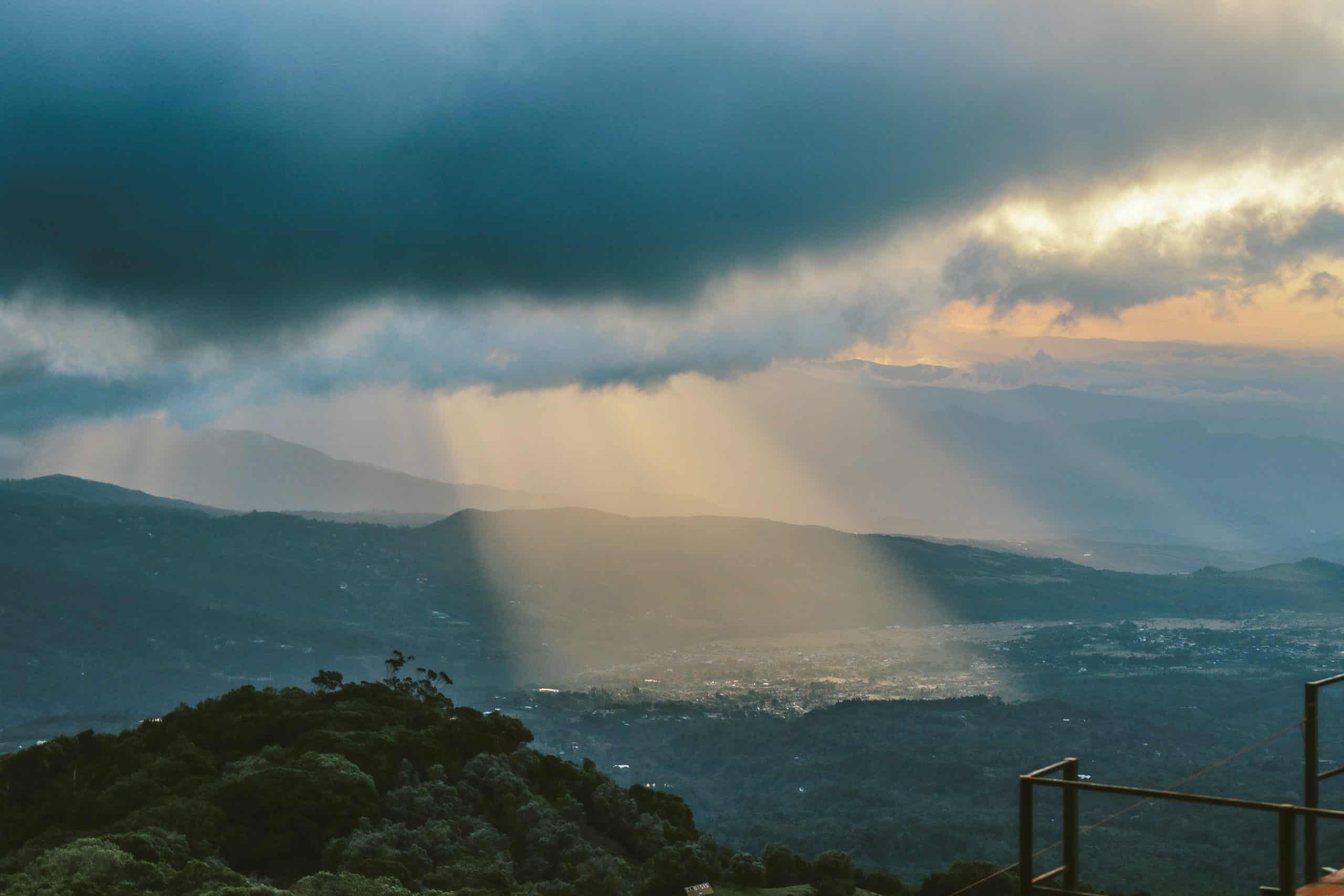
Get your outdoor plans done this morning as showers and thunderstorms are expected to build across the Central Valley and the Pacific this afternoon, and the heaviest rain will fall on the Central and South Pacific. In those two areas, the rain could last into the early evening and spread to the coast, according to the National Meteorological Institute (IMN). That puts beach towns from Jacó and Quepos down to Dominical, Uvita and the Osa Peninsula in line for the wettest afternoon in the country.
The morning looks calmer inland and most of us here should see mostly clear to partly cloudy skies early on, with showers and storms mainly over Caribbean waters and, to a lesser extent, the Pacific. Some of that rain could drift onto nearby coastlines. The Caribbean and the Northern Zone should see only isolated afternoon rain, mostly in the mountains. That is a welcome break after Tropical Wave 50 soaked both of these areas over the weekend.
However, keep in mind that less rain does not mean less risk. After several wet days, the ground in much of Costa Rica is saturated, so it cannot soak up much more water. Even moderate rain can now set off landslides on hillsides and flooding in low areas. If you are driving through the mountains this afternoon or tonight, slow down and watch for rocks and mud on the road. Fallen debris is hardest to see after dark, and several recent closures on mountain highways began at night.
If you are heading to Limón or the Caribbean coast, check the status of Route 32 before you leave. The highway through Braulio Carrillo National Park closed again shortly after 9 p.m. Saturday when rocks and debris fell at kilometer 28, between the San Isidro de Heredia toll and the turnoff to Río Frío. Since the Ministry of Public Works and Transport (MOPT) announces reopenings on its social media pages, check there or on Waze before you set out.
That was at least the third closure on this mountain stretch since Oct. 5. The road shut that night when material fell at kilometer 33 and reopened the next morning, then closed again at 5:40 p.m. on Oct. 8 when debris landed at several points along the route. The ministry closes it as a precaution when rain keeps falling, because more rock and mud can come down on drivers and on the crews clearing it.
When Route 32 is shut, you can reach the Caribbean on Route 10 through Turrialba, or through Vara Blanca and Bajos de Chilamate. The Vara Blanca road is narrow and winding, and it has been limited to light vehicles during past closures, so trucks and buses are better off on the Turrialba route. Both detours add significant time to the trip.
Wherever you are, do not drive or walk through flooded streets, streams or rivers. Moving water only 30 centimeters (1 foot) deep can sweep a car away, and you cannot see how deep it is or whether the road underneath is still there. If you or someone else is trapped by rising water, call 9-1-1 rather than trying a rescue yourself.
On the beach, get out of the water and off the sand as soon as you hear thunder. Lightning often strikes the highest point around, and on an open beach that is a person. October is usually the rainiest month on Costa Rica’s Pacific side, so this pattern of brighter mornings and stormy afternoons is likely to repeat in the weeks ahead.