

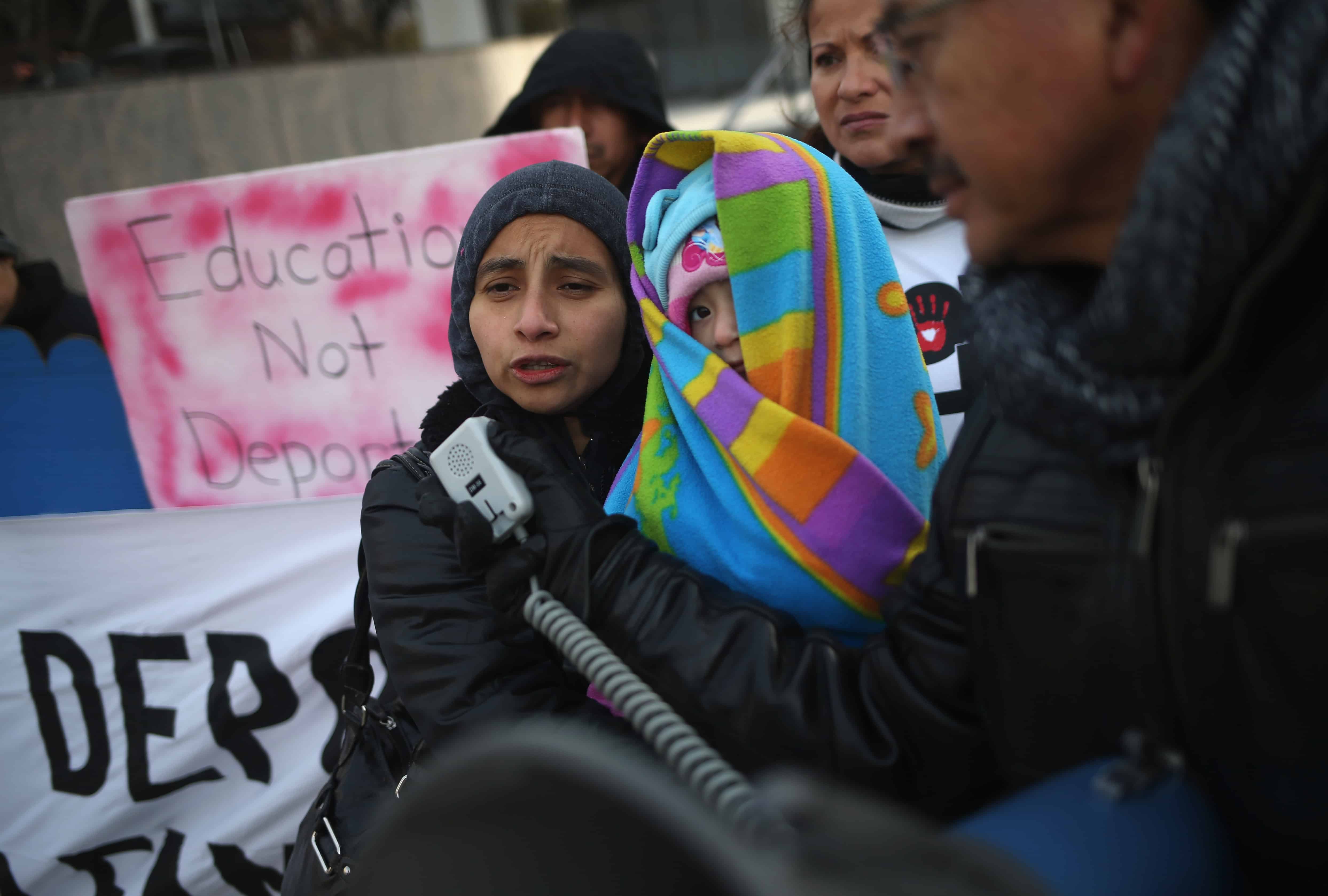
An estimated two million Guatemalan immigrants living in the United States are undocumented, but not even the Guatemalan government knows the actual number, immigration attorney Pablo Solares claimed.
For the past 15 years, Solares has worked in the U.S. to help fellow Guatemalans obtain identity documents from their native country. One problem, he said, is that Guatemala’s documentation system doesn’t take into account that many migrants come from marginalized communities with high levels of poverty and illiteracy. They generally are not accustomed to possessing identity documents, Solares told the daily Prensa Libre last month.
“Nobody has the official figure, not even the government of Guatemala,” Solares said.
Most “are in a very unstable situation regarding documents, not only U.S. documents but also those issued by their own country,” he added.
“A centralized system has been set up that ignores and discriminates against traditions typical of those places,” Solares said.
“Many migrants come from the places that are most affected by poverty [and] illiteracy, with no custom of having identity documents,” he said.
Two of the more affected areas are the western departments of Huehuetenango and San Marcos, both bordering Mexico, he said.
According to Solares, Guatemalan consulates in the U.S. aren’t much help and “work with very seriously limited resources.”
Part of Solares’ job is contacting groups of Guatemalans who are “totally out of the government’s reach” and living in pockets of Central American immigrant communities in the U.S.
Through Guatemala’s Registro Nacional de las Personas, or National Registry of Persons, Solares helps immigrants obtain a Personal Identification Document without them needing to travel to Guatemala.
High corruption levels
Last year, during a forum on the humanitarian crisis of migrant children, Guatemala’s Human Rights Prosecutor Jorge De León accused the government of being incapable of guaranteeing its citizens access to a decent livelihood.
De León said funds earmarked for Guatemalan children need to be invested free of corruption, and currently “there are no conditions that allow citizens to think that they’ll have a better life in Guatemala.”
Public policies haven’t sufficiently addressed poverty and extreme poverty, largely because of high corruption indicators, he said. Social programs “neither accomplish their aim or reach their goal.”
De León said that every year, about 200,000 young workers look for decent jobs, but find none.
“In some cases, they take informal, poorly paid jobs that create frustration and lead them to view migration as a way to improve their living conditions,” he said.
On the issue of unaccompanied child migration, De León said, “It’s not a question of passing more laws or creating new types of crimes, or creating more bureaucracy to look after children.”
Instead, more focus should be placed on investing funds “with transparency and without corruption in order to change the conditions under which most people live,” he said.
Child deportations increasing
Tens of thousands of children, most of them leaving the “Northern Triangle” countries of El Salvador, Guatemala and Honduras, have reached the U.S.’ southern border with Mexico – in many cases, only to be deported to their countries of origin.
These three Central American countries are severely hit by violence from organized crime – mostly drug-trafficking organizations – as well as youth gangs known as maras.
Children are sent unaccompanied, in high numbers, by parents from Northern Triangle countries to join relatives already established in the U.S. as a means of protecting them from increasing levels of local violence.
According to figures provided this month by Guatemala’s Immigration Administration, the number of Guatemalan children deported by land from Mexico increased last month by 165 percent to 536 minors, from 202 in the same period last year.
Guatemala’s First Lady Rosa Leal, who has been tasked with implementing strategies to respond to the issue of migrant minors, recently told local media that, “Before, each week we would receive 50 minors expelled by land, but the number tripled over the past several months.”
Leal added that she plans to meet with her U.S. counterpart, Michelle Obama, to analyze strategies to prevent child migration and ensure that during the children’s journeys their rights are respected.





