

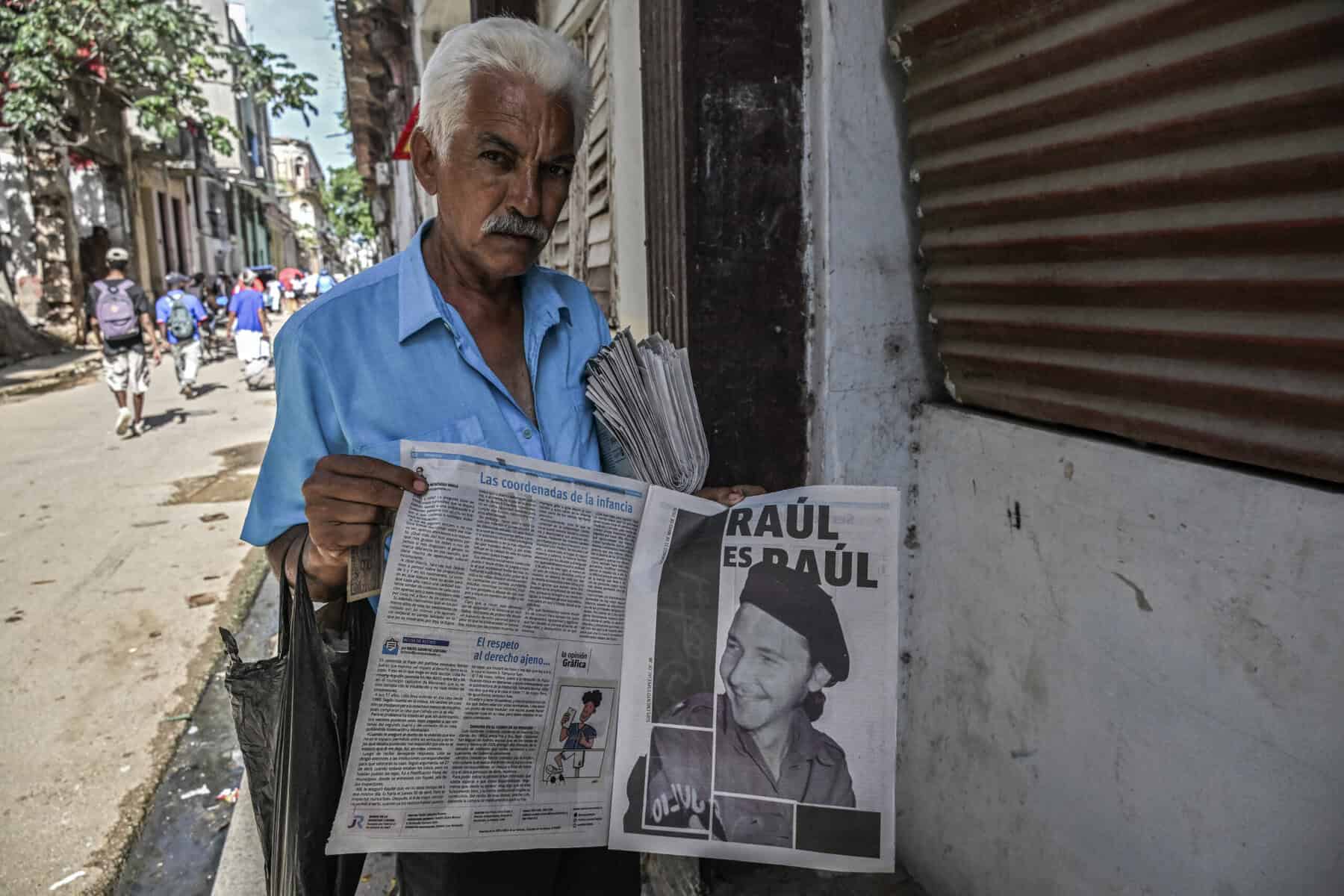
Former Cuban President Raúl Castro gave his approval Wednesday to a package of economic reforms debated by top representatives of the Communist Party, Cuba’s only legal party, in Havana as the island confronts a deepening crisis under pressure from Washington.
Castro, 95, holds no official position but remains a key figure in Cuba’s power structure. The presidency said that he took part in the meeting by videoconference.
In a letter signed by the former leader and presented during the meeting, Castro said transforming the economy “is what best serves the Revolution today.”
The PCC’s Central Committee analyzed roughly 20 proposals during the extraordinary plenary session aimed at opening more sectors to private investment, attracting more capital from Cubans living abroad, and reducing the size of the state, amid the oil blockade imposed by the United States on the island since January.
The reforms, previously presented by President Miguel Díaz-Canel, could be approved by the National Assembly as soon as Thursday, less than a week after they were announced.
“Although they recognize market mechanisms as instruments for the efficient allocation of resources, they do not in any way imply abandoning the social responsibility of the state,” Prime Minister Manuel Marrero said, according to the government on X.
However, it remains unclear whether these measures will be enough to satisfy U.S. President Donald Trump, who has made clear he wants change and has suggested the possibility of “taking control” of the island, located about 90 miles, or 150 kilometers, from Florida.
After years of denying the scale of the problem, the Cuban government appears forced to act as economic deterioration, social pressure, and growing international isolation leave it with increasingly little room to maneuver.
The oil blockade imposed by Trump in January has pushed Cuba’s already weakened economy to the brink of collapse, with blackouts that sometimes exceed 30 hours and shortages of food, fuel, drinking water, and medicine. Private businesses, authorized in 2021 and allowed to employ up to 100 people, have become an increasingly important part of the economy.
Díaz-Canel said Cubans, both on the island and abroad, will have the same conditions as foreign investors, some of whom have recently withdrawn because of U.S. sanctions. He has also announced plans to reduce the size of the state by cutting the number of ministries and public employees.





