

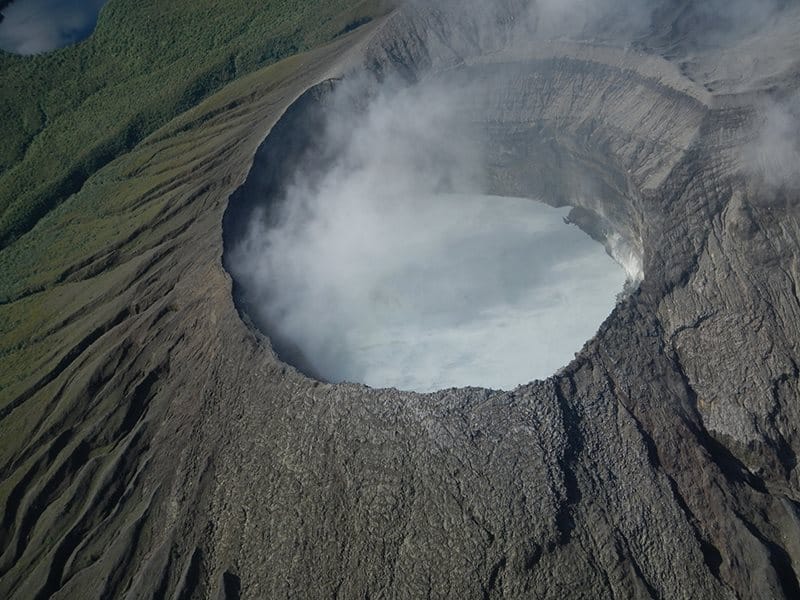
Costa Rica has raised the activity level at Rincón de la Vieja Volcano to “precaution” following a sustained increase in eruptions and volcanic mudflows. The volcano was moved from Level 2, “warning,” to Level 3 after monitoring equipment recorded 38 steam-driven eruptions between July 2 and July 24. Three of those events generated lahars, which are fast-moving mixtures of water, mud, rocks and volcanic debris.
The mudflows descended through rivers and streams on the northern side of the volcano, where communities face the greatest risk from sudden changes in water levels and river conditions. The change in status does not mean that a major eruption is certain or imminent. It indicates that the volcano has entered a period of increased activity in which stronger explosions, ash emissions, gas releases and additional lahars are possible.
Scientists also detected volcano-related earthquakes, including a small seismic swarm on June 28, along with a gradual increase in sulfur dioxide emissions since mid-June. Most of the recent eruptions have been phreatic, meaning they occur when underground water is rapidly heated and turns to steam. These explosions do not necessarily involve lava reaching the surface, but they can happen with little warning and eject steam, ash, rocks and material from the crater lake.
One of the most significant recent events occurred early Monday, July 20. The moderate eruption lasted about 30 seconds and produced a lahar (a fast-moving flow of water, mud, rocks and volcanic debris) that moved through waterways on the northern slope. Cloud cover prevented scientists from determining the height of the eruption plume, but seismic and acoustic monitoring stations detected the event.
Heavy rain around the summit is adding to the danger. Volcanic sediment expelled during eruptions can accumulate near the crater and on the upper slopes. Rain can later loosen the material and carry it into nearby rivers, even several hours after an eruption has ended. Earlier in July, residents reported that the Azul and Pénjamo rivers had turned a milky gray following repeated eruptions and heavy rainfall. The change was attributed to rainwater carrying accumulated ash and crater sediment down the mountain.
Water affected by volcanic material may become unusually acidic and should not be used for drinking, bathing, livestock or irrigation until authorities confirm that it is safe. People should also avoid entering river channels or standing near low bridges and crossings during heavy rain around the summit.
The greatest concern is on the northern side of the volcano, including areas near Dos Ríos de Upala and waterways such as the Azul, Pénjamo, Góngora and Blanco rivers. A sudden rise in water levels, a change in color, strong sulfur odors or water carrying branches and rocks can signal that a lahar or flash flood is approaching.
Monitoring of the volcano continues through seismic, acoustic, gas and ground-deformation equipment, along with surveillance cameras and field inspections. No new park-wide closure had been announced following the alert change. The Las Pailas and Santa María visitor sectors remain listed as operating, while the trail leading to the active crater remains closed because of volcanic danger.
Visitors should confirm conditions with park officials before traveling, as eruptions, rainfall and river conditions can lead to restrictions with little notice. Those living in the surrounding communities should continue following official volcano, weather and emergency updates, particularly during periods of heavy rain





