
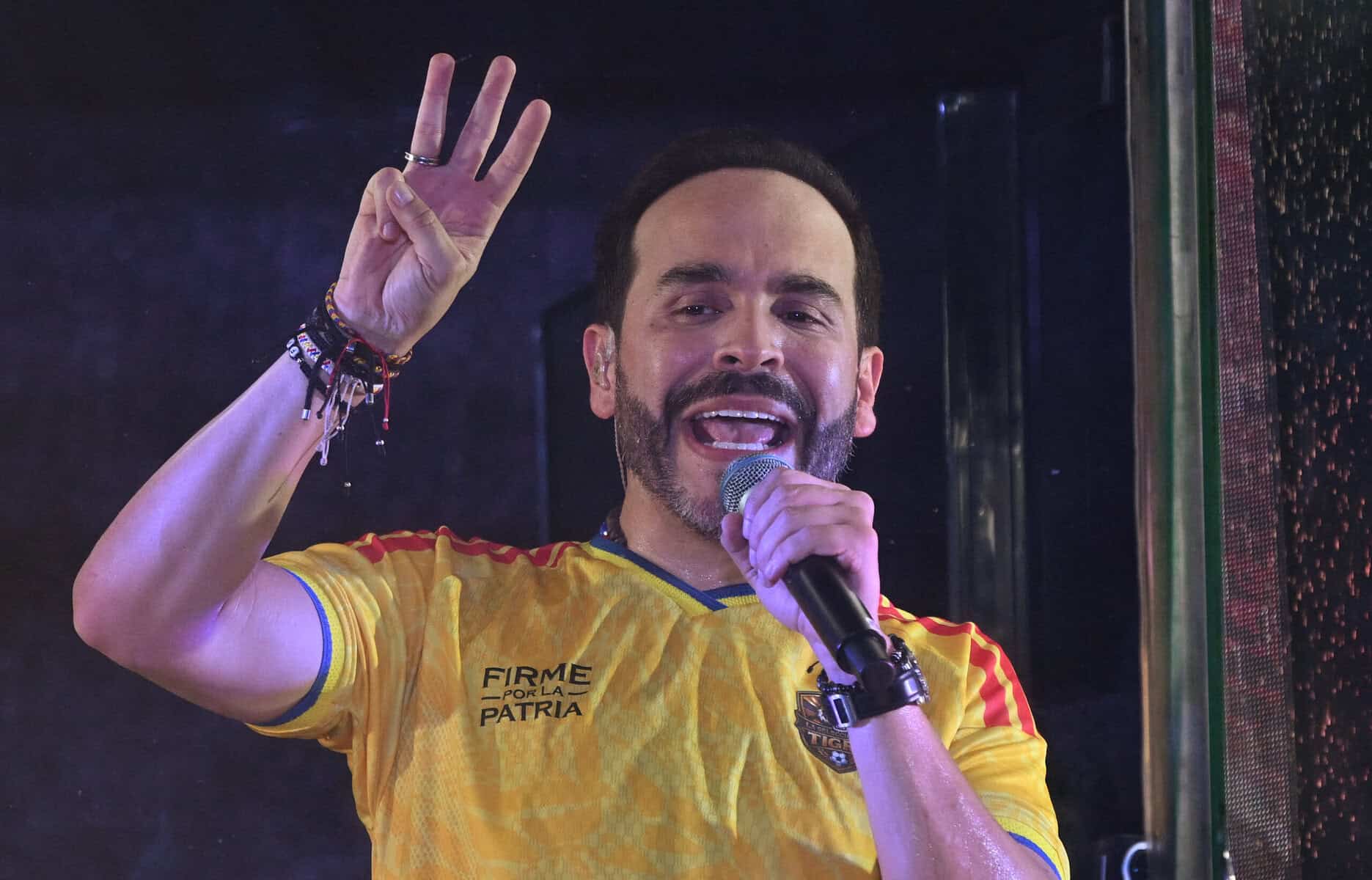
Millionaire attorney Abelardo de la Espriella will govern Colombia aligned with the principles of a right wing that is regaining ground across the continent, with proposals to build megacarcels and ally without reservations with the United States to fight drug trafficking. With a hardline discourse and a stance against traditional politics, the 47-year-old businessman was elected Sunday to his first public office. Beginning in August, he will preside over the country with the last active armed conflict in the Western Hemisphere.
His disruptive proposals include drastically cutting the state, bombing guerrillas and other drug traffickers with Donald Trump’s support, and reviewing Colombia’s continued membership in cooperation bodies such as the United Nations. De la Espriella defeated Senator Iván Cepeda, an ally of the country’s first leftist president, Gustavo Petro, by less than one percentage point.
His victory closes the chapter opened by the left four years ago in a country that, for two centuries, was governed by right wing elites. It also strengthens “the bloc that is forming in Latin America,” Juan David Cárdenas, an expert at the University of La Sabana, said. It is “a swing of the pendulum back to the right in the region, which is clearly also a consequence of the strong role Trump has played in local political processes,” he added.
Plan Colombia II
Colombia, the world’s largest producer of cocaine, is once again governed by a U.S. ally at a time when Trump is intensifying the pursuit of criminal groups in the region. Under Petro, relations with Washington became strained, and Colombia was left out of the “Shield of the Americas” anti-crime alliance, made up of countries from the Americas and led by Trump.
De la Espriella, a Colombian and U.S. citizen who identifies as “Republican,” wants to bring the country into that alliance. He promised to fight drug trafficking harshly through bombings, the eradication of drug crops with herbicides and the presence of U.S. military bases on Colombian territory.
He has called his initiative “Plan Colombia II,” a reference to Washington’s multibillion-dollar cooperation program with Bogotá at the beginning of the century, which put guerrilla groups under severe pressure. “There will be no areas off limits to the state, no unpunished and untouchable criminals. There will be no organizations above the Constitution and the law,” he warned Sunday in his first speech as president-elect.
Megaprisons and Weapons
Inspired by the presidents of El Salvador, Nayib Bukele, and Ecuador, Daniel Noboa, De la Espriella wants to build 10 mega prisons to lock up criminals “10 floors underground,” where they will be fed “bread and water,” he promised. Those types of maximum-security prisons have triggered warnings from organizations over possible human rights violations.
De la Espriella’s opponents see authoritarian overtones in his rhetoric, while experts warn of a possible escalation in violence as a result of this strategy. The president-elect also proposes easing rules on civilian gun possession.
“People who demonstrate the physical and psychological suitability to carry a weapon will have a weapon in the era of El Tigre,” he said during the campaign.
Dollarization, Fracking and Less Government
De la Espriella inherits a country with a fiscal deficit close to 7% of GDP, the second highest in the region after Brazil, following a period of high public spending to finance social programs under Petro’s government. During the campaign, he said the “ideal” would be to dollarize Colombia’s economy as part of the economic plan for his “miracle country.”
He also proposes promoting fracking to increase energy production, reducing the size of the state by 40%, inspired by Javier Milei in Argentina, and lowering taxes on companies.
Goodbye to the United Nations?
On cooperation, De la Espriella says he is willing to review Colombia’s continued participation in organizations such as the United Nations and the Organization of American States. Currently holding the pro tempore presidency of the U.N. Security Council, Colombia has played a role in debates on peace and security in the region.
De la Espriella considers those organizations a “political board of the left” and says they “have been useless.” The jurist also raised the possibility of withdrawing Colombia from the Inter-American Court of Human Rights, which he considers a “farce.”
He also wants to close some Colombian embassies abroad and turn those that remain open into business centers.