

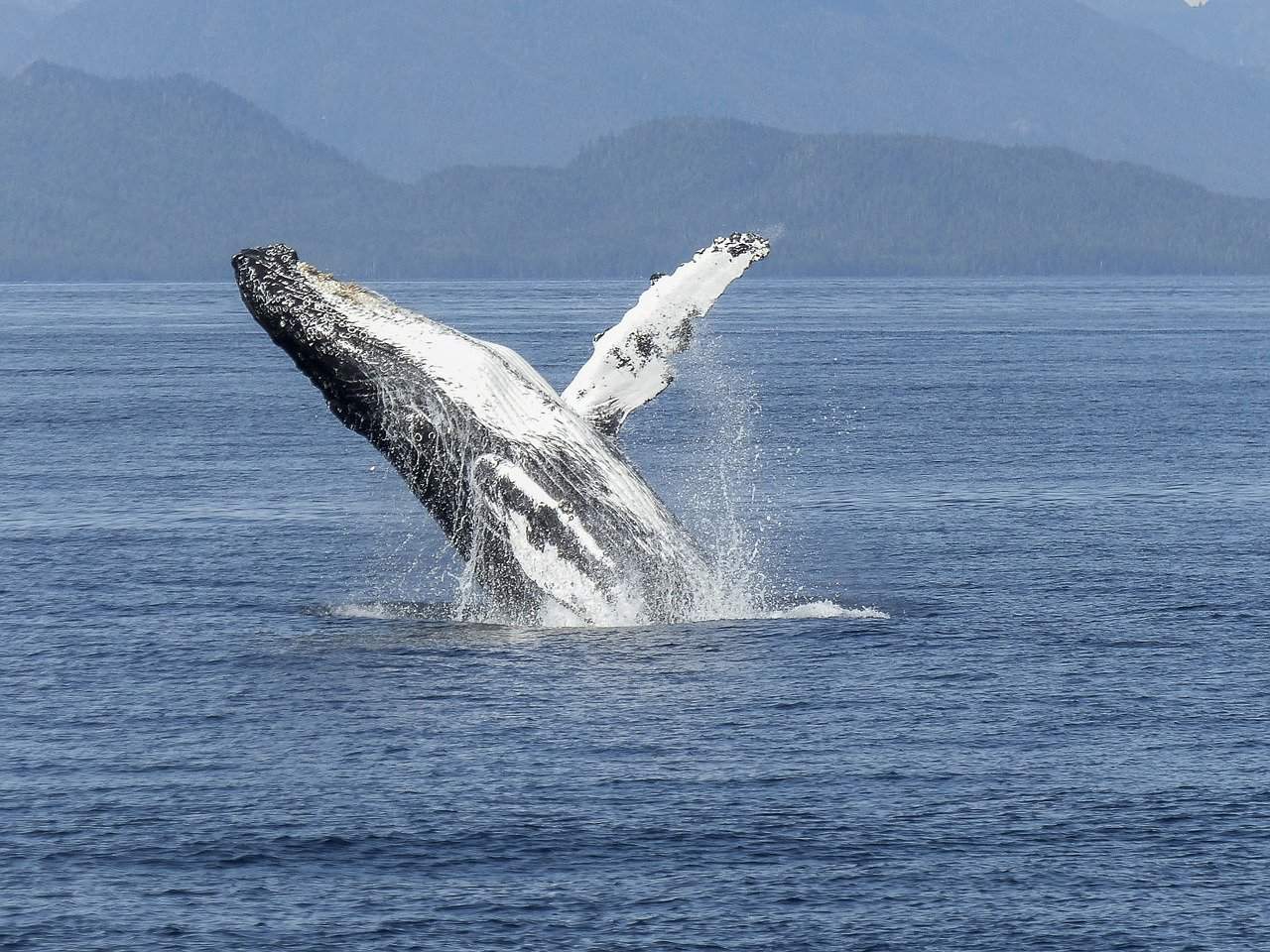
Humpback whales are back in Costa Rica’s South Pacific, and if you want to see them, the next four months are your window. Whales from the Southern Hemisphere reach Costa Rican waters between July and November, arriving to breed and to give birth in some of the calmest, warmest water they will find anywhere on their route north. Golfo Dulce, the sheltered gulf tucked between the Osa Peninsula and the mainland, is where many of them end up.
Costa Rica is unusual in that it gets two separate humpback populations in the same calendar year. The southern whales come between July and November. Northern Hemisphere whales, traveling down from Alaska and the west coast of North America, arrive between December and March. Almost nowhere else on the planet hosts both, which is why Costa Rica is often described as having the longest humpback season in the world. For a visitor, that means you are far less locked into a single narrow travel window than you would be in most whale destinations.
Golfo Dulce became the first Whale Heritage Area in Latin America in 2023, a designation given to places where whale watching is run responsibly and where local communities are actively involved in protecting the animals. The gulf covers roughly 750 square kilometers (about 290 square miles) and is one of only four tropical fjords in the world. Its depth, its calm surface, and the freshwater and nutrients flowing in from surrounding rivers create protected conditions where mothers can rest and nurse their calves without fighting open-ocean swell. That is the whole reason the whales choose it, and it is also why sightings here tend to be closer to shore and less punishing on the stomach than offshore trips elsewhere.
More than 30 cetacean species have been recorded in Costa Rican waters, and seven turn up regularly in Golfo Dulce. Alongside humpbacks, you can expect bottlenose dolphins, pantropical spotted dolphins and false killer whales, with orcas and Bryde’s whales appearing occasionally. The gulf also supports one of the most significant resident bottlenose dolphin populations in the Eastern Tropical Pacific, which means dolphins are around year-round even outside whale season. Researchers use the same resident groups to track long-term health of the gulf, so a tour here is often feeding into ongoing science whether you notice it or not.
Before you book, it helps to know the rules your captain is working under, because they shape what the trip will actually look like. Boats have to stay at least 100 meters (about 330 feet) from whales and 50 meters (about 165 feet) from dolphins. Any single encounter is capped at 30 minutes.
No more than two boats may watch the same group at once. Getting in the water with whales or dolphins is not allowed at all. Those distances exist because engine noise and crowding push mothers and calves away from resting areas and can separate a calf from its mother, which in the worst case is fatal. If a captain offers to get you closer than that, or offers a swim, you are being sold a trip that breaks the rules and stresses the animals. Walk away and find another operator. A good guide will explain the distance before you leave the dock rather than after you complain about it.
Set your expectations accordingly. You will see blows, backs, tails and, with luck, a breach, usually through binoculars or a long lens rather than from directly overhead. September and October are generally the strongest weeks of the southern season. Mornings are calmer than afternoons on the water. Bring sun protection, water and something for motion sickness if you are prone to it, and book with an operator that carries certified guides.
The season matters economically as much as ecologically. Whale watching has grown from a niche add-on into one of the anchors of sustainable tourism in the South Pacific, and it feeds hotels, restaurants, marinas, transport services and certified guides across Golfito, Osa and surrounding communities during months that would otherwise be quiet. Tour operators, community groups and business associations have spent years professionalizing the sector through training, operating protocols and public education.
“We want every whale-watching experience to be an opportunity to learn, inspire conservation and demonstrate that tourism can coexist with environmental protection,” said Ana González, general manager of Marina Bahía Golfito.
The timing lines up with a strong stretch for Costa Rican tourism generally. Costa Rica recorded 959,738 air arrivals in the first quarter of 2026, a 12.9 percent increase over the same period a year earlier and the highest first-quarter figure on record, according to the Instituto Costarricense de Turismo (ICT). Demand has skewed heavily toward nature-based travel, and the South Pacific has drawn an unusual amount of international attention this year.
If you are already heading south for the whales, the gulf pairs easily with other things. Boats leaving from Marina Bahía Golfito also run sport fishing, kayaking and birdwatching trips, and the marina connects to Piedras Blancas National Park, the Osa Peninsula and Corcovado National Park. Most visitors build two or three days around the region rather than treating the whale trip as a standalone outing.
Getting there has become easier. Golfito sits roughly six to seven hours by road from San José, and domestic flights to Golfito and Puerto Jiménez cut that to under an hour. Book flights, lodging and tours well ahead if you are traveling in September or October, when the peninsula fills up.





