

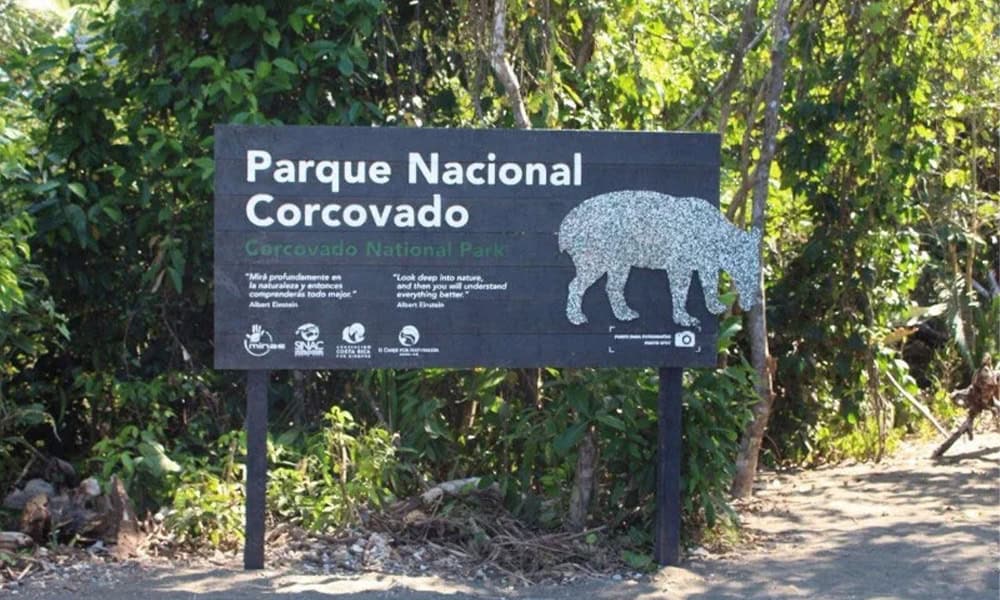
Corcovado National Park, one of Costa Rica’s most important protected areas, is again at the center of a debate over how much tourism its ecosystems can support. The park, located on the Osa Peninsula, is one of our country’s best-known nature destinations. Costa Rica’s tourism board describes Corcovado as a protected area of forests, mangroves, rivers, swamps and coastline, home to hundreds of species of birds, mammals, trees, insects, amphibians, reptiles and freshwater fish. All visitors must enter with an authorized guide.
That biological richness has made Corcovado a major draw for travelers, but rising demand has also increased pressure on the park’s infrastructure and management system. SINAC data cited in recent reporting shows the park receives more than 60,000 visitors a year, with the Sirena sector drawing particular attention because it is the most visited area.
The dispute over visitor limits reached Costa Rica’s Constitutional Chamber after Frente Amplio legislator Ariel Robles filed an appeal against a 2023 resolution by the Osa Conservation Area, known as ACOSA. That resolution increased Corcovado’s daily visitor capacity from 560 to 700 people. It also raised the Sirena sector’s daily entry quota from 120 to 240 people across two shifts and increased lodging capacity from 70 to 80 people. San Pedrillo also received an additional 100 daily visitor spaces.
The Sala IV ruled in favor of Robles and ordered ACOSA and SINAC to leave the 2023 resolution without effect. The court also ordered authorities to issue a new resolution explaining the parameters used to manage visitor flows and justifying the daily entry and lodging quotas. The ruling found that the prior decision did not clearly show the technical or scientific basis for the increase.
For conservationists, the ruling raised a larger question: can Corcovado grow as a tourism engine without weakening the protections that make it valuable in the first place?
Ifigenia Garita, a tropical biologist, conservationist and founder of the tour operator Osa Wild, has warned that the increase in visitors was approved without enough study and without matching improvements in basic infrastructure. She pointed to concerns over restrooms, water capacity, long lines, crowded meal service and visitor complaints in the Sirena area.
Garita has also said the debate is not about opposing tourism, but about spreading visitation across different sectors of the park rather than concentrating pressure on Sirena. She warned that Corcovado should not follow the same path as Manuel Antonio, where overcrowding has been a long-running point of dispute.
Supporters of expanded access argue that Corcovado is central to the economy of communities such as Puerto Jiménez, Drake Bay, Sierpe and other areas around the Osa Peninsula. Local guide Luis Diego Jiménez has defended the increase as a boost for rural community tourism, saying more visitor spaces helped local guides, boat operators, food suppliers and small businesses recover from the economic blow of the pandemic.
That position reflects the tension facing Corcovado. The park protects one of Costa Rica’s richest natural areas, but nearby communities depend heavily on tourism linked to that same protection. For many local families, fewer visitor spaces can mean fewer jobs and less income. For conservationists, adding visitors without clear limits and stronger facilities risks damaging the park and lowering the quality of the experience.
The issue remains unresolved. Recent reporting indicates that after the court decision, ACOSA issued new rules for Sirena, and local tourism representatives continued pushing for higher capacity. The debate now centers less on whether people should visit Corcovado and more on how visitor numbers are set, how those decisions are justified, and how much of the income generated by the park returns to its protection.
Corcovado’s challenge is the same one facing many of Costa Rica’s most popular protected areas: tourism can support conservation and local livelihoods, but only if growth is planned around science, infrastructure and enforcement. Without that balance, the park risks becoming a victim of its own success.





