

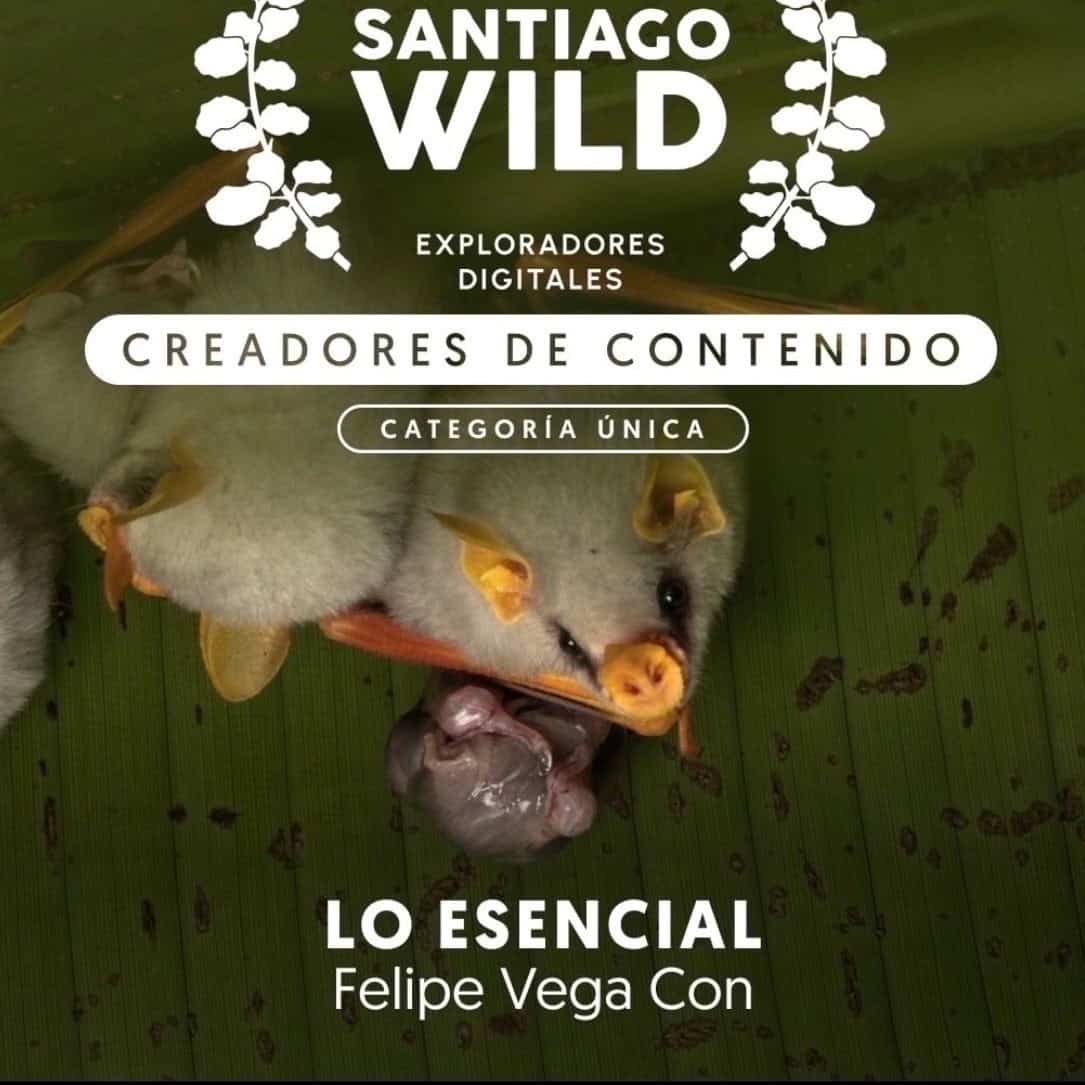
Costa Rican graphic designer and wildlife photographer Felipe Vega has become the first Costa Rican to win at Santiago Wild, one of Latin America’s leading nature film festivals, with a one-minute film about tent-making bats filmed in Sarapiquí. The film, titled Lo Esencial, won in the Digital Explorers category, which recognizes short videos and microfilms made for digital platforms and social media.
Santiago Wild’s rules define the category as films between one and three minutes, designed for platforms such as Instagram, TikTok and YouTube. Vega’s short film follows an intimate wildlife moment: the discovery of a newborn tent-making bat, known in Spanish as a murciélago tiendero. The footage was captured while he was photographing a family of bats in Sarapiquí, without expecting to witness anything unusual.
“I’m no bat expert by any means, but when I saw them, I was just calmly taking pictures. In fact, I have photos taken two minutes apart showing the entire adult family, and then, a little while later, that tiny little one with no fur at all. It was a huge surprise, and I wasn’t quite sure what I was looking at, so I just tried to record and document it,” Vega said.
Tent-making bats are known for an unusual behavior that separates them from the cave-roosting bats most people imagine. Rather than sleeping inside caves, they modify large leaves into shelters. The bats cut or chew along the structural veins of leaves, causing them to fold into a tent-like shape where they can roost during the day.
The subject matter gave the win added weight for Vega. Bats have long carried a negative reputation, a perception that worsened during the pandemic. His film tries to shift that view by showing them as mammals raising young, sheltering together and sharing behaviors that viewers can recognize.
For Vega, the goal was not simply to explain an animal behavior. He wanted the film to create an emotional connection. “I want people to truly connect with the animals. Giving them their space and this recognition is a major achievement in showcasing the biodiversity we have and in joining forces to conserve these mammals,” he said.
The win also highlights the growing role of short-form nature storytelling. Santiago Wild, organized by Ladera Sur with support from National Geographic and Jackson Wild Festival, held its sixth edition in 2026 with categories covering natural history, conservation, environmental reporting, emerging talent and digital formats.
The awards ceremony took place May 7 in Santiago, Chile, where Vega attended with his family and learned he had won. Winners in the competition received festival recognition and the opportunity for their films to be screened as part of Santiago Wild 2026. “From the moment I was nominated, it was an honor, but now that I’ve won, I see it as a great source of motivation to keep growing, improve the work I do, and continue telling the nature stories we have here,” Vega said.
Vega was not the only Costa Rican recognized at the festival. Documentary filmmaker Emi Kondo also received a nomination for Leaf Architects, a film focused on the same type of bats and the research of Costa Rican biologist Bernal Rodríguez. Vega and Kondo did not know each other, but both ended up telling stories about the same remarkable animals.
For Costa Rica, the award adds another international recognition tied to its biodiversity. For Vega, it also shows how a small moment in the forest, filmed in just one minute, can carry a larger message about conservation, curiosity and the wildlife living close by





