

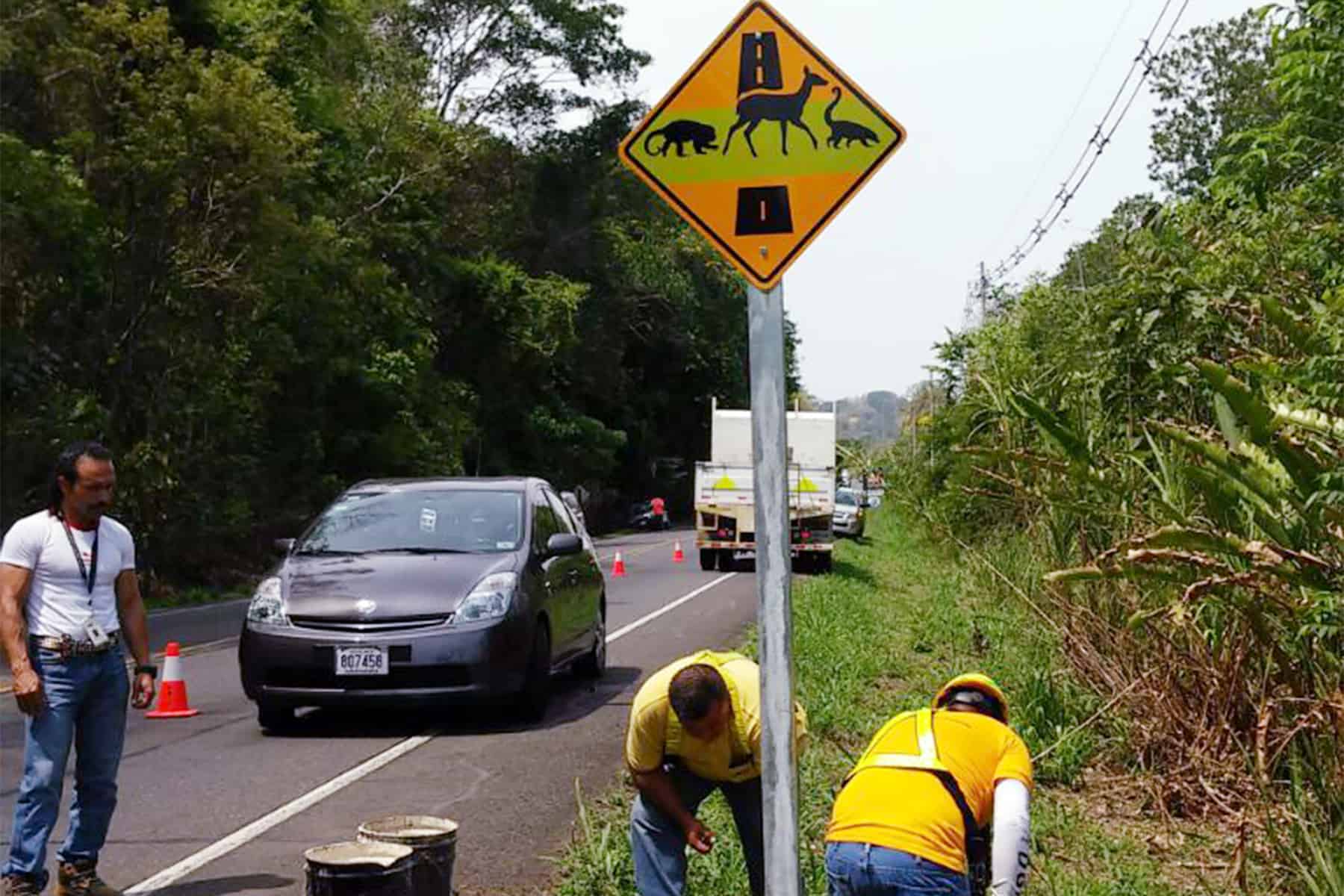
A bill that would require wildlife crossings to be included in Costa Rica road projects is at risk of being shelved, prompting warnings from conservation groups that the country could miss a major chance to protect animals killed by vehicles, electrocution and habitat fragmentation.
The proposal, Bill No. 23.166, passed a first-round vote in the Legislative Assembly on April 21 with 47 votes in favor and none against. The bill would add a new Article 31 bis to Costa Rica’s Organic Environmental Law and require wildlife crossings in public road infrastructure when technical evidence shows roads affect animal movement or ecological connectivity.
The bill still needs a second-round vote. Conservation organizations warn it could be archived unless lawmakers approve a four-year extension motion that would keep the file alive and allow it to continue through the legislative process. The motion was presented on May 18, with the bill’s current deadline approaching June 9.
The proposal was introduced on June 9, 2022, by then-Broad Front lawmaker Ariel Robles Barrantes. If the Assembly does not vote on the extension or move the bill forward in second debate before the deadline, the project would be shelved despite already clearing its first major legislative hurdle.
The legislation would apply to national and rural roads, especially in protected areas, forests, biological corridors and other sensitive zones where animal movement is part of the ecological balance. The text requires the Ministry of Public Works and Transport, municipalities and other public entities to coordinate with SINAC to determine where crossings are needed, while SETENA would review the inclusion of such measures during the environmental viability process.
For new works, the bill would require wildlife crossings to be considered from the planning stage, including financing in the project budget. For existing roads, mitigation measures would be added during maintenance, widening or rehabilitation works. SINAC would have up to 24 months to identify priority points in existing infrastructure, subject to budget availability.
The push comes as conservation groups point to years of roadkill data across our country. A compilation of Costa Rican studies cited by the organizations found more than 19,000 records of wildlife being hit by vehicles between 1996 and 2025. On Route 253 alone, along a 20-kilometer stretch between Comunidad and Papagayo, researchers estimated 7,000 wildlife collisions in 2019.
Other figures show the problem goes beyond highways. Between 2011 and 2025, SalveMonos recorded 1,552 wildlife accidents, including 994 electrocutions and 153 roadkill cases. Nearly 85 percent involved primates. Data from Vías Amigables con la Vida Silvestre, the Las Pumas Rescue and Sanctuary Center, and Panthera also documented 676 wild feline roadkill cases on national highways between 2012 and 2025, with the manigordo accounting for 482 cases.
Conservation groups argue that crossings are already working where they have been installed. SalveMonos has placed 313 arboreal wildlife bridges in Santa Cruz and Carrillo, with monitoring cameras showing repeated use, especially by howler monkeys. A Wildlife Crossing Monitoring Protocol prepared by Panthera and the Inter-American Development Bank reviewed 19 studies from 2011 to 2023 and documented 59 species using wildlife crossings in Costa Rica.
The warning places lawmakers under renewed pressure to act before the bill expires. Environmental groups say the lack of a specific wildlife crossings law can no longer be treated as a minor omission, given the volume of documented deaths and the availability of tested mitigation measures.
If the extension motion is approved, the bill would remain active and could move to a second-round vote. If not, one of Costa Rica’s most direct legislative efforts to reduce wildlife deaths on roads would be shelved just weeks after winning unanimous support in first debate.





