

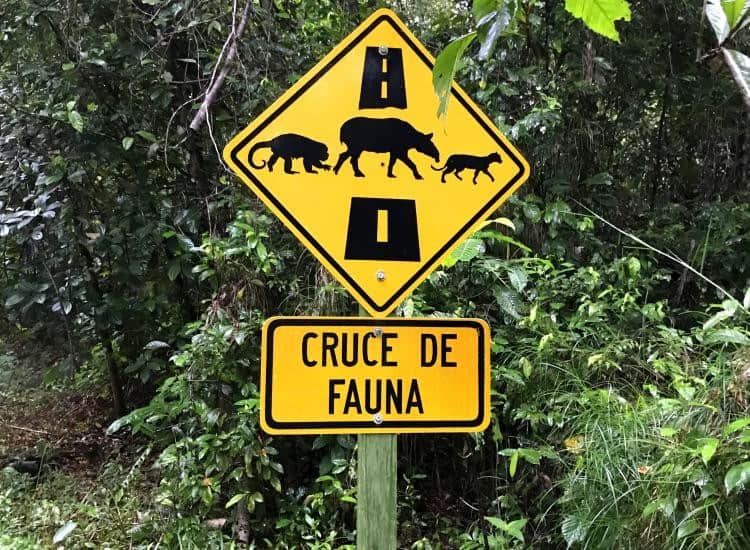
Costa Rica lawmakers have advanced a bill that would make wildlife crossings a formal requirement in road infrastructure projects, a move aimed at reducing animal deaths on highways and protecting ecological corridors across the country. The Legislative Assembly approved the bill in first debate with 47 votes in favor and none against. The proposa, would require road projects to include safe passage structures for wildlife when technical studies show that a road affects animal movement or ecological connectivity.
The measure applies to new and existing public infrastructure, including national and cantonal roads. It gives special attention to areas near protected zones, forests, national parks, biological corridors, and other fragile points where roads cut through wildlife habitat. The bill was introduced by Frente Amplio lawmaker Ariel Robles Barrantes. Its central goal is to move wildlife protection into the planning stage of public works, rather than treating it as an afterthought once animals are already being killed or displaced by roads.
Under the proposal, the Ministry of Public Works and Transportation, municipalities, and other public entities would have to coordinate with the National System of Conservation Areas to determine where wildlife crossings are needed. The National Technical Environmental Secretariat would also be required to verify that these measures are included as part of the environmental feasibility process.
The crossings could include aerial bridges, underground passages, culverts, or other structures designed around the species found in each area. The bill states that designs must be based on technical and scientific studies, including the identification of roadkill hotspots and areas where animal movement is being disrupted.
For existing roads, the proposed law would require mitigation measures to be included in maintenance, expansion, or renovation projects. That means older roads would not be exempt, although implementation would depend on technical findings and available budgets.
Responsibility for installing the structures would fall on project developers, who would have to follow the designs included in environmental management plans or environmental commitment declarations. SINAC would provide technical criteria on the location, type, and number of crossings needed.
The bill also gives SINAC 24 months to identify the main critical points in existing infrastructure and coordinate measures to address them. The Executive Branch would then have to issue regulations defining design criteria, monitoring rules, maintenance needs, and the responsibilities of each institution involved.
Costa Rica already has experience with wildlife crossings, but supporters of the bill argue that the country has lacked a clear legal obligation requiring them across public infrastructure. Legislative technical reports noted that Costa Rica has worked on the issue for more than a decade through public institutions, universities, private groups, and environmental organizations, but that the bill would strengthen mandatory measures to reduce the impact of roads on wildlife.
The issue has gained attention in recent years as road expansion, tourism growth, and development push deeper into areas used by monkeys, sloths, jaguars, tapirs, anteaters, reptiles, and other species. In many parts of the country, animals cross highways to reach food, water, nesting areas, or mating zones. Roads can split those habitats, making collisions more likely and reducing the ability of species to move safely through their natural range.
Supporters say the bill would help Costa Rica better match its conservation image with its infrastructure policy. The country promotes itself internationally for biodiversity and protected areas, but many of its roads pass through or near wildlife habitat without enough safe crossing points.
The proposal still needs approval in second debate before it can become law. If passed, it would create a binding framework for wildlife crossings in road planning, environmental review, construction, and future maintenance.





