Lately I have seen an abundance of AI-generated clips portraying happy scenes of how life was back in the day. One shows Christmas 1985, all a pictorial representation of a song such as White Christmas, with treetops glistening and children listening to hear sleigh bells in the snow. Inside the house, a roaring fireplace, a decorated tree with presents piled beneath, and mom in the kitchen making cookies.
Of course, the reality is different. My memory of that same Christmas season is working overtime, my girlfriend moving out and a close friend dying. It is easy to look back wistfully, and unrealistically, through eyes that wish those days had never ended.
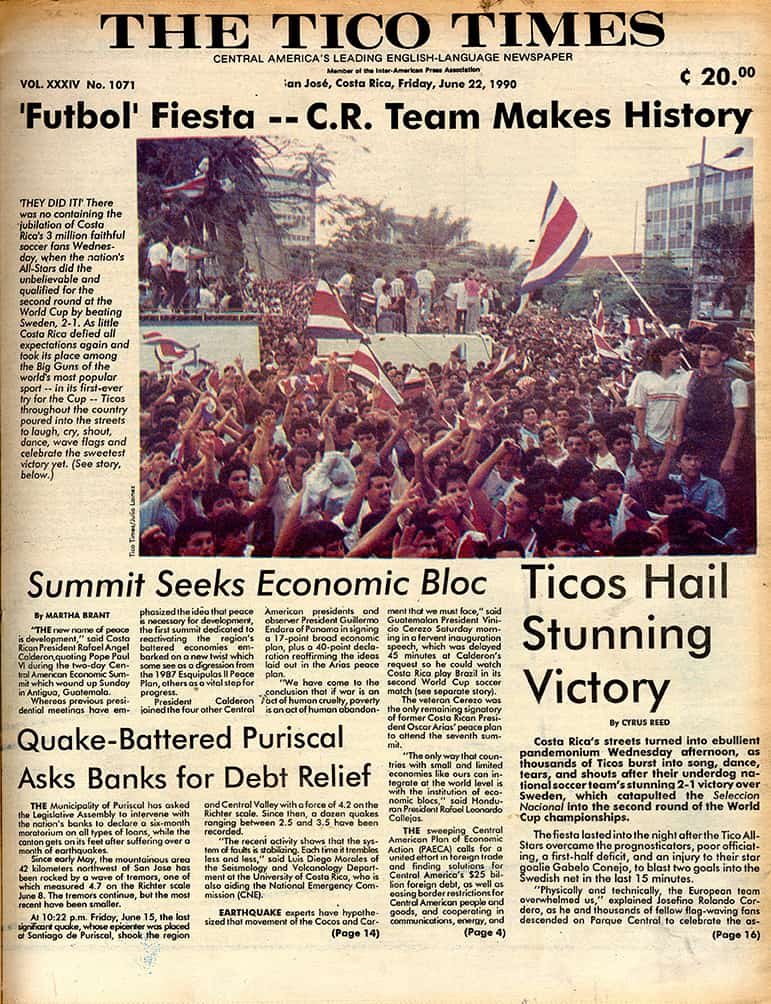
I sometimes find myself experiencing the same romantic look back when I think of my first years in Costa Rica. The year 1990 was a time of optimism. The Berlin Wall had fallen, the Soviet Union had collapsed, dictators in Central America were replaced by legally elected leaders, and here in Costa Rica, Oscar Arias was honored with a Nobel Prize a couple years before for authoring the Central American Peace Plan.
Even the hit songs reflected this. Right Here, Right Now by Jesus Jones and Winds of Change by the Scorpions celebrated this changing world. Of course, I can name things that I do not miss about those days: unpaved, potholed roads, one-lane bridges everywhere, too many people throwing personal trash out the window of a moving vehicle, no decent phone service outside the San José metro area, and the inability to find good peanut butter, among other things.
Progress was inevitable, and I welcome those changes that brought us into the modern day. Beyond this, there are things I still miss about the Costa Rica I knew. Here are a few.
Cash was king
Debit cards were still a few years away, SINPE a couple decades away. Instead of plastic cards and numbers on a screen, you carried something tangible, real bills with big numbers on them that were accepted everywhere.
A monthly trip to the bank to withdraw dollars, which I then exchanged with a trusted money changer who had his own office on Avenida Segunda and paid a slightly better rate than the bank, and I was set for the next few weeks.
Speaking of the exchange rate
Even then Costa Rica was not a cheap destination. But the exchange rate was reasonable, and those in charge had implemented an automatic gradual devaluation that slowly but continually yielded more colones for each dollar.
The exchange rate shot from 100 to the dollar in 1990 to 500 to the dollar in 2006, and has since been a series of peaks and valleys, though what we are experiencing now seems more like a plunge into the abyss than a valley.
Less taxation
The 13% VAT was a long way away. There was a standard 10% sales tax that was factored into the price of most items. It was applied additionally on bigger-ticket items like cars, building materials and appliances. I ran a home-based baking business for years that was strictly cash and carry. The stores I worked with all accepted handwritten receipts and paid me in cash.
Then came facturas timbradas, registering your business with the government, taxable income, and no more flying under the radar, except when doing business with others also flying under the radar.
No influencers
The damnable word had not yet been coined. The pre-influencer era spared us from those who use our many spectacular sites as backdrops for their selfies, and regale us from the perspective of a self-styled expert who has been in Costa Rica two years and has a 200-word Spanish vocabulary.
Obesity was rare
One of my first observations on arrival was that the whole country looked physically fit. The first village I lived in was in the Zona Sur. The two noticeably overweight men in town were also the two most prosperous, ranchers with large herds of cattle and other side investments in the area. They lived a comparative high life, and it showed.
Today there are tens of thousands as obese as the two ranchers, but it is mostly a result of poor diets laden with sugar, manteca and excess starches. More Ticos are prosperous, so maybe there is a correlation to be made between prosperity and eating, drinking and being merry to excess.
Murder was not an everyday occurrence
Cocaine and cartel-related violence was rare. There were sensational cases, such as the psicópata, a never-apprehended serial killer who numbered 19 victims in the late 1980s and early 1990s, many of them couples in secluded areas of the Central Valley.
But the numbers do not lie. In 1991 there were 132 murders, or 4.1 per 100,000 people. In 2025 there were 873 murders, 2.4 per day and 17 per 100,000.
There was more space for everyone
The population went from 3 million and change to 5 million and change. The number of vehicles on the road, and this number is staggering, went from 300,000 in 1990 to nearly 2 million in 2025, an almost sevenfold increase. And, of course, more developments, more hotels, more pieces of nature cleared and replaced by a concrete and steel structure.
I can only imagine how the AI of 2060 will look back upon present-day Costa Rica. Will today’s Costa Rica look quaint? Will people look back wistfully at bygone days, wishing they could recapture those moments?
Hell if I know. If I am still alive then I will be a centenarian and cannot imagine being that old and thinking about anything more than getting through the day.
Read more of Don Mateo’s writing from his newly published ebook.