

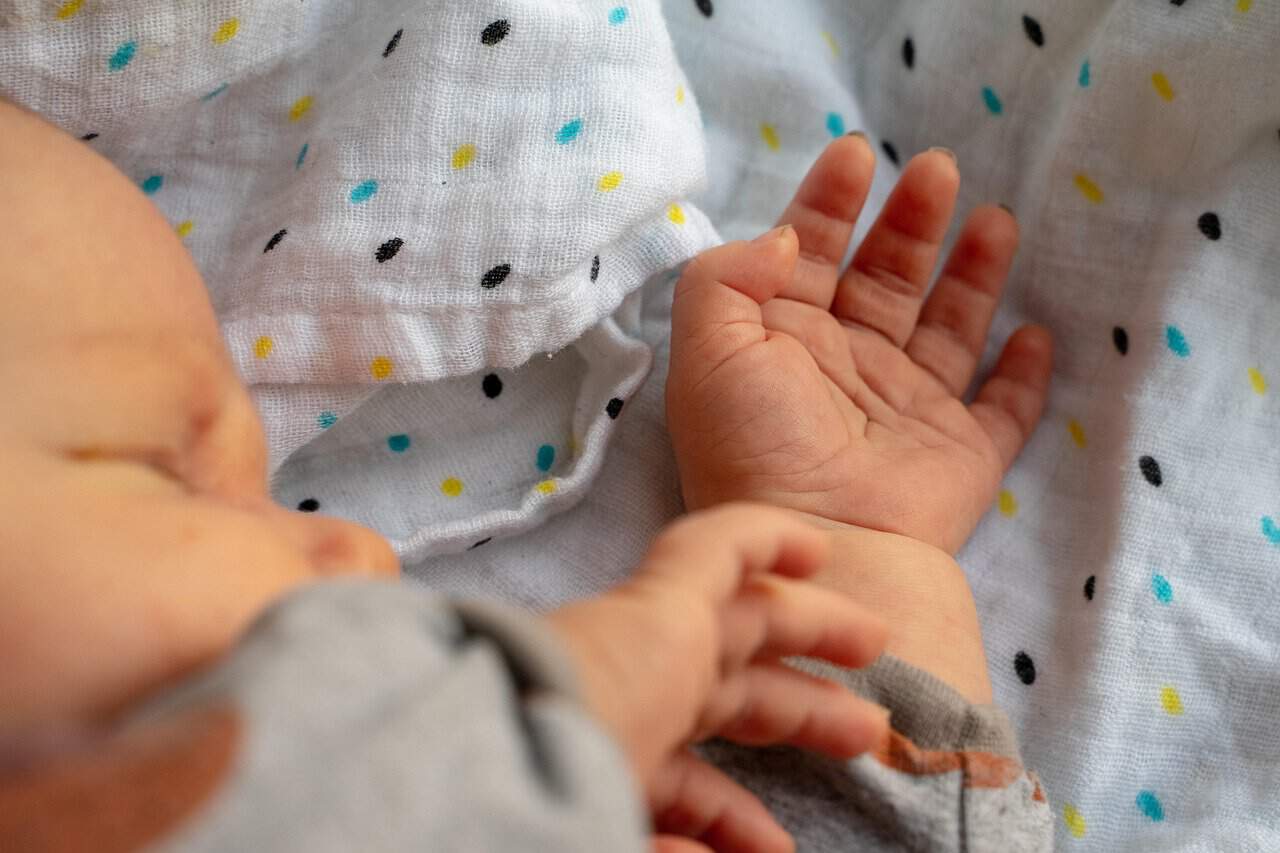
The contractions woke Diana Betancourt at 1 a.m. Like so many women before her, she sat up in bed, suddenly, and knew it was time. Her partner awoke with her. He reached for his watch and began timing the contractions, just like the couple had learned in their birthing class. The contractions came steadily, in wave after wave, increasing in intensity.
Two hours later, Diana did something else women have been doing since time immemorial: She called a midwife. Diana would give birth at home. Diana told her story with many interruptions from her very healthy and perfectly rambunctious 18-month-old, Lucía. “It was mystical, magical,” Diana said of Lucía’s home birth in Costa Rica. She paused. “It changed my life.”
The 30-year-old Colombian was in good company as she told her story last weekend on the campus of the StateUniversity at a Distance (UNED) in Sabanilla, northeast of San José. In the classrooms and auditoriums around her, 250 women were gathered from 23 countries to share both the mysterious and practical at Birth Without Borders, a congress of Midwifery Today International.
While serious medical procedures such as Cesarean sections are becoming more and more accepted around the globe as neat solutions to the “problem” of pregnancy, these women came together last weekend to say that there is no problem.
“Birth is totally natural,” said Dr. Rebecca Turecky, a certified nurse-midwife in the United States, an OB-GYN nurse in Costa Rica, and one of the organizers of the congress. She added that if there is a problem, at least in Costa Rica, it’s the way women are treated in the public hospitals.
“It’s a factory situation here,” she said.
The women had a practical reason for the gathering as well.
During the two pre-conference and three event days of the gathering, they attended workshops, traded tips, and shared experiences with each other. Forty-five of the midwives are from rural communities in Central America, and through a grant from the Global Fund for Women in the U.S. city of San Francisco, in California, they were able to travel to San José to participate.
Another 35 came on their own. The goal, Turecky said, was to share models from around the world and break from the technology side of things. To “humanize birth.”
Intense Home Birth
Diana’s midwife didn’t arrive until 9 a.m. She had the wisdom of experience, and she knew these things take time. She came with a doula, the woman who had been charged with preparing Diana emotionally for the birth, and who would now be by her side as she went through the act itself.
They went downstairs, and Diana slid into the Jacuzzi tub that she and her partner had prepared. He slipped in behind her, holding her.
“I don’t remember anything else,” Diana said, except that it was “very, very intense.”
The experience Diana underwent was water birth, a style of child delivery in which the mother lies in a tub of warm water during labor and during the actual delivery. This type of hydrotherapy can ease the pain of unmedicated childbirth, as well as facilitate the baby’s entry into its new world. But while water birth – and home birth in general – is gaining acceptance in North American hospitals, according to conference organizers, it’s harder to find in Costa Rica.
Midwifery is essentially illegal except in some indigenous communities, and midwives in Costa Rica like Diana’s who don’t have a nurse’s certification must practice under the table.
Costa Rica’s public institutions aren’t very friendly to quirky birthing procedures either. Through a mixture of institutional inertia and overcrowding, Turecky said giving birth in a Costa Rican hospital has become a very unpleasant experience.
“We hear from people who experience pregnancy with a lot of hope and a lot of joy, but then they go to public hospitals and it’s a disaster,” Turecky said. In addition to overcrowding and the factory mentality, part of the reason, she said, is the overuse of invasive medical techniques.
The Cesarean section is one example. Another is the episiotomy, in which the perineum between the vagina and anus is cut to make extra space for the baby. “As if the mom can’t handle the baby coming out,” Turecky said.
Not to say the possibility for change isn’t there. Several Social Security System (Caja) doctors attended the congress, and Turecky said they left impressed.
Other attendees included U.S. author and midwife guru Ina May Gaskin, who led the backlash to overmedicated birth in the 1960s. Today, she speaks at conferences and medical schools; a method for shifting shoulder dystocia babies into the delivery position has been named after her: the Gaskin Maneuver.
Much of the wisdom at the conference, however, came from the traditional midwives who had been brought to share their experiences. One Mexican midwife taught a method for shifting a breach baby by wrapping a blanket around the mother’s hips and shimmying it gently.
Most of the midwives use time-tested massage techniques to gently encourage the babies into the right positions. The midwives also explained their herbal remedies and natural techniques they use to stop hemorrhaging and ease the stress of a long labor.
“Actually, I’ve been surprised at the amount of Ticos who use traditional medicine,” said María Cecilia Escobar, a midwife from Guatemala and representative of a midwife clinic in her department in Quetzaltenango that has 2,000 traditional midwives.
“We’re not doing anything original,” Turecky said. “We’re just sharing our own movement for the humanization of childbirth.”
Pain and Transcendence
Diana took on a dreamy look as she described giving birth to her first daughter. The pain, she said, was intense, and she had to “transcend” it and get beyond the biblical idea that childbirth is a punishment.
As she approached her 12th hour of labor, the time came. Her partner lifted her gently by the armpits. She squatted, and pushed hard, pushed the baby out. Her partner cut the umbilical cord, and she came out of the water and lay on a bed nearby. The midwife handed her her first child – a daughter.
“Your body is prepared for it,” Diana said. “You just have to allow it to happen and abandon yourself.”





