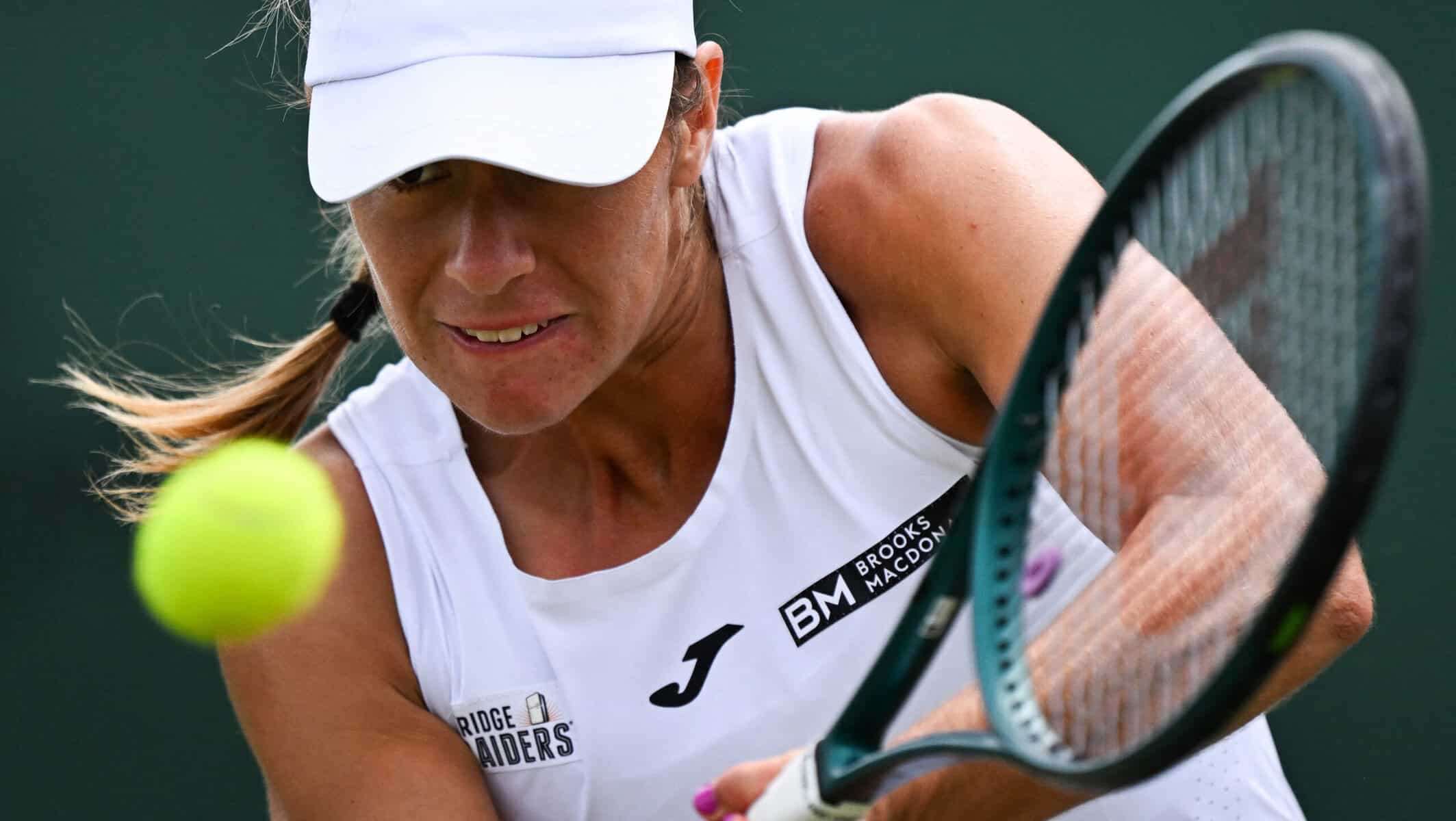
Latin America will not arrive at Wimbledon without talent. It will arrive without a clear women’s singles favorite. That is the more honest reading of the region’s place on the WTA Tour as the grass-court season moves toward the All England Club. There are names worth watching, especially Argentina’s Solana Sierra, Colombia’s Camila Osorio and Mexico’s Renata Zarazúa.
There is also the lingering presence of Brazil’s Beatriz Haddad Maia, still one of the region’s most accomplished players of the past decade. But there is no obvious Latin American contender in the women’s draw. Not yet.
Wimbledon begins June 29 and runs through July 12, with a 128-player women’s singles field on grass. For Latin America, the challenge is not simply getting players into the draw. It is turning those entries into second-week runs in a part of the season that has rarely been forgiving to the region’s women.
Sierra may be the most interesting name in the group. The 22-year-old Argentine has moved into the top 60 and is coming off the kind of Grand Slam result that changes how a player is viewed. At Roland Garros, she stunned Jasmine Paolini, a former French Open and Wimbledon finalist, and gave Argentina one of its biggest women’s tennis moments in years.
That win matters. It showed Sierra can handle a major-stage opponent and a major-stage atmosphere. It also gave Latin American tennis a young player who is no longer just a prospect.
Grass, though, asks different questions. Sierra grew up on clay, and her game is still better suited to longer rallies, heavier points and time to build patterns. Wimbledon will demand quicker decisions, cleaner first-strike tennis and steadier serving under pressure. Her ranking makes her the region’s highest-ranked woman heading toward the tournament, but her grass-court ceiling remains a live question.
Osorio brings a different profile. The Colombian is experienced, scrappy and dangerous when she turns matches into physical, emotional battles. She has built a solid 2026 season and remains one of the more reliable Latin American players inside the top 100.
Her problem at Wimbledon is the same one that has followed her throughout her career. She can compete with almost anyone from the baseline, but grass can punish players who do not consistently earn cheap points on serve. Osorio’s movement and fight will keep her in matches. Whether she can dictate enough on a faster surface is the bigger issue.
Zarazúa is another player capable of making a first-week story. The Mexican has become one of the most important women’s tennis figures in her country’s modern era, and she continues to hold a place inside the top 100. She came through qualifying in Berlin this week before losing to Linda Noskova, the No. 8 seed, 6-1, 6-4.
That result was not a disaster. Noskova is exactly the kind of opponent who can expose the gap between a solid tour player and a dangerous grass-court hitter. Zarazúa’s task at Wimbledon will be to use variety, timing and court sense to prevent bigger hitters from controlling points too early.
Then there is Haddad Maia, whose situation is harder to frame. At her best, the Brazilian has been the region’s clearest women’s tennis standard-bearer. She reached the top 10 in 2023, won titles on grass earlier in her career, and has the left-handed game, size and doubles instincts to trouble opponents on faster courts.
But the current picture is not as strong. Haddad Maia has slipped sharply from her peak, and her recent results do not make her feel like a safe pick for a deep Wimbledon run. Her name still carries weight. Her form does not carry the same certainty.
That leaves Latin America with depth but no true anchor. Sierra has the most momentum. Osorio has the consistency. Zarazúa has the story value. Haddad Maia has the résumé. None enters Wimbledon looking like a likely quarterfinalist.
The region’s best path may be through the draw itself. A favorable first-round opponent, a seed short on grass rhythm, or a section opened by an early upset could change the tone quickly. Wimbledon often rewards players who arrive with modest expectations and adjust faster than the field around them.
For Latin American tennis, that may be the realistic hope this year. Not a favorite. Not a headline contender from day one. But several players with enough quality to turn one good draw, one strong serving day, or one upset into something bigger.
The women’s picture is thin. It is not empty.
And if one Latin American player is going to make Wimbledon noise, the first week will tell us fast.