

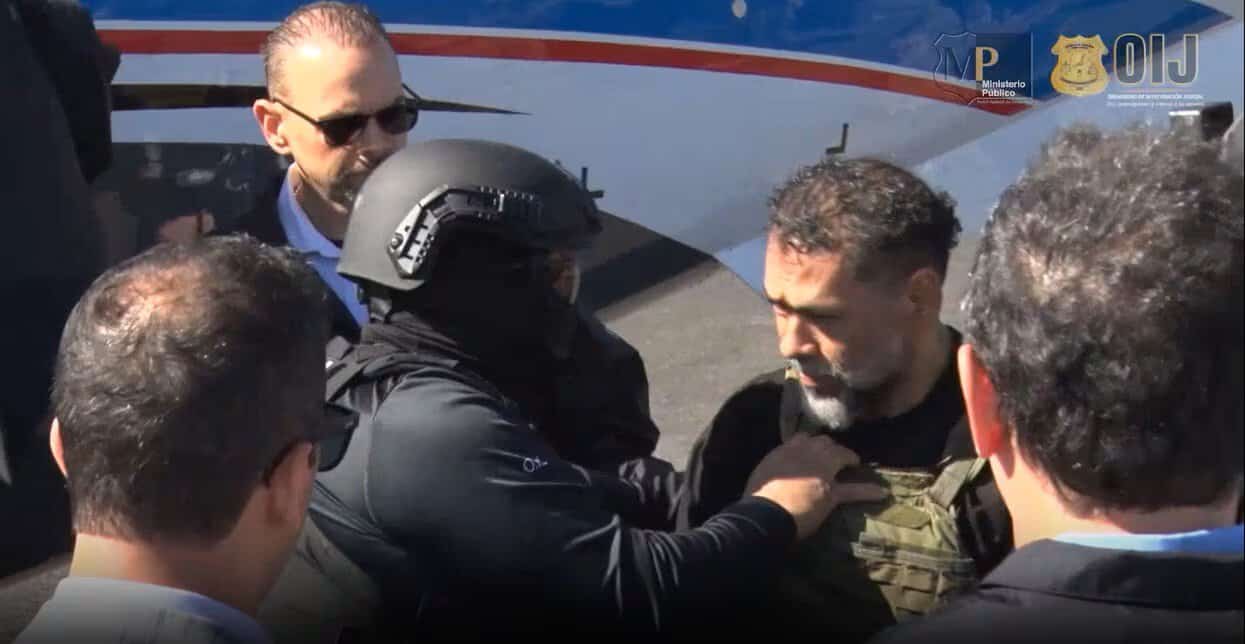
Edwin Danney López Vega, the Costa Rican alleged drug trafficker known as “Pecho de Rata,” could avoid a full jury trial in the United States after his defense confirmed it is reviewing a plea proposal from federal prosecutors. López Vega’s attorney, Gaylon P. Riddels, asked a federal judge in Texas for additional time to review the government’s proposal, discuss its terms with his client and continue negotiations with prosecutors.
López Vega has not agreed to plead guilty, and the terms of the proposed deal have not been made public. Chief U.S. District Judge Amos L. Mazzant III approved the request yesterday and postponed the final pretrial conference from September 4, 2026, until January 8, 2027, at the Paul Brown United States Courthouse in Sherman, Texas.
The delay gives the defense several additional months to examine evidence and decide whether a negotiated guilty plea makes more sense than taking the case before a jury. December 18 is now the key date. The court ordered the parties to notify it of a plea agreement or file another request for a delay by then.
The judge also warned that waiting beyond that deadline could affect López Vega’s ability to receive a sentencing reduction for accepting responsibility. Other pretrial motions are due by December 28.If no agreement is reached, the January hearing is expected to set dates for jury selection and trial.The development marks a potentially significant turn in one of the most closely watched cases arising from Costa Rica’s historic decision to begin extraditing its own citizens.
López Vega and former security minister and magistrate Celso Gamboa Sánchez were flown to Texas on March 20, becoming the first Costa Rican nationals extradited to the United States after the country changed its Constitution in May 2025 to permit extradition of citizens in cases involving international drug trafficking. The two men face separate federal cases.
U.S. prosecutors charged López Vega in June 2025 with conspiracy to manufacture and distribute cocaine while knowing the drugs would be imported into the United States. Federal prosecutors allege that he participated in an international trafficking organization that moved cocaine through Colombia, Panama, Costa Rica, Guatemala, Mexico and the United States.
U.S. authorities have described López Vega as an important figure in cocaine trafficking through Costa Rica’s Caribbean region. The U.S. Treasury Department sanctioned him in 2025 and said he operated from Limón and worked with other major trafficking figures to move cocaine through Costa Rica and launder drug proceeds.
The federal charges ordinarily expose defendants to penalties that can include life imprisonment. López Vega’s extradition, however, came with important limits negotiated before Costa Rica allowed him to leave the country.
U.S. authorities provided formal guarantees that López Vega would not receive a life sentence or a prison term exceeding Costa Rica’s maximum of 50 years. The extradition also limits the U.S. case against him to conduct that Costa Rican courts determined could legally be prosecuted following his previous convictions in Costa Rica.
A plea agreement could now determine how much of that potential exposure López Vega actually faces. Such an agreement would normally require him to plead guilty to one or more charges in exchange for concessions negotiated with prosecutors. Any sentence would ultimately be determined through the federal court process and subject to the conditions attached to his extradition.
For now, there is no deal. Yesterday’s filing shows only that negotiations have advanced far enough for prosecutors to put a proposal before the defense and for López Vega’s lawyers to seek months of additional time to consider it. That leaves the next major decision with López Vega: reach an agreement with U.S. prosecutors before December 18, seek another delay, or move toward a federal jury trial in 2027.





