

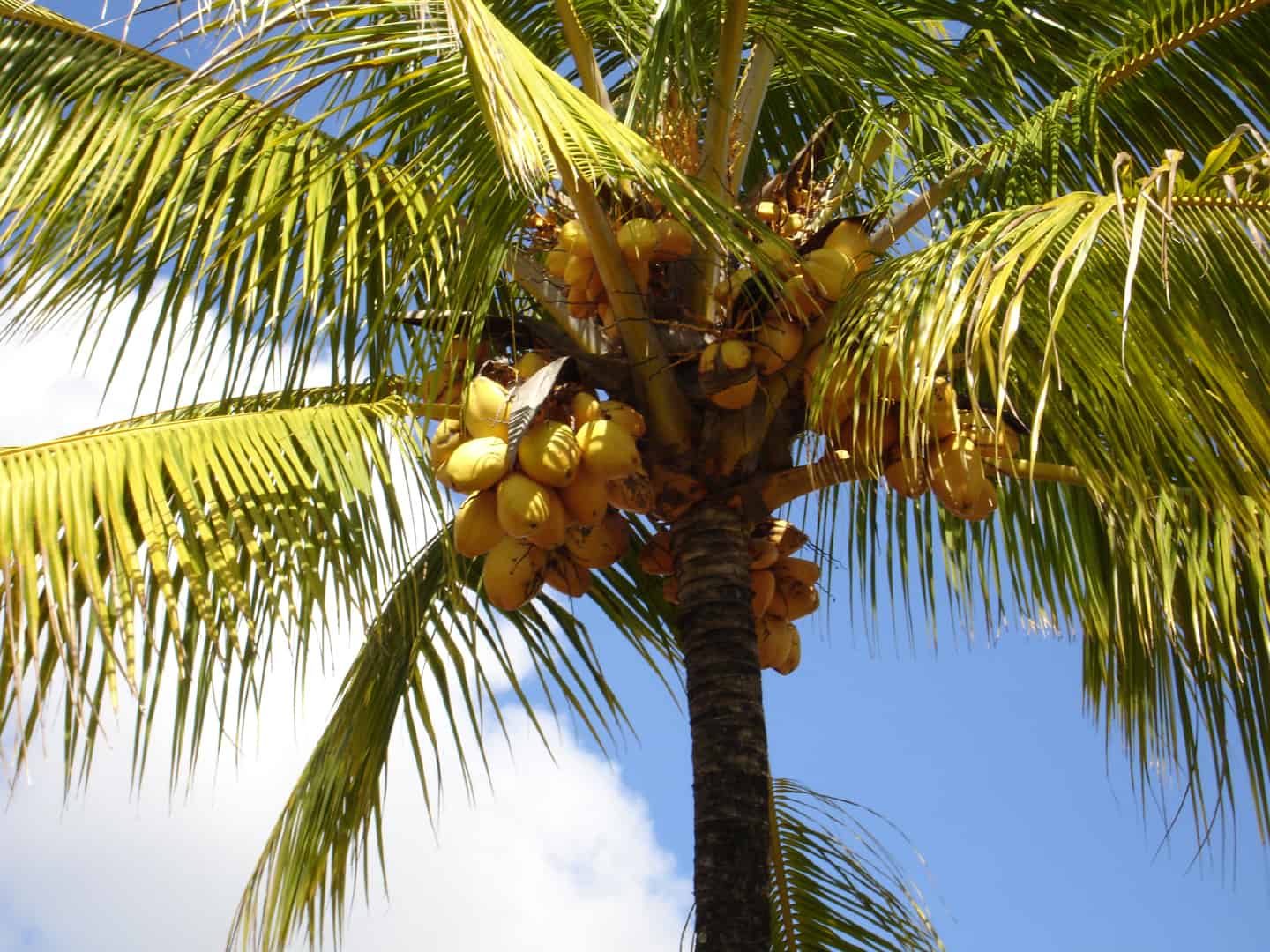
The coconut is called the tree of life, for it has been providing humans food and drink, materials for housing, fuel and medicine for thousands of years. One of the most important cultivated trees in the world, Cocos nucifera of the palm family, Palmaceae, is now present in all tropical regions on the planet and enjoys well deserved popularity among food lovers and industrial producers.
Yet the origin of the coconut tree is shrouded in mystery and speculation. Many scholars believe it originated in the tropical islands of the Pacific, from there spreading to other tropical areas in the Americas, India, South Asia and Oceania. One legend relates the coconut’s origins to CocosIsland, now part of Costa Rica’s world-famous national park system.
Located hundreds of miles off the country’s Pacific coast, the island was visited by 14th-century explorers who found coconut forests that seemed to them native and also ancient.
Revered by ancient cultures, the coconut played a dignified role in religion as well as in the nutrition and well-being of humankind.
In South Asia, coconuts are known as sriphala, or “fruit of the gods,” and symbolize usefulness, selfless service, prosperity and generosity.
The palms are believed to be the embodiment of the ancient Indian concept of kalpavriksha – the tree that grants all wishes.
We have found ways to use every single part of this crop to our benefit: the trunks for timber, leaves for thatch, fibrous coir husks as base material for ropes and coconut matting, and nuts for food. Unripe, green nuts contain coconut water, a powerful thirst quencher known here as agua de pipa. The nutmeat can be eaten fresh or dried (as desiccated or flaked coconut) and is also available in blocks of creamed coconut.
Valuable coconut oil is extracted from the nutmeat and used in margarines, soaps and detergents, as well as for cooking.
Though high in saturated fat, every 100 grams of fresh coconut contains 3.2 grams of protein in addition to 36 grams of fat.
Desiccated coconut contains 5.6 grams of protein and 62 grams of fat, as well as some vital trace elements. About 50% of coconut oil is lauric acid – one of the good fats.
Found in both mother’s milk and coconut oil, lauric acid is a rare fatty acid in its monoglyceride form (monolaurin, or ML), which supports healthy metabolism and is being studied for its antifungal, antiviral and antibacterial properties. It is also a good source of manganese, selenium, copper, iron and dietary fiber.
From a culinary standpoint, coconut is present in the cuisines of many regions, particularly Southeast Asia and the South Pacific, southern India, tropical Africa and the Caribbean. Each culture has utilized the flesh and milk of the coconut in its own ways.
The coconut’s path to the table is varied in forms and styles of cooking, ranging from baked goods, drinks, cocktails and desserts to more savory dishes such as soups, creams and sauces. Of course, the use of coconut milk is unforgettable in the hot and spicy curries of South Indian and Thai cuisines.
“Not shy” is one way to describe coconut milk’s presence in many Caribbean stews and dishes, such as the famous rondón, or “rundown,” a traditional Afro-Caribbean dish from the Caribbean province of Limón. Usually made for a large group, rondón is a seafood stew featuring local tubers such as yuca (cassava or manioc) and camote (a type of Caribbean sweet potato).
The stew is gently simmered and exquisitely spiced with cinnamon, allspice, ginger, coffee and hot chilies. The Caribbean version of curry, rondón is a must when visiting the southern Caribbean beaches of Puerto Viejo and Cahuita.
Another example of coconut’s use is “rice and beans,” Limón’s delicious take on gallo pinto, made with refreshing coconut milk and a symphony of spices and peppers. Regularly accompanying baked chicken with coconut gravy, this is a staple dish of the Caribbean diet.
In other parts of Costa Rica, coconut is used in sweets and desserts. Look for classic cocadas or tártaras – delicious coconut and caramel brittle baked in pastry – sold near bus stops and at busy intersections. Another typical dessert is cajetas de coco, coconutand-brown-sugar sweets similar to cocadas but chewier.
Agua de pipa is usually sold anywhere the heat strikes. Ice-cold young coconuts are decapitated to reveal a hole seemingly made for a straw. Enjoy – pure and delicious –nature’s own electrolyte power booster, with no added sugar, sodium or artificial colorings. It even makes a good mixer for other concoctions.
For this column, I offer a recipe for rice and beans with spiced coconut gravy, in honor of the coconut flair used in Caribbean cooking. ¡Buen provecho!
Caribbean Rice and Beans with Spiced Coconut Gravy
Rice and Beans
Ingredients:
- 3 cups cooked, cold white rice
- 1 cup cooked red or black beans
- 1 small onion, minced
- 4 garlic cloves, minced
- 1-inch piece of fresh ginger, grated
- 1 red bell pepper, finely chopped
- 1 bunch cilantro, finely chopped
- 1 1/2 cups coconut milk
- 2 tsp. hot sauce
- 1 tsp. cinnamon
- 1 tsp. allspice
- Salt and pepper to taste
- 2 tbsp. vegetable oil
Cooking Directions:
In a wide skillet over medium heat, fry onions and peppers in oil for about 5 minutes, stirring constantly. Add garlic and ginger and sauté for one minute. Incorporate the remaining ingredients, bring to a boil and simmer until most of the liquid has evaporated.
Adjust flavors and reserve.
Coconut Gravy
Ingredients:
- 1 1/2 cups coconut milk
- 1 tsp. curry powder
- 1 tsp. soy sauce
- 1 tbsp. sugar
- 1 tbsp. lemon juice
- 2 tbsp. cornstarch
Cooking Directions:
In a saucepan, bring coconut milk to a boil. Add curry, sugar, soy sauce and lemon juice, and simmer for two minutes. In a bowl, mix cornstarch and 1/4 cup water until no lumps are visible. Add to coconut-curry mixture and whisk until gravy thickens. To serve, make a bed of the hot rice and beans and pour the gravy on top.
Makes five servings.





