
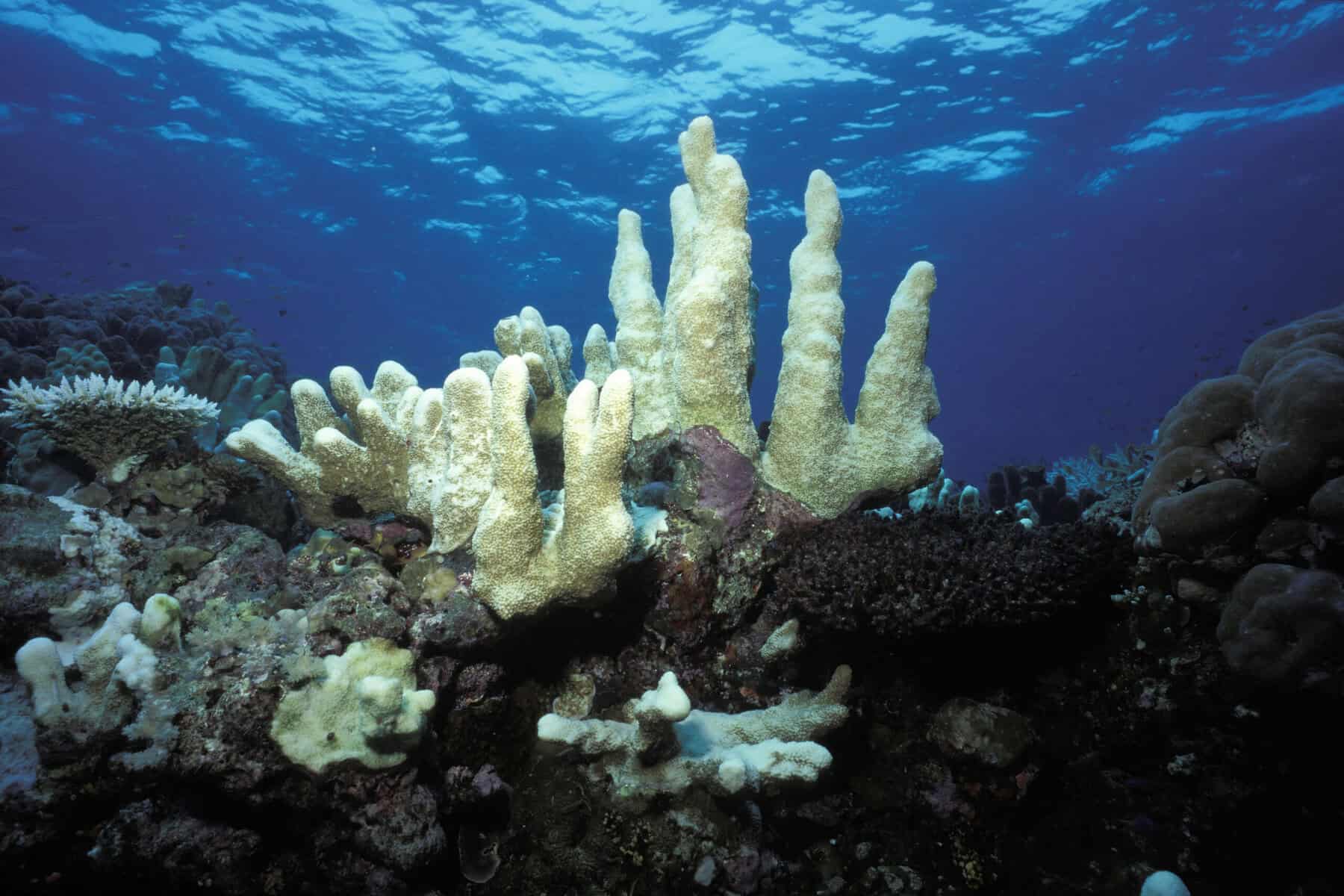
Records preserved in coral skeletons dating back 1,000 years show that El Niño events are becoming more intense as the planet warms, with major implications for a future increasingly shaped by climate change, according to a study published Thursday. The research, published in the journal Science, comes as a strengthening El Niño event in the equatorial Pacific could become the most intense ever recorded, surpassing major events in 2015, 1997 and 1982, according to scientific estimates.
It is expected to peak toward the end of the year and could contribute to record global heat in 2027. Its effects are already being felt from Central America, where drought conditions are worsening, to Indonesia, where it is helping fuel intense wildfires. “We did not know this before this study, but now we know that, in the eastern Pacific, these very strong El Niño events are unusual in the context of the last 1,000 years and are well above preindustrial levels,” lead author Julia Cole, a professor at the University of Michigan, said.
Scientists broadly agree that El Niño’s worldwide weather effects overlap with climate change, worsening rainfall in some places while increasing drought and heat in others. There has been less agreement, however, over whether global warming itself is strengthening the El Niño-Southern Oscillation, or ENSO, the cycle of warm El Niño and cool La Niña events in the tropical Pacific that can dramatically alter weather patterns around the world.
Looking Back 1,000 Years
Although several strong El Niño events occurred in the late 20th and early 21st centuries, satellite records only extend back to the early 1980s. Before that, observations collected from ships were limited, Cole explained. That is why paleoclimate scientists turn to indirect records such as corals, which can act as natural climate archives.
The Galápagos Islands, the volcanic archipelago off Ecuador’s western coast and directly within the eastern Pacific El Niño zone, contain a rich collection of living and fossilized corals. The corals grow by roughly one to two centimeters each year. By taking core samples at millimeter-scale intervals, researchers were able to reconstruct monthly temperature records from different periods covering the past 1,000 years.
The chemical composition of coral skeletons provides clues about the conditions in which they formed. Scientists examined measurements including the ratio of strontium to calcium and different forms of oxygen preserved inside the coral. The results showed that temperature swings associated with ENSO cycles were considerably smaller during the preindustrial period from 1000 to 1850.
They began increasing in the late 19th century and showed a striking amplification during the past 40 years. Researchers compared those changes with climate models simulating the preindustrial era and found that the increase was greater than what could be explained by natural causes alone.
Major Implications
“That strengthening runs parallel to global warming, so it appears to be related to the warming of the planet caused by human fossil fuel use,” Cole said. “The implications for people are immense because El Niño is a major source of climate extremes and risks,” she added. Andrew Dessler, a climate scientist at Texas A&M University who was not involved in the study, told AFP that the findings reinforce the urgency of moving away from fossil fuels and toward climate-safe renewable energy.
The study found that ENSO variability in the eastern equatorial Pacific is now approximately 36 percent greater than during the preindustrial era, largely because of stronger El Niño events. That figure does not mean individual El Niño events are necessarily 36 percent stronger. Instead, it measures the increased variability of the entire ocean-atmosphere system, including both its warm El Niño and cool La Niña phases.
Cole said she hopes the research will help close an important gap in scientists’ understanding of how a warming planet is affecting El Niño. “Our corals are a time machine into the past, not into the future,” she said. “What we can say is that the trend is happening, the trend is continuing, and we are seeing it every day now.”