

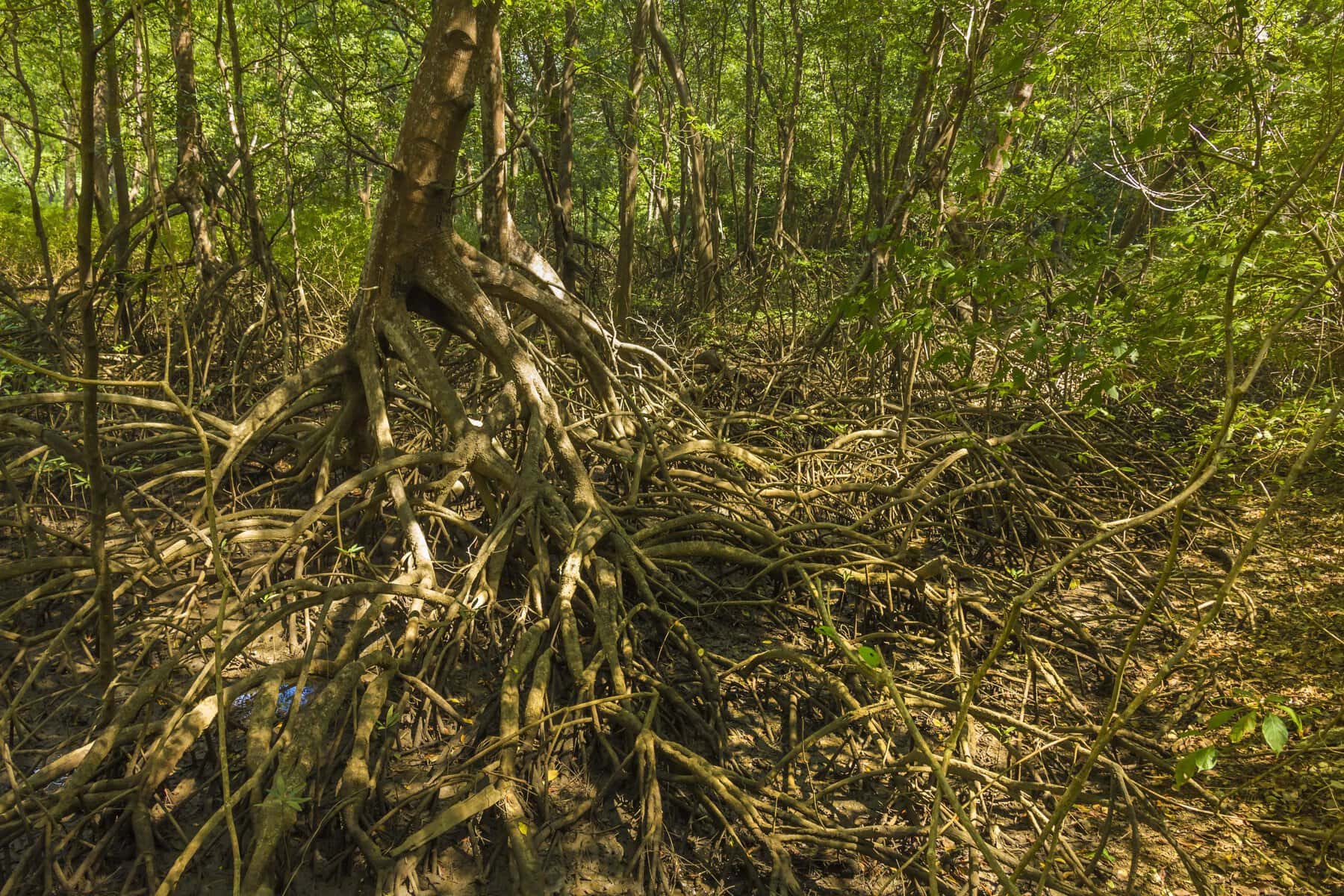
Residents of Playa Sámara are pushing for the restoration of the Río Lagarto mangrove, an ecosystem that environmental authorities say was heavily altered by decades of filling and development pressure along this part of Costa Rica’s Pacific coast. The National System of Conservation Areas (SINAC), part of the Ministry of Environment and Energy, is now looking for judicial authorization to conduct field studies on two private properties in the Cangrejal area of Sámara.
The work is intended to help authorities determine the original extent of the mangrove, measure the depth of fill placed over the wetland and establish its official boundaries. According to SINAC estimates, more than 300,000 cubic meters of fill material were deposited in the area between 1980 and 1996. Removing that amount would require roughly 21,000 dump-truck trips, making any restoration effort a long and complicated process.
SINAC estimates that restoring the mangrove could take about 10 years and cost approximately ₡179 million. The agency has indicated that the work would need to be carried out gradually. Removing large quantities of fill too quickly could send sediment into the ocean and potentially affect nearby marine ecosystems.
Residents say the damage goes back decades. Patrick McGoey, a Playa Sámara resident involved in efforts to protect the area, said the mangrove was extensively altered during the expansion of tourism infrastructure, particularly during the 1980s. “There was a great deal of manipulation in the mangrove forest, including the placement of fill material for the construction of tourism infrastructure,” McGoey said.
He said trees were cut and removed and the land was filled, leaving parts of the former mangrove looking more like open farmland. McGoey also pointed to renewed development pressure in 2024, when plans for the Vistas de Sámara project drew strong opposition from local residents.
The proposal called for 37 10-story apartment towers containing thousands of residential units, along with 333 condominium lots and other development near the Río Lagarto wetland. A total of 366 Playa Sámara residents formally opposed the project in a manifesto submitted to the Municipality of Nicoya.
The developer later announced that it would not move forward with the project. Costa Rica’s environmental authority, SETENA, subsequently canceled its environmental viability after the developer requested that the file be closed and community organizations are now focusing on what comes next.
The Coalition for Human Rights and the Environment (CODEHMA), has joined residents and civil society groups in calling for the Río Lagarto estuary and mangrove to be restored and protected. Their campaign seeks to raise public awareness while pressing government institutions to establish the mangrove’s boundaries and move forward with a formal restoration plan.
Javier Armijo, a resident of the Canto Los Gavilanes area of Sámara, said government support will be essential. “Among other things, we need the area to be officially demarcated so it can be permanently restored, and a restoration plan implemented just as it would be for any other ecosystem,” Armijo said.
He said the community is not opposed to development but wants future projects to reflect the environmental sensitivity of the area. “Fortunately, the apartment tower project did not move forward,” Armijo said. “We’re not against development, but it must be carried out in a thoughtful and proportionate manner.”
Juanita Castillo, a resident of downtown Playa Sámara, said the mangrove also played an important economic role in earlier generations. She said small-scale fishermen once fished from the wetland and sold their catch in Nicoya, providing income for local families. Historical aerial imagery examined by Costa Rican authorities shows that several hectares of mangrove existed in the area during the mid-20th century before much of it disappeared as the land was filled and altered.
For residents pushing for its recovery, the current effort is no longer simply about stopping another development project. It is about determining exactly where the mangrove once stood and beginning what could be a decade-long effort to bring part of it back.





