

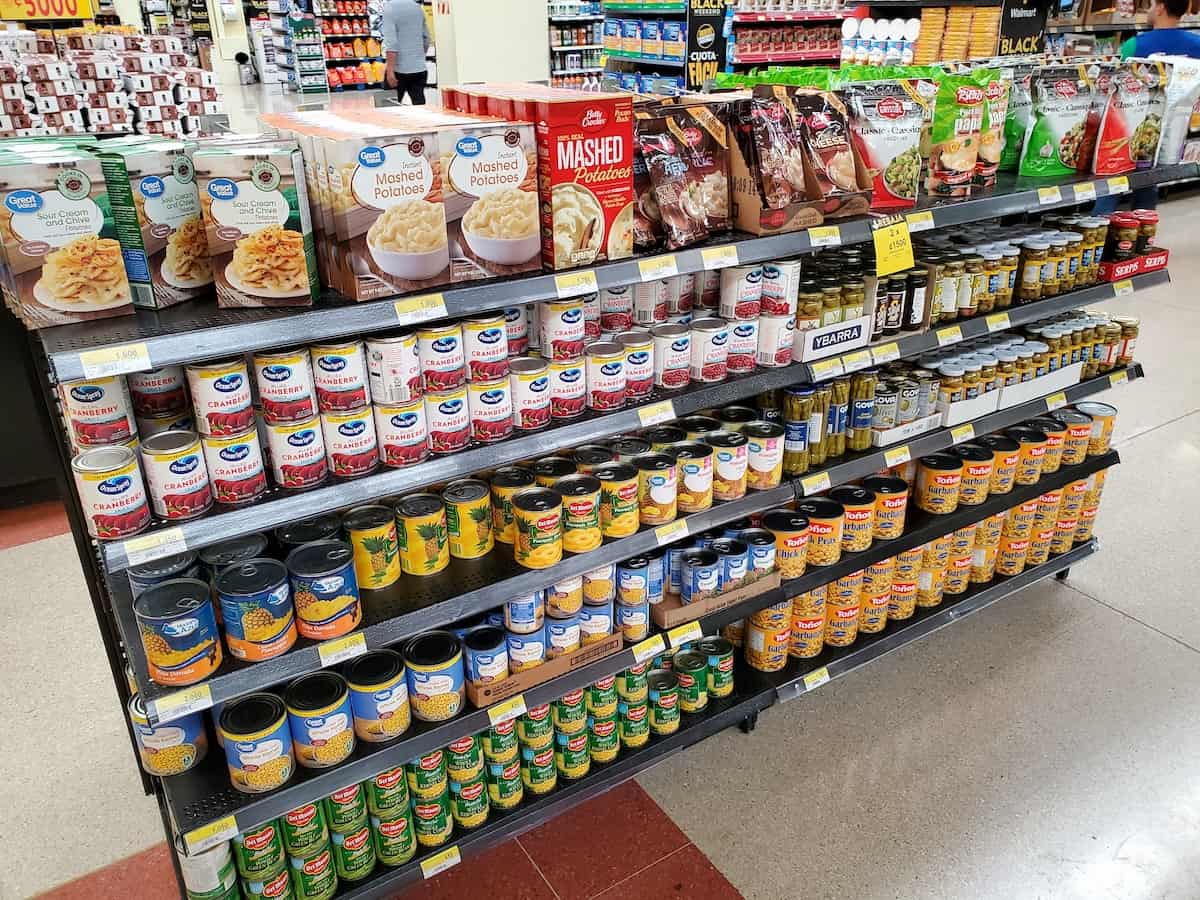
Costa Rica is studying a plan that could raise the sales tax on basic grocery staples from the current 1% toward the standard 13% rate, a proposal that has reignited a politically charged debate over how the country pays its bills and who should carry the cost.
Finance Minister Rodrigo Chaves, who also serves as minister of the presidency, has promoted the idea in recent weeks as part of a broader fiscal package. He has framed it not as a tax hike but as the removal of a benefit that, he argues, currently subsidizes wealthy and poor shoppers alike. “There will be no new taxes; the VAT will not go up, period,” Chaves said, questioning why higher-income households in affluent neighborhoods receive the same break on staples as families living in poverty.
The mechanism under discussion is a so-called “personalized VAT.” Under it, all consumers would pay the same rate at the register on basic-basket goods, and the state would later refund the tax to lower-income households identified through Sinirube, the government’s social-registry system. Nogui Acosta, head of the governing Pueblo Soberano bloc and a former finance minister, said the country already uses a comparable model to refund sales tax to poor families on school supplies, uniforms, computers, tablets and phones under a law passed in October 2024.
The proposal traces back to the International Monetary Fund, which in its 2026 Article IV report released in late May recommended applying the general 13% rate to the “canasta básica tributaria” — the tax basket — and compensating vulnerable households through targeted transfers. Costa Rica’s basic goods have been taxed at a reduced 1% rate since the 2018 public-finance reform law. According to the Finance Ministry, that exemption represented roughly ₡500 billion (about $1.1 billion) in forgone revenue in 2024, a figure officials say disproportionately benefits wealthier consumers who spend more.
The government is separately reviewing which products belong in the basket. The tax basket currently covers more than 200 items across some 20 categories, according to the national statistics institute (INEC), though officials including Chaves and presidential adviser Pilar Cisneros have questioned whether it should include as many as it does, citing counts of roughly 170 to 189 products.
For anyone who shops for groceries in Costa Rica, the practical stakes are direct. If enacted, everyday staples such as rice, beans, eggs, chicken, bread and milk — now taxed at 1% — could be taxed at a substantially higher rate, and the planned refunds would flow only to households classified as low-income by Sinirube. That means expat residents and middle- and upper-income Costa Ricans alike would pay the higher rate at checkout without compensation.
Any change is far from certain. The measure is a proposal under study, not a filed bill, and any reform to the tax code would require approval by the Legislative Assembly. Pueblo Soberano holds 31 of 57 seats — a majority, but not a guaranteed one for a tax increase, historically among the hardest measures to pass in the chamber. Acosta said he did not know when the initiative would reach lawmakers but expected it in the short term.
The plan drew fresh criticism this week. Frente Amplio legislator Ariel Robles argued the country had gone “from a jaguar economy to a scrawny kitten,” faulting the government for weighing taxes on first-necessity goods while leaving other sectors untouched. The final decision, Chaves has said, rests with President Laura Fernández and the Assembly.





