
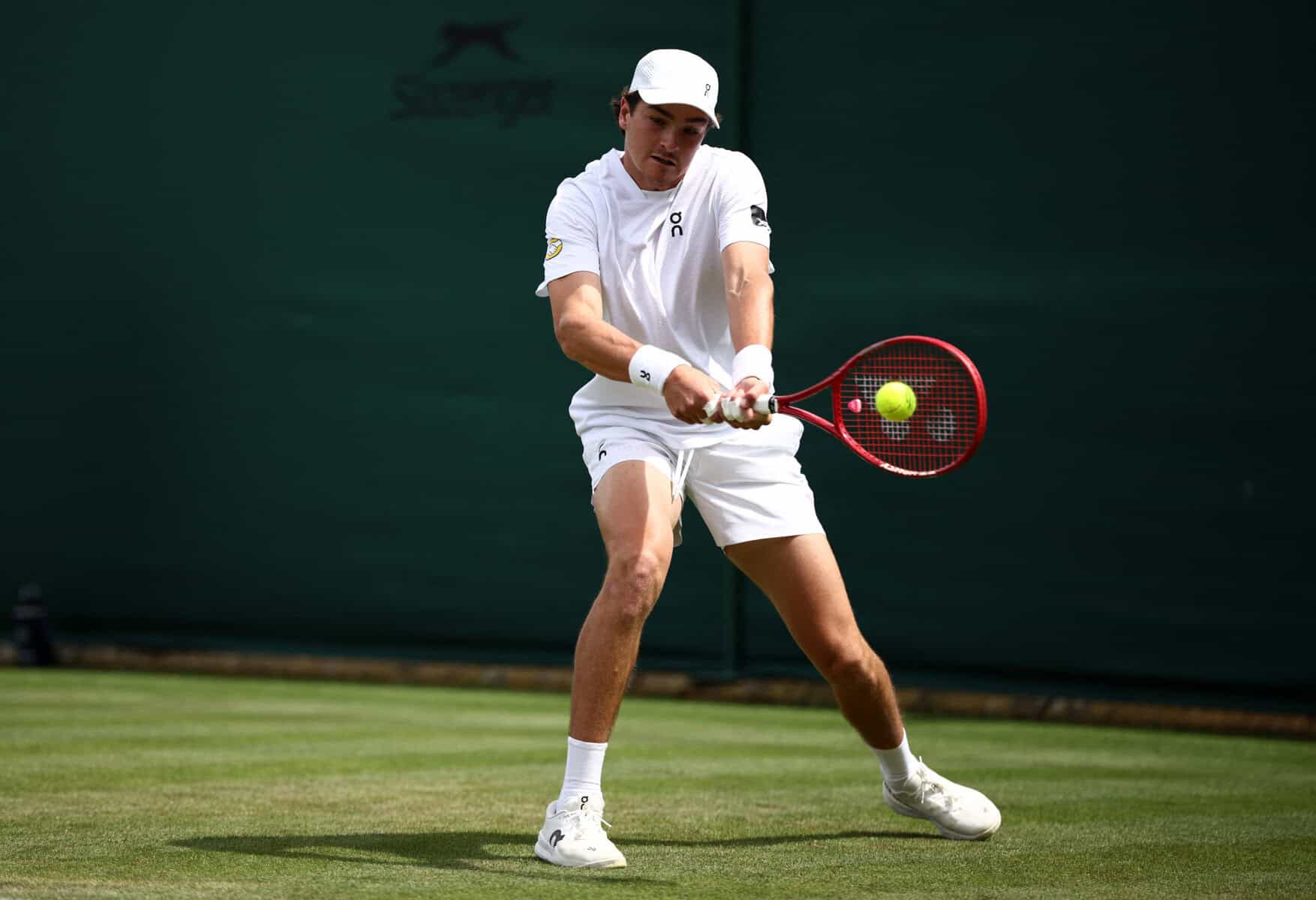
João Fonseca’s Wimbledon run ended earlier than Brazil wanted, but not before the 19-year-old gave Latin American tennis another clear sign that its next major star has arrived.
Fonseca, the 24th seed, lost 6-3, 6-3, 6-3 to Russian qualifier Roman Safiullin in the third round Friday on Court Two. The scoreline was blunt. Safiullin, a former Wimbledon quarterfinalist, played with the calm of a man who knows the surface, while Fonseca never found enough rhythm to turn the match into the kind of storm Brazilian fans have started to expect from him.
Still, this was not a failed Wimbledon. It was another step in a season that has pushed Fonseca from promising teenager to one of the most watched young players in the sport. The Brazilian reached the third round at the All England Club for the second straight year, beating Jesper de Jong 6-1, 7-5, 6-4 in the second round with the kind of clean, aggressive tennis that has made him such an easy player to follow. He struck 38 winners in that match and looked increasingly comfortable on grass, still the surface where Latin American players traditionally have the least room for error.
That is part of why Fonseca’s Wimbledon matters beyond the result. Latin America has produced great tennis players for generations, but the region’s best modern success has often come on clay. Grass demands something different: shorter points, more confidence moving forward, a stronger serve, and the willingness to take risks before rallies settle.
Fonseca’s game, built around early ball-striking and a heavy forehand, gives Brazil a player who does not look limited by surface. His rise has also brought something rarely seen around a young Latin American tennis player at Wimbledon: noise.
Brazilian fans followed him through the tournament with chants, flags and a level of energy more often associated with football than the All England Club. That support has become part of the Fonseca story. He is not just a prospect with ranking points. He is becoming a national sports figure, carrying the kind of attention that can lift a player and squeeze him at the same time.
The pressure is real. Earlier this season, Fonseca produced one of the biggest results of the tennis year when he came from two sets down to beat Novak Djokovic at Roland Garros. He then defeated Casper Ruud to reach his first Grand Slam quarterfinal before losing to Jakub Mensik. That Paris run changed the way he is viewed. After beating Djokovic on a Grand Slam stage, third rounds no longer feel like enough, even for a teenager.
That is the uncomfortable compliment inside Fonseca’s Wimbledon exit. Expectations have already moved. For Brazil, that is significant. Gustavo Kuerten remains the country’s modern tennis reference point, a three-time French Open champion whose success helped build a tennis following that still shows up loudly for Brazilian players abroad.
Fonseca is not Kuerten, and his career should not be measured against that standard yet. But he is the first Brazilian man in years to make that kind of comparison feel at least understandable. For Latin America, his emergence comes at a useful moment. Argentina still has depth, Chile continues to produce competitive tour players, and Brazil has names across both tours, including Beatriz Haddad Maia and Luisa Stefani.
But Fonseca offers something different: a teenage men’s singles player who can pull casual fans into a Grand Slam match and make them care before the second set starts. Wimbledon exposed how far he still has to go. Safiullin gave him little time, protected his own service games and kept the Brazilian from building the emotional momentum that can turn a match.
Fonseca will leave London with work to do on grass-court patience, return positioning and handling days when the first strike does not land often enough. But the bigger picture remains intact. A 19-year-old Brazilian reached the third round of Wimbledon, backed up a major Paris breakthrough, and left behind the sense that his next deep Grand Slam run is a matter of when, not whether.
Latin American tennis left the singles draw without a trophy threat. It did not leave without a story.