

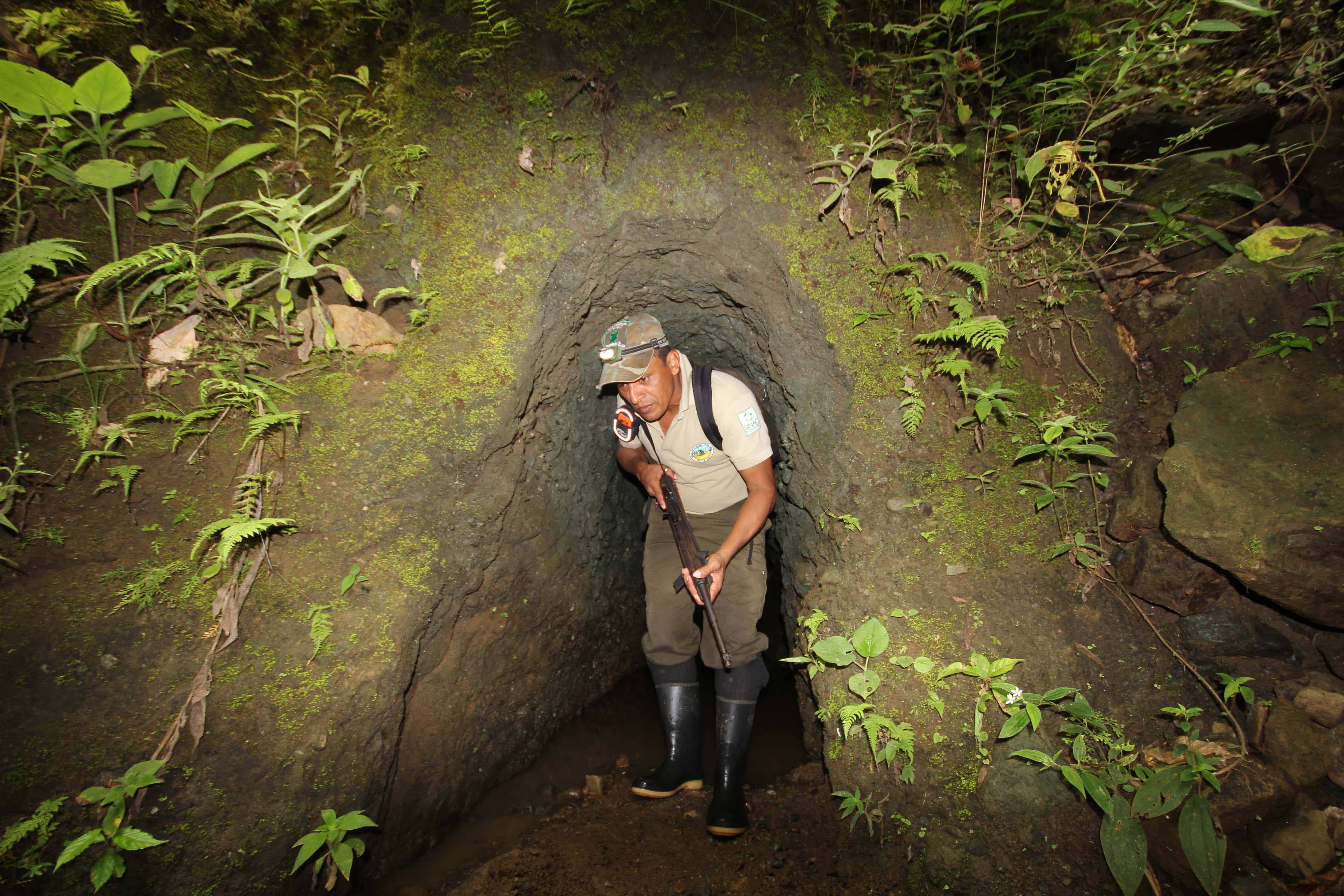
Concerns are growing over Costa Rica’s ability to protect Corcovado National Park as park rangers contend with illegal gold mining, poaching, logging, illegal fishing and incursions into protected land while working with limited personnel and resources. The latest warning comes from environmental advocates who say environmental crimes are increasing inside and around the park on the Osa Peninsula.
Bernardo Aguilar, president of the Civic Environmental Parliament, has called for more personnel dedicated to surveillance, protection and maintenance. The staffing numbers show the challenge. SINAC data released this summer indicated that Corcovado had 48 park rangers as of June 17.
But Enrique Obando, a ranger working in Corcovado, said only about 15 were assigned primarily to control and protection duties, while the others were needed for tourism and other park operations. He estimated that each protection ranger is effectively responsible for roughly 3,000 hectares of difficult tropical forest terrain.
Corcovado protects 42,570 hectares of land and another 5,375 hectares of marine territory. Its forests, beaches, wetlands and coastal waters provide habitat for some of Costa Rica’s best-known wildlife, including jaguars, tapirs, pumas and peccaries. The dangers facing those charged with protecting the park became particularly clear earlier this year.
Four men were detained in January after rangers discovered an alleged illegal gold-mining operation along the Sirena River. Investigators said the group had equipment including GPS devices, water pumps and a generator. One suspect escaped, while several of those detained allegedly threatened park rangers during the operation. The case is under investigation by environmental prosecutors.
Rangers have also encountered increasingly organized mining operations in remote parts of Corcovado. During another operation in March, eight rangers walked approximately 10 kilometers from the Los Patos station to reach an illegal mining camp. Three men were detained and mining equipment was seized. Rangers involved in the operation described working with limited communications and relying partly on outside conservation groups for food, equipment and other logistical support.
Illegal gold mining has long been a problem on the Osa Peninsula, but recent investigations have raised concerns that some operations are becoming better financed and equipped. Rangers have reported finding miners with metal detectors and satellite phones, making enforcement in Corcovado’s remote interior increasingly difficult. The staffing pressure extends beyond Corcovado.
A University of Costa Rica report published in June found that SINAC had 137 employees throughout the entire Osa Conservation Area, which includes Corcovado, Piedras Blancas and Marino Ballena national parks along with several other protected areas. The same report cited the 2025 State of the Nation report showing that SINAC’s overall budget had fallen by about 40% after several consecutive years of reductions.
The problem is not limited to land. Illegal fishing and removal of marine resources have also been identified as threats in areas associated with Corcovado, adding a large stretch of coastline and ocean to the territory authorities must monitor. For Costa Rica, the stakes extend beyond conservation.
Corcovado is one of our most important nature-tourism destinations and a centerpiece of tourism on the Osa Peninsula. Thousands of travelers visit the region each year specifically for its rainforest and wildlife, making effective protection of the park important both environmentally and economically.
Costa Rica has long promoted its national parks and protected areas as central to its international reputation. In Corcovado, however, rangers are being asked to protect a vast and difficult landscape while simultaneously managing visitors, responding to environmental crimes and confronting operations that can be increasingly organized and dangerous.
The latest warnings are renewing a familiar question: whether the resources assigned to protect one of Costa Rica’s most valuable wild areas are keeping pace with the threats inside it.





