

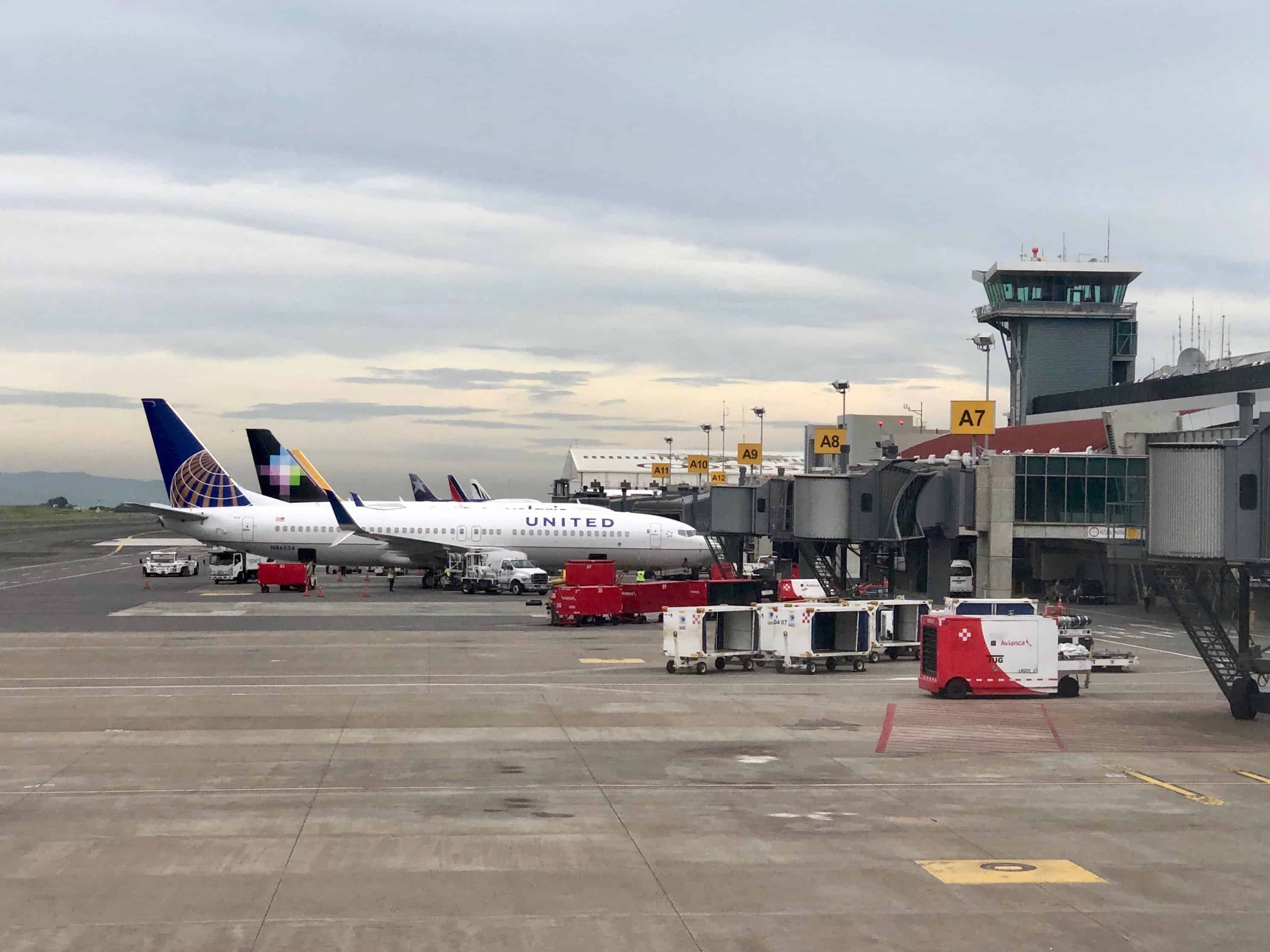
The San Jose airport recorded a drop in international tourist arrivals in May, even as Costa Rica’s overall air tourism numbers continued to grow, showing a shift in the travel market and raising new questions about competitiveness. The latest tourism figures show that 126,053 international tourists entered Costa Rica through Juan Santamaría in May, a 1.4% decline compared with the same month last year. By contrast, Liberia’s Airport received 69,430 tourists, a 12% increase.
That split is notable because the airport in San Jose has long been Costa Rica’s main international gateway. It remains the busiest airport and the key entry point for those heading to the Central Valley, Caribbean, Arenal, Monteverde, the Central Pacific and much of the South Pacific. But the May numbers show that Costa Rica’s air tourism growth is increasingly being pulled toward Guanacaste.
Costa Rica received 195,571 tourists by air in May, up 3% from May 2025. It also set a record for the first five months of the year, with 1,390,842 arrivals by air. That makes the national picture positive, but uneven.
However, let’s not over state this, the San Jose airport is not in free fall. From January through May, the airport still received 864,558 international tourists, a 6.4% increase from the same period in 2025. The warning sign, however, is more specific: growth is slowing at the San José airport while Liberia is expanding faster and taking a larger share of arrivals.
In May, Guanacaste accounted for 35.5% of Costa Rica’s air arrivals. In 2019, that share was closer to 19%, according to tourism analysis cited by the Costa Rican Tourism Observatory.
The trend reflects how Costa Rica’s tourism map is changing. Guanacaste has become a more direct option for visitors flying to beach destinations such as Tamarindo, Nosara, Playas del Coco, Papagayo, Flamingo and Santa Teresa. Airlines have increasingly treated Liberia as a strong leisure gateway, especially for the U.S. and Canadian markets.
The San Jose airport continues to play a broader role. It serves business travel, visiting friends and relatives, European routes, domestic connections and travelers heading beyond the northwest Pacific. But its May decline suggests that Costa Rica’s central airport is facing stronger competition, both inside the country and across the region.
During the recent 2025–2026 high season, Juan Santamaría reported record passenger traffic and new or returning seasonal routes, including Chicago by American Airlines, Monterrey by Viva, and European service from carriers such as Air France, KLM, Air Transat and British Airways. But the airport also felt the loss of Spirit Airlines operations, removing a low-cost option that had served price-sensitive travelers across Latin America and the United States.
That matters because Costa Rica is already seen as one of Central America’s more expensive destinations. Tourism businesses have repeatedly warned that the strong colón and higher operating costs make the country less competitive against regional rivals. When hotel rooms, tours, transport and restaurant bills feel more expensive to dollar-earning visitors, cheaper destinations become more attractive.
El Salvador is the clearest regional comparison. Salvadoran authorities reported more than 2.1 million international visitors between January and May 2026, reaching half of the country’s annual target of 4.2 million visitors. The country has promoted itself aggressively around security improvements, surf tourism, events and lower travel costs.
The comparison is not exact. El Salvador’s figures include both tourists and same-day visitors, while Costa Rica’s air-arrival figures count international tourists entering by plane. But the direction of travel is important. Costa Rica is still a premium nature destination with strong global recognition, but nearby countries are competing harder on price, access, events and airport investment.
For Costa Rica, the issue is not simply whether more tourists arrive. It is where they enter, how much they spend, how easily they move around the country and whether airlines see enough demand to keep adding seats.
A weaker San Jose trend could affect hotels, shuttle operators, tour companies and communities that depend on San José as the first stop for international visitors. It could also reinforce the gap between Guanacaste, where air access and beach demand are growing quickly, and other regions that rely on the central airport to feed tourism traffic.
The latest figures leave Costa Rica with a mixed message. It is still growing by air, and the year-to-date numbers remain strong. But May showed that the growth is not evenly spread, and Juan Santamaría’s decline is a reminder that Costa Rica’s tourism model is facing sharper competition at home and abroad.





