

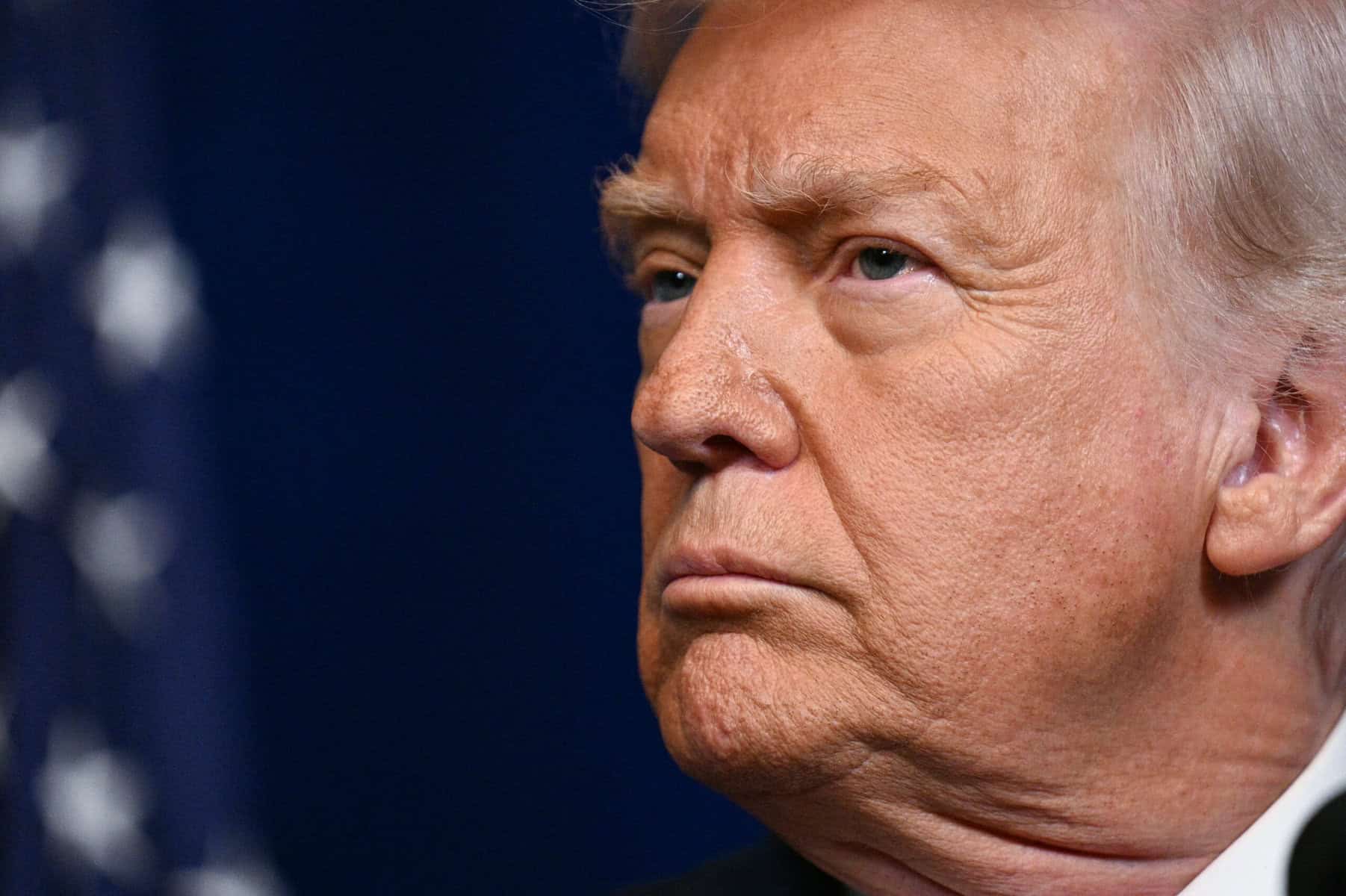
President Donald Trump stated that the United States carried out a strike on a Venezuelan facility used for loading drugs onto boats. He described the action as the first land-based operation in an ongoing effort to curb narcotics trafficking from the region. The announcement came during a meeting with Israeli Prime Minister Benjamin Netanyahu at Trump’s Mar-a-Lago residence in Florida.
Trump shared details of the incident, noting a significant explosion at the site. “There was a major explosion in the dock area where they load the boats up with drugs,” he told reporters. He added that U.S. forces had targeted boats at sea before, but now extended operations to the loading zone itself. “We hit all the boats and now we hit the area,” Trump said. He emphasized that the site “no longer exists” after the blast.
The president refused to specify which agency conducted the operation. “I know exactly who it was, but I don’t want to say who it was,” he remarked. He also avoided confirming if the strike occurred within Venezuelan borders, only stating it happened “along the shore.” This lack of clarity has left analysts questioning the exact nature and location of the event.
The claim marks a potential shift in U.S. strategy toward Venezuela. For months, American forces have focused on intercepting vessels in international waters as part of a campaign against President Nicolás Maduro’s government, which Washington accuses of leading a drug cartel. Trump has offered rewards for Maduro’s capture and imposed sanctions, including seizures of oil tankers. If verified, this would be the first reported U.S. attack on Venezuelan soil in the current operation.
Venezuelan officials have not responded to the allegations. Neither the U.S. Department of Defense nor Southern Command has provided confirmation or further information. The silence from both sides adds to the uncertainty surrounding the president’s words.
From Costa Rica’s standpoint, such developments raise concerns about regional stability. Venezuela’s ongoing crisis has already driven migration flows that affect neighboring countries, including ours. An escalation could strain resources and heighten security risks along shared borders in Central and South America. Local experts point out that drug routes from Venezuela often pass through the Caribbean, impacting Costa Rican efforts to combat trafficking.
Trump first mentioned the strike in a radio interview on December 26, referring to it as knocking out a “big facility.” He tied it to broader anti-drug initiatives, claiming success in disrupting shipments. The timing, just after Christmas Eve, suggests the operation may have occurred around then, though no date was given.
Critics argue the move blurs lines between counter-narcotics and broader political pressure on Maduro. The U.S. has long sought regime change in Venezuela, supporting opposition figures and isolating the government internationally. This latest claim fits into that pattern, but without evidence, it risks fueling skepticism.
As tensions build, observers watch for any Venezuelan retaliation or involvement from allies like Russia and China. For now, the incident remains Trump’s word against a backdrop of unconfirmed reports. The full implications for Latin American relations will depend on what facts emerge next.
The president’s comments come amid his administration’s focus on border security and drug interdiction. He has repeatedly highlighted these issues in public statements, positioning them as key achievements.
Costa Rican authorities have not commented on the matter, but the government continues to monitor regional dynamics closely. With trade and migration ties to both the U.S. and South America, any conflict spillover could demand a coordinated response.





